Academic Journal
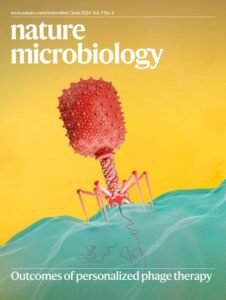
Q1Nature Microbiology
About Nature Microbiology
Nature Microbiology is a scholarly journal published by Nature Research. SCImago 2025 places it in Q1 with an SJR of 7.44 and an H-index of 176.
Its listed coverage is 2016-2026 and its research categories include Applied Microbiology and Biotechnology (Q1); Cell Biology (Q1); Genetics (Q1); Immunology (Q1); Microbiology (Q1); Microbiology (medical) (Q1). The 2025 dataset reports 301 documents and 10634 citations across the latest three-year reporting window.
Nature Microbiology is one of the most prestigious journals in the field of microbiology, renowned for publishing high-quality, peer-reviewed research that advances our understanding of microbial life. As part of the Nature Portfolio, this journal provides a platform for groundbreaking discoveries in bacteriology, virology, mycology, parasitology, and microbial ecology. Whether you are a researcher, educator, or science enthusiast, Nature Microbiology offers invaluable insights into the microscopic world that shapes our planet and our lives.
What is Nature Microbiology?
Launched in 2016, Nature Microbiology has quickly established itself as a leading voice in microbiological research. It covers a broad spectrum of topics, from the molecular biology of microorganisms to their roles in health, disease, and environmental processes. The journal publishes original research articles, reviews, perspectives, and commentaries that contribute to the advancement of microbial science.
Key Areas of Research
One of the strengths of Nature Microbiology lies in its interdisciplinary approach. The journal welcomes contributions from diverse areas, including:
-
Microbial pathogenesis and host-microbe interactions
-
Antimicrobial resistance and drug development
-
Microbiomes and microbial communities
-
Synthetic biology and biotechnology
-
Environmental and evolutionary microbiology
-
Viral and bacterial genomics
By promoting a broad scope, the journal helps bridge gaps between fundamental science and applied research, fostering innovation across multiple fields.
Why Nature Microbiology Stands Out
With its high impact factor and rigorous editorial standards, Nature Microbiology is widely respected in both academic and industry circles. Every article undergoes strict peer review, ensuring the integrity and relevance of published work. In addition, the journal maintains an open-access option, allowing broader visibility and dissemination of scientific knowledge.
The journal also plays a pivotal role in shaping public health policies and environmental strategies by highlighting emerging threats like antibiotic resistance, pandemics, and the effects of climate change on microbial ecosystems.
SEO Keywords: Nature Microbiology, microbial research journal, microbiology journal, microbiome studies, antimicrobial resistance, Nature Portfolio, peer-reviewed microbial research, virology journal, bacteriology journal, microbiology publication
Who Should Read Nature Microbiology?
-
Researchers and academics in microbiology, biotechnology, and life sciences
-
Healthcare professionals interested in infectious diseases and microbial resistance
-
Environmental scientists exploring microbial roles in climate and ecosystems
-
Graduate and postgraduate students seeking cutting-edge developments
-
Science communicators and journalists covering biomedical and environmental stories
Journal Metrics
Metrics can change by reporting year. Verify time-sensitive values with the publisher or indexing service.
Aims & Scope
Microbiology is a fascinating branch of science that deals with the study of microorganisms—tiny life forms that are invisible to the naked eye. The scope and nature of microbiology are vast and encompass various subfields that play critical roles in health, agriculture, environment, and industry. As technology advances, microbiology continues to evolve, offering groundbreaking insights into life at the microscopic level.
Nature of Microbiology
The nature of microbiology lies in its focus on microorganisms such as bacteria, viruses, fungi, protozoa, and algae. These organisms are studied for their structure, function, genetics, physiology, classification, and interaction with humans and the environment. Microbiology is both a basic and applied science, helping us understand life processes and offering solutions to practical problems.
Microbiology can be broadly classified into several branches, including:
-
Bacteriology – the study of bacteria.
-
Virology – the study of viruses.
-
Mycology – the study of fungi.
-
Parasitology – the study of parasites and protozoa.
-
Phycology – the study of algae.
Each of these branches contributes to our understanding of microbial life and its impact on the ecosystem.
Scope of Microbiology
The scope of microbiology is ever-expanding and plays a crucial role across multiple domains:
-
Medical Microbiology
This branch focuses on disease-causing microorganisms, their diagnosis, prevention, and treatment. It includes the development of vaccines, antibiotics, and diagnostic tools. Medical microbiologists play a key role in managing infectious diseases and understanding microbial resistance. -
Industrial Microbiology
Microorganisms are used in the production of antibiotics, enzymes, vitamins, alcohols, and other valuable products. Fermentation technology and bioprocessing are key areas where microbes contribute significantly to industrial advancements. -
Agricultural Microbiology
This area explores the role of microbes in soil fertility, plant growth, and protection against pests. Microorganisms like Rhizobium and mycorrhizae enhance crop productivity and are essential for sustainable agriculture. -
Environmental Microbiology
Microbes are integral to waste decomposition, bioremediation, and nutrient cycling. They help in maintaining ecological balance by breaking down organic matter and pollutants, thus supporting a healthy environment. -
Food Microbiology
Ensuring food safety and quality is another vital application of microbiology. Microbiologists work to prevent foodborne illnesses, extend shelf life, and enhance fermentation processes used in producing yogurt, cheese, and other consumables. -
Microbial Biotechnology
Advances in genetic engineering and molecular biology have empowered microbiologists to manipulate microbial DNA for producing insulin, hormones, and other biotechnological products.
Recent Research Articles
Latest publications matched automatically by ISSN.
IL-17A-producing γδ T cells control pulmonary Mycobacterium abscessus infection in mice
Xiaoqian Hu, Siran Lin, Wenchang Meng, Haoye Liu et al.
2026-09-03 · DOI: 10.1038/s41564-026-02466-5High-throughput recovery of integron cassettes for gene discovery screens
Filipa Trigo da Roza, André Carvalho, Amalia Prieto, Paula Blanco et al.
2026-09-03 · DOI: 10.1038/s41564-026-02474-5BCL-2 inhibition at antiretroviral therapy initiation reduces the intact SIV reservoir in macaques
Tomas Raul Wiche Salinas, Justin Harper, Claire Deleage, Kevin Nguyen et al.
2026-09-03 · DOI: 10.1038/s41564-026-02464-7Reply to ‘Grounding microbial conservation in ecological principles’
Jack A. Gilbert, Chris Greening, Raquel S. Peixoto
2026-09-02 · DOI: 10.1038/s41564-026-02463-8Grounding microbial conservation in ecological principles
Cinzia Corinaldesi, Karthik Anantharaman, James C. Aronson, Brett J. Baker et al.
2026-09-02 · DOI: 10.1038/s41564-026-02462-9MetaCAT enables reconstruction of high-quality microbial genomes and their association with host traits from metagenomic data
Cong-Cong Liu, Shan-Shan Dong, Jing Guo, Zhen Xu et al.
2026-09-01 · DOI: 10.1038/s41564-026-02472-7Advancing equity through community-led, globally connected infectious disease research
Pontiano Kaleebu, Aliya Naheed, Mahnaz Vahedi, Jackeline Alger et al.
2026-09-01 · DOI: 10.1038/s41564-026-02489-ySurvival of the driest
Hemant Joshi, Babak Javid
2026-08-31 · DOI: 10.1038/s41564-026-02461-wMicro-engineering the future
2026-08-27 · DOI: 10.1038/s41564-026-02481-6Autodissemination stations suppress Aedes notoscriptus mosquitoes and reduce Buruli ulcer risk in urban Australia: a randomized controlled field trial
Véronique Paris, Andrew H. Buultjens, Nicholas Bell, Thomas L. Schmidt et al.
2026-08-27 · DOI: 10.1038/s41564-026-02439-8Author Correction: Multikingdom and functional gut microbiota markers for autism spectrum disorder
Qi Su, Oscar W. H. Wong, Wenqi Lu, Yating Wan et al.
2026-08-27 · DOI: 10.1038/s41564-026-02496-zDesiccation promotes DNA damage and rifampin resistance in Mycobacterium tuberculosis
Christopher D. Brown, Brendon M. Lee, Hannah M. Liu, Amy M. Wu et al.
2026-08-26 · DOI: 10.1038/s41564-026-02437-wA Zika virus vaccine with E protein fusion loop mutations protects via CD8+ T cells
Kantinan Chuensirikulchai, Qin Hui Li, Hsueh-han Lu, Julia Timis et al.
2026-08-26 · DOI: 10.1038/s41564-026-02465-6Large eukaryotic DNA viruses encode ESCRT machinery for membrane remodelling
Sofia Medvedeva, Ulysse Guyet, Eugene V. Koonin, Tom O. Delmont et al.
2026-08-26 · DOI: 10.1038/s41564-026-02470-9A roadmap to create FAIR collections of microbial strains
Thomas C. A. Hitch, Mitsuo Sakamoto, Jörg Overmann, Thomas Clavel et al.
2026-08-26 · DOI: 10.1038/s41564-026-02446-9Metabolic dependencies are common among soil bacteria
2026-08-25 · DOI: 10.1038/s41564-026-02456-7Colibactin beyond carcinogenesis
Patrick Gallagher, Layla M. Jeries, Kasie Raymann
2026-08-24 · DOI: 10.1038/s41564-026-02448-7Obligate cross-feeding of metabolites is common in soil microbial communities
Ghada Yousif, Francisco Zorrilla, Swagatika Dash, Leonardo Oña et al.
2026-08-24 · DOI: 10.1038/s41564-026-02457-6Colibactin produced by a honeybee gut symbiont mediates pathogen defence
Yulin Song, J. Elijah Powell, Joel W. H. Wong, Yunxi Liu et al.
2026-08-24 · DOI: 10.1038/s41564-026-02438-9Candida auris uses nutrient sensing to modulate virulence and host immune responses
Irma Tedja, Harshini Weerasinghe, Garrett Bryak, Helen Stölting et al.
2026-08-24 · DOI: 10.1038/s41564-026-02454-9Reviews
Community Reviews
Version History
April 14, 2025 at 1:25 pm
April 14, 2025