Academic Journal
Q1Information Fusion
About Information Fusion
Information Fusion is a scholarly journal published by Elsevier B.V.. SCImago 2025 places it in Q1 with an SJR of 4.197 and an H-index of 201.
Its listed coverage is 2000-2026 and its research categories include Hardware and Architecture (Q1); Information Systems (Q1); Signal Processing (Q1); Software (Q1). The 2025 dataset reports 716 documents and 24679 citations across the latest three-year reporting window.
Understanding Information Fusion: A Comprehensive Guide
In today’s data-driven world, Information Fusion plays a critical role in extracting actionable insights from multiple sources of information. Whether in defense, healthcare, business intelligence, or autonomous systems, the concept of information fusion is transforming the way organizations make decisions and respond to dynamic environments.
What is Information Fusion?
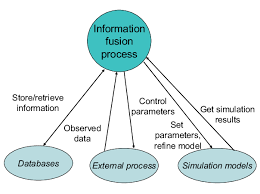
Information fusion refers to the process of integrating data from multiple sources to produce more consistent, accurate, and useful information than that provided by any individual data source. The main objective is to improve situational awareness, reduce uncertainty, and support informed decision-making.
Information fusion systems are designed to handle data that may vary in format, accuracy, and reliability. By combining this data intelligently, these systems can deliver enhanced interpretations that are more comprehensive than isolated observations.
Key Levels of Information Fusion
Information fusion typically operates at three main levels:
-
Data-Level Fusion: Involves combining raw data from various sources. This level focuses on increasing signal-to-noise ratio and is often used in sensor networks.
-
Feature-Level Fusion: Extracted features from raw data are combined to enhance pattern recognition and classification.
-
Decision-Level Fusion: Involves combining decisions from multiple systems or algorithms to produce a final, improved decision output.
Applications of Information Fusion
Information fusion has a wide array of applications across industries:
-
Defense and Military: Used in surveillance, reconnaissance, and command-and-control systems to synthesize data from multiple sensors and sources for battlefield awareness.
-
Healthcare: Assists in diagnostics and treatment planning by integrating patient data from various medical devices and databases.
-
Autonomous Vehicles: Combines inputs from cameras, LiDAR, radar, and GPS to help vehicles navigate safely and efficiently.
-
Cybersecurity: Enhances threat detection by correlating data from different monitoring systems and security logs.
-
Business Intelligence: Helps organizations integrate data from different departments to generate comprehensive performance insights.
Benefits of Information Fusion
-
Improved Accuracy: Combining multiple sources reduces the impact of noise or errors from any single source.
-
Enhanced Decision-Making: Better insights lead to faster and more confident decisions.
-
Cost Efficiency: Streamlined data analysis can reduce operational costs by improving resource allocation.
-
Robustness and Reliability: Systems become more fault-tolerant by compensating for missing or faulty data.
Challenges in Information Fusion
Despite its benefits, information fusion faces several challenges:
-
Data Heterogeneity: Combining data from different formats and quality levels can be complex.
-
Real-Time Processing: Many applications require high-speed fusion for time-critical decisions.
-
Scalability: As the volume of data grows, systems must scale without compromising performance.
Journal Metrics
Metrics can change by reporting year. Verify time-sensitive values with the publisher or indexing service.
Aims & Scope
Scope of Information Fusion: Unlocking the Power of Data Integration
Information fusion is an emerging interdisciplinary field focused on integrating data from multiple sources to produce more consistent, accurate, and useful information than that provided by any individual data source. As the volume of data grows exponentially across domains, the scope of information fusion becomes increasingly significant in areas ranging from defense and healthcare to finance and smart cities.
What is Information Fusion?
At its core, information fusion involves the process of combining data from various origins—such as sensors, databases, or user inputs—to make better decisions. This integration can be done at different levels: raw data level, feature level, or decision level. Techniques used include statistical methods, machine learning, neural networks, and fuzzy logic.
Applications of Information Fusion
One of the biggest strengths of multi-sensor data fusion lies in its versatility. It finds applications across a wide range of industries:
1. Defense and Surveillance
In military and homeland security, information fusion is used to integrate data from satellites, drones, and ground-based sensors. This enhances situational awareness, target tracking, and threat assessment.
2. Healthcare
Medical diagnostics benefit from fusing data from wearable devices, lab reports, imaging, and patient history. This leads to early detection, more accurate diagnoses, and personalized treatment plans.
3. Autonomous Vehicles
Self-driving cars rely heavily on information fusion by combining inputs from LIDAR, radar, GPS, and cameras. This integrated data allows for better decision-making in real-time navigation and obstacle avoidance.
4. Smart Cities
In urban planning and management, data from traffic sensors, weather stations, and utility grids are fused to optimize resource use, enhance public safety, and reduce energy consumption.
5. Finance and Business Intelligence
Fusion techniques help detect fraud, assess risk, and develop market forecasts by integrating diverse data streams such as transaction records, social media signals, and economic indicators.
Benefits of Information Fusion
-
Improved Accuracy: By leveraging multiple data sources, the final outcome is often more reliable.
-
Enhanced Robustness: Fusion reduces the risk of failure caused by faulty or missing data from a single source.
-
Faster Decision-Making: Real-time integration supports quicker responses in dynamic environments.
The Future of Information Fusion
As technology advances, the future of information fusion looks promising. Developments in artificial intelligence and big data analytics are expected to enhance the efficiency and intelligence of fusion systems. The integration of quantum computing and edge computing will further expand its capabilities in real-time and large-scale environments.
With the rise of IoT and 5G, the volume of available data will only increase, making information fusion even more vital for meaningful analysis and actionable insights.
Recent Research Articles
Latest publications matched automatically by ISSN.
Learning to prefer: Reward-driven infrared-visible fusion via RWKV
Jialing Huang, Yingying Wang, Xuanhua He, Hui Zheng et al.
2027-02 · DOI: 10.1016/j.inffus.2026.104685SAR: semantic ambiguity relief network for RGB-T semantic segmentation
Shenlu Zhao, Jingyi Li, Qiang Jiao, Qiang Zhang et al.
2027-02 · DOI: 10.1016/j.inffus.2026.104671Parameter-efficient fine-tuning for multimodal fusion: A survey of injection-driven integration mechanisms
Zhuoyifan Zhang, Xiaoshuai Hao, Rong Yin, Jian Li et al.
2027-02 · DOI: 10.1016/j.inffus.2026.104682Adaptive cross-view EEG fusion of external scalp and internal neural representations for affective brain-computer interfaces
Tao Wang, Peng Wang, Suiyu Liu, Xiaoyan Wang et al.
2027-02 · DOI: 10.1016/j.inffus.2026.104754CAAL: EEG-guided cross-modal adaptive alignment for learning consistent representations in EEG-fNIRS fusion
Baole Fu, Jinwu Gao, Shengyan Hou, Zhihuan Jia et al.
2027-02 · DOI: 10.1016/j.inffus.2026.104729Disparity Arbiter: Pseudo label mining with student deficiency awareness
Chuang-Wei Liu, Mengtan Zhang, Nachuan Ma, Jin Wu et al.
2027-02 · DOI: 10.1016/j.inffus.2026.104692NSAP: Neuro-symbolic adaptive propagation for knowledge graph completion
Xinde Yu, Hui Zhang, Bo Zhang, Kun Gao et al.
2027-02 · DOI: 10.1016/j.inffus.2026.104737DPG-CD: Depth-prior-guided cross-modal joint 2D–3D change detection
Luqi Zhang, Zhen Dong, Bisheng Yang
2027-02 · DOI: 10.1016/j.inffus.2026.104743GRL-DDC: A data-driven paradigm for sustainable governance of online information propagation
Ziyao Zhao, Fuzhong Nian
2027-02 · DOI: 10.1016/j.inffus.2026.104697Federated recommender systems as distributed knowledge fusion: Techniques, challenges, and future directions
Yunqi Mi, Jiakui Shen, Guoshuai Zhao, Chengxu Liu et al.
2027-02 · DOI: 10.1016/j.inffus.2026.104712Echo URL: Dual-pathway signal processing fusion for unsupervised representation learning in ultrasound sensing
Bingzhi Wang, Jiajun Yu, Dengke Zhong, Qiao Huang et al.
2027-02 · DOI: 10.1016/j.inffus.2026.104726DFP-AD: A Dynamic Frequency Prototype Framework for Unsupervised Anomaly Detection
Qiao Zhang, Mingwen Shao, Xinyuan Chen, Xiang Lv et al.
2027-02 · DOI: 10.1016/j.inffus.2026.104728A physics-guided and geometry-constrained fusion framework for underwater light-beacon salient object detection in optical docking
Yuhong Miao, Guojun Wu, Qingyan Chen, Chensheng Cheng et al.
2027-02 · DOI: 10.1016/j.inffus.2026.104741UMRL: A unified Multi-modal reinforcement learning for autonomous driving Decision-making at unsignalized intersections
Fei Hui, Shanke Li, Kun Peng, Shoucai Jing et al.
2027-02 · DOI: 10.1016/j.inffus.2026.104721A three-stage interpretable linguistic group decision-making model: A perspective of combining concept lattice and adversarial interpretive structure modeling
Kuo Pang, Chao Fu, Li Zou, Tao Zhang et al.
2027-02 · DOI: 10.1016/j.inffus.2026.104701MRDR-SLAM: multi-robot LiDAR localization and mapping with rotation-invariant deep relocalization
Yiwen Chen, Yuan Zhuang, Binliang Wang, Jianzhu Huai et al.
2027-02 · DOI: 10.1016/j.inffus.2026.104703Fractional class-specific weighted random forest optimization
Nour Elislem Karabadji, Abdelghani Lakhdari, Ahmed Al Nuaim, Ali Algefary et al.
2027-02 · DOI: 10.1016/j.inffus.2026.104689NeuroAlign: Hierarchical multimodal fusion of dynamic and structural neuroimaging for MCI analysis
Xiongri Shen, Zhenxi Song, Jiaqi Wang, Yi Zhong et al.
2027-02 · DOI: 10.1016/j.inffus.2026.1047053D object detection and knowledge distillation in autonomous driving: A survey
Weiqing Yan, Changhong Bu, Yuanyang Zhang, Guanghui Yue et al.
2027-02 · DOI: 10.1016/j.inffus.2026.104706Multimodal information fusion for chart understanding: A survey of MLLMs—evolution, limitations, and cognitive enhancement
Zhihang Yi, Jian Zhao, Jiancheng Lv, Tao Wang et al.
2027-02 · DOI: 10.1016/j.inffus.2026.104700Reviews
Community Reviews
Version History
April 20, 2025 at 10:11 am
April 20, 2025