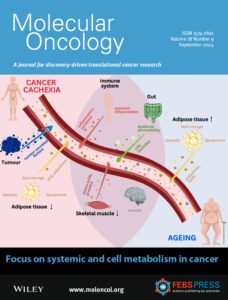
Academic Journal
Q1Molecular Cancer
About Molecular Cancer
Molecular Cancer is a scholarly journal published by BioMed Central Ltd. SCImago 2025 places it in Q1 with an SJR of 9.908 and an H-index of 242.
Its listed coverage is 2002-2026 and its research categories include Cancer Research (Q1); Molecular Medicine (Q1); Oncology (Q1). The 2025 dataset reports 300 documents and 22706 citations across the latest three-year reporting window.
Molecular cancer is a rapidly advancing field that focuses on the molecular and genetic changes involved in the development and progression of cancer. Unlike traditional cancer studies that examine tumors at the tissue level, molecular cancer research delves into DNA, RNA, proteins, and other cellular mechanisms that drive cancer growth. This approach has revolutionized how scientists understand cancer and how doctors treat it.
What Is Molecular Cancer?
Molecular cancer refers to the study of cancer at a molecular level. It involves understanding the mutations, gene expressions, and signaling pathways that lead to the transformation of normal cells into cancerous cells. These insights help identify specific molecular targets, allowing for more precise and personalized cancer therapies.
For example, certain mutations in the BRCA1 and BRCA2 genes are known to significantly increase the risk of breast and ovarian cancer. Identifying these mutations through molecular testing can guide early detection, prevention strategies, and treatment choices.
Why Molecular Cancer Research Matters
The primary goal of molecular cancer research is to improve diagnosis, treatment, and patient outcomes. By pinpointing the exact mutations or abnormalities that cause cancer, researchers can develop targeted therapies that are more effective and less toxic than traditional chemotherapy.
Some key benefits of molecular cancer research include:
-
Early Detection: Molecular biomarkers can detect cancer before symptoms appear.
-
Personalized Medicine: Treatments can be tailored to a patient's unique genetic makeup.
-
Improved Prognosis: Early and targeted treatment often leads to better outcomes.
-
Drug Development: Molecular studies accelerate the creation of new, more effective cancer drugs.
Targeted Therapy and Precision Medicine
One of the major breakthroughs in molecular cancer research is the development of targeted therapies. Unlike conventional treatments that affect both healthy and cancerous cells, targeted therapies aim at specific molecules involved in tumor growth.
For instance, HER2-positive breast cancer is treated with drugs like trastuzumab (Herceptin), which specifically targets the HER2 protein that fuels cancer growth. Similarly, EGFR inhibitors are used in treating certain types of lung cancer with EGFR gene mutations.
The Role of Genomics and Bioinformatics
Genomics and bioinformatics play a critical role in molecular cancer research. With advanced sequencing technologies, scientists can now analyze the entire genome of a tumor to identify mutations and alterations. Bioinformatics tools help process this massive amount of data, making it easier to identify patterns and potential treatment options.
Future Outlook
The future of cancer treatment lies in precision oncology, where molecular insights will guide every step of care — from diagnosis to therapy. As research progresses, we can expect more breakthroughs in immunotherapy, gene editing (like CRISPR), and vaccine development, all rooted in molecular cancer science.
Journal Metrics
Metrics can change by reporting year. Verify time-sensitive values with the publisher or indexing service.
Aims & Scope
In recent years, molecular cancer research has emerged as a revolutionary field within oncology, offering deeper insights into the biology of cancer and transforming how we detect, diagnose, and treat this complex disease. By focusing on genetic, epigenetic, and molecular alterations in cancer cells, this area of research is shaping the future of personalized medicine and targeted therapies.
Understanding Molecular Cancer
Molecular cancer refers to the study of cancer at the molecular and cellular levels. This includes exploring DNA mutations, RNA expression patterns, protein interactions, and cellular signaling pathways that lead to the uncontrolled growth of cancer cells. Unlike traditional cancer studies that relied on histopathology, molecular oncology investigates the underlying mechanisms driving cancer progression, helping scientists and clinicians develop more precise interventions.
Early Detection and Diagnosis
One of the most promising aspects of molecular cancer research is its contribution to early cancer detection. By identifying specific biomarkers—genes or proteins linked to certain cancer types—researchers are creating diagnostic tools that detect cancer in its earliest stages. Techniques such as liquid biopsies, which analyze circulating tumor DNA in the blood, are now being used to identify cancer before symptoms appear, leading to significantly improved prognosis and survival rates.
Personalized and Targeted Therapies
Traditional cancer treatments like chemotherapy and radiation can be harsh and nonspecific. Molecular cancer research enables the development of targeted therapies, which attack cancer cells based on their genetic and molecular profiles while sparing healthy cells. Drugs like trastuzumab (for HER2-positive breast cancer) and imatinib (for chronic myeloid leukemia) are products of this approach. These treatments have shown remarkable success, improving outcomes and reducing side effects for patients.
Additionally, immunotherapy—which leverages the body's immune system to fight cancer—has benefited from molecular insights. By understanding how cancer cells evade immune detection, scientists are creating immune checkpoint inhibitors that effectively restore the body’s ability to recognize and destroy cancer.
Role in Cancer Prevention
Molecular research is also paving the way for cancer prevention strategies. Genetic screening can identify individuals at high risk of developing certain cancers, such as BRCA mutations for breast and ovarian cancer. With this knowledge, patients can take proactive steps including lifestyle changes, more frequent screenings, or even preventative treatments.
Future Scope and Challenges
The future of molecular cancer research holds immense promise. Technologies like CRISPR gene editing, AI-driven drug discovery, and multi-omics integration are expected to accelerate breakthroughs in understanding and treating cancer. However, challenges remain, including high research costs, data complexity, and the need for ethical guidelines surrounding genetic testing.
Recent Research Articles
Latest publications matched automatically by ISSN.
mRNA therapeutics in cancer: from molecular design to clinical translation
Zhixiong Zhu, Jia Li, Hexian Li, Qizhong Lu et al.
2026-09-08 · DOI: 10.1186/s12943-026-02796-2T cell receptors equipped with ICOS provide T cells with durable anti-tumor response
Alexandre Marraffa, Cor Berrevoets, Margherita Mosiello, Rui M.L. Coelho et al.
2026-09-07 · DOI: 10.1186/s12943-026-02765-9Correction: METTL3 facilitates tumor progression via an m6A-IGF2BP2-dependent mechanism in colorectal carcinoma
Ting Li, Pei-Shan Hu, Zhixiang Zuo, Jin-Fei Lin et al.
2026-09-05 · DOI: 10.1186/s12943-026-02780-wCorrection: Multimodal sequencing identifies synergistic mechanisms driving resistance to neoadjuvant nivolumab treatment in hepatocellular carcinoma
Fanhong Zeng, Jiaxin Guo, Zheng Zeng, Vanilla Xin Zhang et al.
2026-09-04 · DOI: 10.1186/s12943-026-02777-5Threshold control of growth arrest in quiescence and senescence: implications for cell fate plasticity in aging and cancer
Merve Yilmaz, Jerry W. Shay
2026-08-31 · DOI: 10.1186/s12943-026-02782-8Retraction Note: Human epididymis protein 4 in association with Annexin II promotes invasion and metastasis of ovarian cancer cells
Huiyu Zhuang, Mingzi Tan, Juanjuan Liu, Zhenhua Hu et al.
2026-08-29 · DOI: 10.1186/s12943-026-02779-3Deep molecular profiling of lung neuroendocrine tumours and supra-carcinoids
Alexandra Sexton-Oates, Émilie Mathian, Noah Candeli, Yuliya Lim et al.
2026-08-27 · DOI: 10.1186/s12943-026-02721-7A targetable dependency on nonsense-mediated decay for cellular homeostasis and immune control in small cell lung cancer
Lucia A. Torres-Fernández, Volker Boehm, Joel Kaufmann, Jonas P. Becker et al.
2026-08-27 · DOI: 10.1186/s12943-026-02750-2Correction: Novel lncRNA-IUR suppresses Bcr-Abl-induced tumorigenesis through regulation of STAT5-CD71 pathway
Xuefei Wang, Jianling Yang, Guijie Guo, Riyue Feng et al.
2026-08-26 · DOI: 10.1186/s12943-026-02776-6Artificial intelligence in oncology: linking biological discovery to clinical utility
Sai Kiran Kuchana, Nikhilesh V. Alahari, Rohith Kode, Karishma R Jalapu et al.
2026-08-22 · DOI: 10.1186/s12943-026-02771-xUnifying functional experimental systems with clinical predictive technologies for personalized care in PDAC
Juan Carlos López-Gil, Daniele Campa, Cosmeri Rizzato, Elisa Espinet et al.
2026-08-20 · DOI: 10.1186/s12943-026-02773-9IGF2BP3 promotes M2 macrophage polarization and ESCC progression by increasing USP36-mediated β-catenin stabilization
Zhongxian Tian, Yongjia Zhou, Yunpeng Zhao, Peiwei Li et al.
2026-08-18 · DOI: 10.1186/s12943-026-02774-8The intratumoral microbiome as an emerging hub in cancer pathogenesis and precision oncology
Jiaao Sun, Shiyan Song, Sijie Luo, Qing Fan et al.
2026-08-15 · DOI: 10.1186/s12943-026-02762-ySpatially organized regulated cell death-immune coupling in solid tumors: integrating spatial omics with actionable regulated cell death biology
Jinkang Tong, Dianjie Zeng, Leyi Chen, Chenming Wei et al.
2026-08-15 · DOI: 10.1186/s12943-026-02756-wsiRNA-mediated mismatch repair disruption synergizes with oxaliplatin to restore immune surveillance in microsatellite-stable colorectal cancer
Jing Ni, Guantao He, Hongwei Wang, Yao Qin et al.
2026-08-15 · DOI: 10.1186/s12943-026-02752-0Programmable ZBTB7A RNA N6-methyladenosine site-specific demethylation suppresses colorectal cancer liver metastasis
Xuena Chen, Shuo Zhao, Bochen Liu, Yujia Fan et al.
2026-08-14 · DOI: 10.1186/s12943-026-02772-wSpatial ecotype in tumor immune exclusion: from spatial architecture to therapeutic strategies
Ming Ying, Lei Zhang, Mengwei Jia, Xiaofei Sun et al.
2026-08-14 · DOI: 10.1186/s12943-026-02766-8Evolutionary insights into tumor progression: integrating genetic mutations and phenotypic plasticity
Vincenzo Davide Pantina, Cesare Morgante, Martina Cucchiara, Gaetana Porcelli et al.
2026-08-14 · DOI: 10.1186/s12943-026-02770-yThe bright side of the stroma: the tumor-suppressive roles of cancer-associated fibroblasts
Tommy Chastel, Lena-Marie Schmitt, Constanze Leonie Augenstein, Richard Tomasini et al.
2026-08-13 · DOI: 10.1186/s12943-026-02769-5Editorial expression of concern: Epigenetic reactivation of estrogen receptor-α (ERα) by genistein enhances hormonal therapy sensitivity in ERα-negative breast cancer
Yuanyuan Li, Syed M Meeran, Shweta N Patel, Huaping Chen et al.
2026-08-10 · DOI: 10.1186/s12943-026-02720-8Reviews
Community Reviews
Version History
April 14, 2025 at 10:42 am
April 14, 2025