Academic Journal
Q1Political Communication
About Political Communication
Political Communication is a scholarly journal published by Taylor and Francis Ltd.. SCImago 2025 places it in Q1 with an SJR of 2.907 and an H-index of 119.
Its listed coverage is 1980-2026 and its research categories include Communication (Q1); Sociology and Political Science (Q1). The 2025 dataset reports 70 documents and 1263 citations across the latest three-year reporting window.
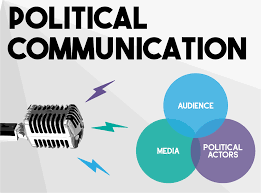
Political communication plays a crucial role in shaping public opinion, influencing political decisions, and ensuring democratic engagement. It refers to the way politicians, governments, and political organizations communicate with the public, the media, and each other. In today’s fast-paced digital world, political communication has evolved significantly, adapting to new technologies, social media platforms, and the changing dynamics of global politics. Understanding political communication is essential for grasping how modern political systems operate and how politicians can effectively convey their message.
The Evolution of Political Communication
In the past, political communication was primarily one-way, with leaders delivering speeches, and the media serving as the intermediary. Television, radio, and print media were the dominant channels for political messaging. However, with the rise of the internet and social media, political communication has become more interactive. Social media platforms like Twitter, Facebook, and Instagram allow politicians to directly reach their audience, bypassing traditional media gatekeepers.
This shift has created new opportunities for politicians to engage with voters, mobilize support, and influence public opinion in real time. Social media also enables more personalized communication, allowing politicians to address specific issues that matter to different demographic groups.
The Role of Political Communication in Campaigns
Political campaigns rely heavily on effective communication to connect with voters, raise awareness about key issues, and build trust. Messaging strategies are designed to resonate with the electorate’s values, concerns, and aspirations. From televised debates to social media posts, political communication takes many forms.
During elections, political parties and candidates often use targeted communication strategies to appeal to different voter segments. Data analytics, including voter profiling and micro-targeting, have become powerful tools for tailoring messages to specific groups based on their preferences and behavior. These techniques help campaigns craft persuasive messages that motivate voters to turn out at the polls.
The Impact of Media on Political Communication
The media has always been a powerful force in political communication. Journalists and news organizations play an essential role in shaping how political events are framed and discussed. In many cases, the media acts as a mediator between political leaders and the public, providing commentary, analysis, and context to political messages.
In recent years, the rise of "fake news" and misinformation has posed significant challenges to political communication. With the proliferation of unverified information, fact-checking and transparency have become critical components of responsible political communication. Politicians and governments must work closely with the media to ensure that the public is accurately informed about key issues.
The Power of Political Communication in Shaping Public Opinion
Effective political communication can significantly impact public opinion. The messages politicians convey through speeches, advertisements, and media appearances can shape how the public views candidates, policies, and political events. Positive communication strategies can build trust, increase approval ratings, and rally supporters, while negative communication (such as attacks on opponents) can influence voters' perceptions.
Public opinion is dynamic and can shift rapidly, especially in the digital age. Political communication must be adaptable and responsive to changing circumstances. The immediacy of social media means that politicians must be quick to address emerging issues, correct misinformation, and respond to public concerns.
Journal Metrics
Metrics can change by reporting year. Verify time-sensitive values with the publisher or indexing service.
Aims & Scope
Political communication is a critical aspect of modern democracy, influencing how political messages are conveyed, received, and interpreted by the public. With the rise of digital media, the scope of political communication has expanded, playing a pivotal role in shaping public opinion, electoral outcomes, and policy debates. In this article, we will explore the diverse scope of political communication, its key components, and its significance in the contemporary political landscape.
What is Political Communication?
Political communication refers to the processes through which information, ideas, and messages related to politics are exchanged between politicians, media outlets, citizens, and institutions. It includes both verbal and non-verbal forms of communication, such as speeches, debates, social media posts, news articles, and advertisements. Political communication serves as a bridge between policymakers and the public, allowing individuals to engage with political issues, form opinions, and participate in the democratic process.
The Expanding Scope of Political Communication
-
Traditional Media: Historically, political communication was dominated by traditional media platforms such as television, radio, and newspapers. Politicians used these mediums to reach a wide audience, delivering speeches, interviews, and campaign advertisements. Despite the rise of digital platforms, traditional media continues to play a vital role in political communication, especially in reaching older demographics.
-
Social Media: The advent of social media has revolutionized political communication. Platforms like Facebook, Twitter, Instagram, and TikTok have provided politicians with direct channels to communicate with voters. Social media enables real-time interaction, allowing politicians to share updates, engage with followers, and mobilize supporters. It also gives citizens a platform to voice their opinions, debate political issues, and influence public discourse.
-
Political Campaigns: Political communication is central to modern election campaigns. Candidates and political parties use a variety of strategies to communicate their messages to the electorate. From televised debates to targeted digital ads, political campaigns rely heavily on communication strategies to persuade voters and build political momentum. The scope of political communication in campaigns extends to political rallies, press releases, and even political memes, all designed to influence public perception.
-
Public Opinion and Polling: Political communication is also crucial for understanding public opinion. Polling and surveys help gauge the electorate’s views on various political issues, while political communication plays a role in shaping those opinions. Through media coverage, debates, and interviews, political figures and parties can influence how issues are perceived by the public, affecting everything from policy decisions to election outcomes.
-
Political Discourse and Activism: Political communication is not only about conveying messages but also about fostering discourse and activism. Social movements, protest campaigns, and advocacy groups use political communication to raise awareness about issues, mobilize support, and demand change. The scope of political communication extends beyond political elites to encompass grassroots movements, giving marginalized groups a voice in the public sphere.
-
Global Impact: In today's interconnected world, political communication has a global reach. Politicians and governments communicate with international audiences, influencing diplomatic relations and global policy decisions. Social media platforms have allowed political issues to transcend borders, enabling citizens around the world to engage in global political conversations, often in real time.
Recent Research Articles
Latest publications matched automatically by ISSN.
Democratic Accountability in East Asia: A Comparative Experimental Study of Voter Responses to Norm Violations
Woo Chang Kang, Sunkyoung Park, Osbern Huang, Koh Iwabuchi et al.
2026-08-31 · DOI: 10.1080/10584609.2026.2721665From #StayWoke to “Culture Wars”: How Social Justice Discourse is Separately and Synergistically Politicized on Twitter and YouTube
Sara Holland Levin, Rui Wang, Junwan Seo, Yi Yin Leong et al.
2026-08-31 · DOI: 10.1080/10584609.2026.2717428Social Media Savvy? The Use and Effectiveness of Political Parties’ Issue Strategies Across Platforms in the German Federal Election Campaign 2025
Christoph Ivanusch, Simon M. Luebke, Anna-Katharina Wurst, Jörg Haßler et al.
2026-08-26 · DOI: 10.1080/10584609.2026.2715702Hold That Thought: Enhancing the Durability of Fact-Checking Effects Through Low-Cost Accuracy Reminders
Je Hoon Chae, Tim Groeling, Hyunjin (Jin) Song
2026-08-21 · DOI: 10.1080/10584609.2026.2716761Rethinking Assumptions About Moral Content Selection: Moral-Emotional Content May Be Less Appealing Than Assumed
Isabella Rebasso, Yanna Krupnikov
2026-08-21 · DOI: 10.1080/10584609.2026.2715701Assessing Civic Journalism Training: A Mixed-Method Applied Research Study
Joshua P. Darr, Sue Robinson
2026-08-18 · DOI: 10.1080/10584609.2026.2715698Enemies Abroad, Animosity at Home: Media Influence on U.S.-China Policy and Anti-Asian Sentiment
Siyu Liang
2026-08-16 · DOI: 10.1080/10584609.2026.2714816Reclaiming Place Through Symbolic Geographies: Visual Resistance on Palestinian Instagram
Insyirah Mujtahid, Nurul Huda Rashid, Kokil Jaidka
2026-08-16 · DOI: 10.1080/10584609.2026.2715694Entertainment as Trojan Horse: Voluntary Consumption of Propaganda in China
Hanzhang Liu, Linan Yao
2026-08-13 · DOI: 10.1080/10584609.2026.2701201Affective Legitimacy and Digital Populism: Evidence from Romania’s Annulled Presidential Elections
Antonio Amuza, Vasile Dîncu
2026-08-13 · DOI: 10.1080/10584609.2026.2714818Kamala is Brat: TikTok and the Affective Politics of Memes
Laura Cervi, Sarah J. Jackson
2026-08-12 · DOI: 10.1080/10584609.2026.2715697Policing the Political Boundary: How the r/BarstoolSports Audience Confronts Politicization
Elliott Edsall
2026-08-12 · DOI: 10.1080/10584609.2026.2715700Trending Topics, Growing Knowledge? How Curating Actors’ Political Social Media Content Affects Youth’s Political Knowledge
Margot Lissens, Cato Waeterloos, Laura Vandenbosch, Desirée Schmuck et al.
2026-08-10 · DOI: 10.1080/10584609.2026.2708127Examining the Influence of Media Coverage on Information-Seeking of Judicial Candidates
Marcy Shieh
2026-08-10 · DOI: 10.1080/10584609.2026.2716378The Knowledge Gap in a High-Choice Media Environment: Experimental Evidence from Online Search
Roberto Ulloa, Leonard Tiedemann, Peter Selb, Celina Kacperski et al.
2026-08-06 · DOI: 10.1080/10584609.2026.2708131Happiness in Political Communication by Men and Women Members of the US Congress
Constantine Boussalis, Travis G. Coan, Mirya R. Holman
2026-07-29 · DOI: 10.1080/10584609.2026.2705676Networked Counterpublics and Contentious Publicity: A Cross-Platform Analysis of QAnon on Parler and Twitter
Sang Jung Kim, Jordan Foley, Yunkang Yang, Keyeun Lee et al.
2026-07-27 · DOI: 10.1080/10584609.2026.2708132Common Identities and Political Talk: Evaluating Cross-Cutting Political Discussions in Sports Communities on Reddit
Ashwin Rajadesingan
2026-07-23 · DOI: 10.1080/10584609.2026.2704899Studying Propaganda as a Social Process
Christian Baden, Anna Litvinenko, Gregory Asmolov
2026-07-22 · DOI: 10.1080/10584609.2026.2706643Affective Publics in the YouTube Live Chat: Multimodal Emotional Contagion During the 2024 U.S. Presidential Debate
Sungwon Jung, Zhi Lin, Joseph M Stepniewski, Jennifer Castillo Cortes et al.
2026-07-22 · DOI: 10.1080/10584609.2026.2704891Reviews
Community Reviews
Version History
April 23, 2025 at 9:25 am
April 23, 2025