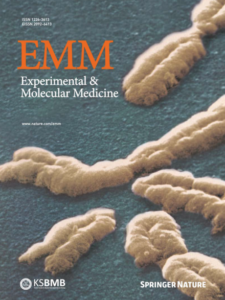
Academic Journal
Q1Experimental and Molecular Medicine
About Experimental and Molecular Medicine
Experimental and Molecular Medicine is a scholarly journal published by Springer Nature. SCImago 2025 places it in Q1 with an SJR of 5.123 and an H-index of 154.
Its listed coverage is 1996-2026 and its research categories include Biochemistry (Q1); Clinical Biochemistry (Q1); Medicine (miscellaneous) (Q1); Molecular Biology (Q1); Molecular Medicine (Q1). The 2025 dataset reports 231 documents and 10249 citations across the latest three-year reporting window.
Experimental and Molecular Medicine is a cutting-edge field of biomedical science that focuses on understanding diseases at the molecular and cellular level. This discipline combines experimental research techniques with molecular biology to explore the underlying mechanisms of various health conditions. As the demand for personalized medicine and targeted therapies grows, Experimental and Molecular Medicine is playing a pivotal role in transforming healthcare.
What is Experimental and Molecular Medicine?
Experimental and Molecular Medicine (EMM) involves studying how genes, proteins, and other molecules interact within cells to affect health and disease. Researchers in this field use advanced tools such as gene editing, CRISPR, molecular imaging, and high-throughput sequencing to analyze cellular processes and identify potential drug targets.
This field bridges the gap between basic laboratory research and clinical applications, often referred to as "bench-to-bedside" science. By understanding disease mechanisms at a molecular level, scientists can develop more precise diagnostics, treatments, and preventive measures.
Key Areas of Focus
-
Cancer Research: One of the primary applications of EMM is in oncology. Scientists study mutations, oncogenes, and tumor suppressor genes to develop targeted cancer therapies.
-
Genetic Disorders: By decoding the human genome, EMM helps identify genetic mutations responsible for inherited diseases and explores gene therapy as a potential cure.
-
Stem Cell Research: This field contributes to regenerative medicine by using stem cells to repair or replace damaged tissues and organs.
-
Immunology: Molecular insights into immune responses are critical for developing vaccines, immunotherapies, and treatments for autoimmune diseases.
-
Neurological Diseases: Research in neurogenetics and molecular neuroscience is essential for understanding Alzheimer’s, Parkinson’s, and other neurodegenerative conditions.
Importance in Modern Medicine
Experimental and Molecular Medicine is the foundation of personalized medicine, where treatment is tailored to an individual's genetic profile. This leads to more effective outcomes, fewer side effects, and improved patient care. Moreover, it accelerates drug development by identifying biomarkers that can predict treatment response.
Emerging Technologies in EMM
With the integration of artificial intelligence, machine learning, and bioinformatics, EMM is becoming more efficient and data-driven. These technologies help analyze large datasets from genomic studies, leading to faster and more accurate discoveries.
CRISPR gene editing, single-cell RNA sequencing, and organ-on-a-chip technologies are revolutionizing the way scientists study human diseases, offering hope for previously untreatable conditions.
Journal Metrics
Metrics can change by reporting year. Verify time-sensitive values with the publisher or indexing service.
Aims & Scope
Experimental and Molecular Medicine (EMM) is a rapidly evolving field that stands at the intersection of fundamental biology and clinical applications. It seeks to uncover the molecular and cellular mechanisms underlying health and disease, paving the way for innovative diagnostic, therapeutic, and preventive strategies. The scope of experimental and molecular medicine is vast and multidisciplinary, encompassing molecular biology, genetics, immunology, pharmacology, and systems biology.
What Is Experimental and Molecular Medicine?
Experimental and Molecular Medicine is a research domain that focuses on understanding biological processes at the molecular level. Using advanced tools like gene editing, CRISPR, high-throughput sequencing, proteomics, and single-cell analysis, researchers investigate how genes and proteins interact in normal and diseased states.
This knowledge is then translated into clinical applications. For example, insights into cancer signaling pathways have led to the development of targeted therapies and personalized medicine approaches. Similarly, understanding immune system dysfunctions has helped design immunotherapies and vaccines for diseases like cancer, HIV, and COVID-19.
Key Areas of Focus
The field of experimental and molecular medicine includes several key research areas:
-
Cancer Biology: Studying oncogenes, tumor suppressor genes, and the tumor microenvironment to develop novel cancer treatments.
-
Genomics and Epigenetics: Investigating how genetic mutations and epigenetic modifications affect gene expression and contribute to diseases.
-
Stem Cell Research: Using stem cells for tissue regeneration and exploring their therapeutic potential in degenerative diseases.
-
Immunology and Infectious Diseases: Understanding host-pathogen interactions and immune responses to develop vaccines and immunotherapies.
-
Neurobiology: Exploring molecular pathways in neurological disorders such as Alzheimer’s, Parkinson’s, and depression.
-
Molecular Pharmacology: Identifying drug targets and developing new medications based on molecular pathways.
Translational Medicine and Personalized Healthcare
One of the most significant aspects of experimental and molecular medicine is its role in translational medicine. By connecting laboratory discoveries to clinical applications, this field is crucial for developing personalized healthcare solutions. With the rise of precision medicine, treatments are now being tailored to individuals based on their genetic profile, lifestyle, and environment.
Why It Matters
The importance of experimental and molecular medicine cannot be overstated. It has revolutionized our understanding of disease mechanisms and changed the way medicine is practiced. From identifying biomarkers for early diagnosis to creating gene therapies for previously untreatable conditions, the impact is both profound and far-reaching.
Recent Research Articles
Latest publications matched automatically by ISSN.
The m6A reader IGF2BP3 promotes acute myeloid leukemia progression by enhancing RCC2 stability
Nan Zhang, Yan Shen, Huan Li, Ying Chen et al.
2022-02 · DOI: 10.1038/s12276-022-00735-xCytosolic escape of mitochondrial DNA triggers cGAS-STING-NLRP3 axis-dependent nucleus pulposus cell pyroptosis
Weifeng Zhang, Gaocai Li, Rongjin Luo, Jie Lei et al.
2022-02 · DOI: 10.1038/s12276-022-00729-9Lipidome profile predictive of disease evolution and activity in rheumatoid arthritis
Jung Hee Koh, Sang Jun Yoon, Mina Kim, Seonghun Cho et al.
2022-02 · DOI: 10.1038/s12276-022-00725-zReduced expression of TAZ inhibits primary cilium formation in renal glomeruli
Jae Hee Jun, Eun Ji Lee, Minah Park, Je Yeong Ko et al.
2022-02 · DOI: 10.1038/s12276-022-00730-2Senescence and impaired DNA damage responses in alpha-synucleinopathy models
Ye-Seul Yoon, Jueng Soo You, Tae-Kyung Kim, Woo Jung Ahn et al.
2022-02 · DOI: 10.1038/s12276-022-00727-xThe mechanism of HMGB1 secretion and release
Ruochan Chen, Rui Kang, Daolin Tang
2022-02 · DOI: 10.1038/s12276-022-00736-wFecal microbiota transplantation ameliorates atherosclerosis in mice with C1q/TNF-related protein 9 genetic deficiency
Eun Sil Kim, Bo Hyun Yoon, Seung Min Lee, Min Choi et al.
2022-02 · DOI: 10.1038/s12276-022-00728-wHypermethylation of PDX1, EN2, and MSX1 predicts the prognosis of colorectal cancer
Yeongun Lee, So Hee Dho, Jiyeon Lee, Ji-Hyun Hwang et al.
2022-02 · DOI: 10.1038/s12276-022-00731-1TRIM45 causes neuronal damage by aggravating microglia-mediated neuroinflammation upon cerebral ischemia and reperfusion injury
Qian Xia, Gaofeng Zhan, Meng Mao, Yin Zhao et al.
2022-02 · DOI: 10.1038/s12276-022-00734-yFBXW7-mediated ERK3 degradation regulates the proliferation of lung cancer cells
Hyun-Jung An, Cheol-Jung Lee, Ga-Eun Lee, Youngwon Choi et al.
2022-01 · DOI: 10.1038/s12276-021-00721-9The importance of enhancer methylation for epigenetic regulation of tumorigenesis in squamous lung cancer
Jae-Won Cho, Hyo Sup Shim, Chang Young Lee, Seong Yong Park et al.
2022-01 · DOI: 10.1038/s12276-021-00718-4Oncogenic E3 ubiquitin ligase NEDD4 binds to KLF8 and regulates the microRNA-132/NRF2 axis in bladder cancer
Minghuan Mao, Liang Yang, Jingyao Hu, Bing Liu et al.
2022-01 · DOI: 10.1038/s12276-021-00663-2SENP2 regulates mitochondrial function and insulin secretion in pancreatic β cells
Jinyan Nan, Ji Seon Lee, Joon Ho Moon, Seung-Ah Lee et al.
2022-01 · DOI: 10.1038/s12276-021-00723-7Application of QPLEXTM biomarkers in cognitively normal individuals across a broad age range and diverse regions with cerebral amyloid deposition
Dongjoon Lee, Jong-Chan Park, Keum Sim Jung, Jiyeong Kim et al.
2022-01 · DOI: 10.1038/s12276-021-00719-3CU06-1004 enhances vascular integrity and improves cardiac remodeling by suppressing edema and inflammation in myocardial ischemia–reperfusion injury
Haiying Zhang, Hyeok Kim, Bong Woo Park, Minyoung Noh et al.
2022-01 · DOI: 10.1038/s12276-021-00720-wImmunomodulatory functional foods and their molecular mechanisms
Jae Hwan Kim, Da Hyun Kim, Seongin Jo, Min Je Cho et al.
2022-01 · DOI: 10.1038/s12276-022-00724-0Tie1 contributes to the development of ovarian hyperstimulation syndrome under the regulation of EGR1 in granulosa cells
Lihua Sun, Hui Tian, Songguo Xue, Hongjuan Ye et al.
2022-01 · DOI: 10.1038/s12276-021-00722-8The impact of fine particulate matter (PM) on various beneficial functions of human endometrial stem cells through its key regulator SERPINB2
Se-Ra Park, Joong Won Lee, Seong-Kwan Kim, Wook-Joon Yu et al.
2021-12 · DOI: 10.1038/s12276-021-00713-9Single-cell analysis of salt-induced hypertensive mouse aortae reveals cellular heterogeneity and state changes
Ka Zhang, Hao Kan, Aiqin Mao, Li Geng et al.
2021-12 · DOI: 10.1038/s12276-021-00704-wRegulation of common neurological disorders by gut microbial metabolites
Jeongho Park, Chang H. Kim
2021-12 · DOI: 10.1038/s12276-021-00703-xReviews
Community Reviews
Version History
April 21, 2025 at 7:31 am
April 21, 2025