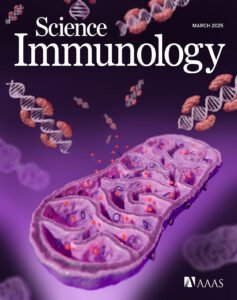
Academic Journal
Q1Science immunology
About Science immunology
Science immunology is a scholarly journal published by American Association for the Advancement of Science. SCImago 2025 places it in Q1 with an SJR of 8.56 and an H-index of 136.
Its listed coverage is 2016-2026 and its research categories include Immunology (Q1); Immunology and Allergy (Q1). The 2025 dataset reports 150 documents and 6878 citations across the latest three-year reporting window.
Science Immunology is a rapidly growing field that plays a critical role in understanding how our bodies fight off infections, diseases, and even cancer. As the cornerstone of medical research and disease prevention, immunology explores the complex mechanisms of the immune system—our body's natural defense against harmful pathogens. From vaccine development to autoimmune disease treatment, science immunology continues to make groundbreaking advancements that shape the future of healthcare.
What Is Immunology?
Immunology is the branch of biomedical science that studies the immune system, a network of cells, tissues, and organs working together to protect the body from foreign invaders like bacteria, viruses, and parasites. This field encompasses both innate immunity (the body's immediate response to pathogens) and adaptive immunity (a more targeted and long-term response developed over time).
Science immunology dives deep into how immune responses are triggered, how immune cells communicate, and how they recognize and neutralize threats. It also investigates what happens when the immune system malfunctions, leading to allergies, autoimmune disorders, or immunodeficiency diseases.
The Importance of Immunology in Modern Medicine
In recent years, science immunology has become more critical than ever. The COVID-19 pandemic highlighted the importance of immune research, especially in the development of effective vaccines and treatments. By understanding how our immune system responds to viruses, scientists were able to create life-saving vaccines in record time.
Moreover, immunology plays a central role in cancer research through immunotherapy, a treatment that helps the immune system recognize and destroy cancer cells. This approach has shown promising results in treating various types of cancer, including melanoma and lung cancer.
Immunological research also supports the development of therapies for autoimmune diseases like lupus, rheumatoid arthritis, and multiple sclerosis, where the immune system mistakenly attacks healthy tissues.
Key Areas of Research in Science Immunology
-
Vaccine Development – Creating effective vaccines for infectious diseases such as influenza, COVID-19, and HPV.
-
Cancer Immunotherapy – Enhancing the immune system’s ability to target and eliminate cancer cells.
-
Autoimmune Diseases – Studying the causes and treatments of conditions where the immune system turns against the body.
-
Allergy Research – Understanding hypersensitive immune responses to common allergens.
-
Transplant Immunology – Preventing organ rejection and improving transplant success rates.
The Future of Science Immunology
With advances in genetic engineering, artificial intelligence, and biotechnology, the future of science immunology looks incredibly promising. Researchers are working on personalized immunotherapies, precision vaccines, and better diagnostic tools that can detect immune disorders at earlier stages.
As our understanding of the immune system continues to grow, so does the potential to treat and prevent some of the world’s most challenging health conditions. Science immunology is not only helping us live longer but also improving the quality of life by offering more targeted, effective, and sustainable healthcare solutions.
Journal Metrics
Metrics can change by reporting year. Verify time-sensitive values with the publisher or indexing service.
Aims & Scope
Immunology is a rapidly evolving field of science that explores the intricate defense system of the human body. As the world continues to battle infectious diseases, autoimmune disorders, and emerging global health threats, the scope of immunology has expanded significantly. From vaccine development to cancer immunotherapy, the science of immunology plays a crucial role in advancing medical research, diagnostics, and treatment strategies.
Understanding Immunology
Immunology is the study of the immune system—the body's natural defense against pathogens such as bacteria, viruses, fungi, and parasites. This complex network involves cells, tissues, and organs that work together to detect and eliminate harmful invaders. The immune system also plays a key role in identifying and destroying abnormal cells, which helps prevent diseases like cancer.
The two main types of immunity—innate immunity (non-specific) and adaptive immunity (specific)—are central to immunological studies. While innate immunity acts as the body’s first line of defense, adaptive immunity offers targeted responses and long-lasting protection through the development of antibodies.
Expanding Horizons in Immunology
The scope of immunology has broadened with advancements in molecular biology, genetics, and biotechnology. Here are some areas where immunology is making significant strides:
1. Vaccine Development
Vaccinology is one of the most prominent branches of immunology. From the eradication of smallpox to the development of mRNA vaccines for COVID-19, immunologists play a key role in creating vaccines that save millions of lives. Ongoing research aims to develop vaccines for diseases like HIV, malaria, and even certain types of cancer.
2. Autoimmune Disorders
Autoimmune diseases, such as lupus, rheumatoid arthritis, and type 1 diabetes, occur when the immune system mistakenly attacks the body’s own tissues. Immunology helps in understanding the triggers and mechanisms behind these disorders, leading to more accurate diagnoses and effective treatments.
3. Allergy and Hypersensitivity
Allergies affect millions globally and result from an overreaction of the immune system to harmless substances. Immunological research aims to uncover the causes of allergic reactions and develop therapies to desensitize the immune response.
4. Immunotherapy
Cancer immunotherapy is a groundbreaking approach that utilizes the immune system to target and destroy cancer cells. Treatments such as immune checkpoint inhibitors, CAR-T cell therapy, and monoclonal antibodies are transforming cancer care with improved survival rates and fewer side effects.
5. Transplant Immunology
Understanding how the immune system responds to organ transplants is essential for preventing rejection. Immunologists work on developing better immunosuppressive therapies to increase transplant success rates.
Career and Research Opportunities
With the ever-growing need for disease prevention and health innovation, careers in immunology are in high demand. Opportunities span across academia, pharmaceutical companies, research institutions, and public health organizations. Fields such as immunogenetics, computational immunology, and systems biology are expanding the boundaries of what immunologists can achieve.
Recent Research Articles
Latest publications matched automatically by ISSN.
Positive selection of IgG over IgM plasma cells through BCR isotype–specific antigen presentation and signaling
Yuki Tai, Takuya Koike, Hiromi Yamamoto, Kyoko Shida et al.
2026-09-04 · DOI: 10.1126/sciimmunol.aee8841Tissue mitochondrial activity dictates the macrophage pool size
Laura Pena-Couso, Jon Sicilia, Sofía Vieto, Roberto Silva-Rojas et al.
2026-09-04 · DOI: 10.1126/sciimmunol.aeb9244Old dog with new tricks: SARS-CoV-2 variant–specific B cells complement imprinted memory
Lauren B. Rodda
2026-09-04 · DOI: 10.1126/sciimmunol.ael7920The many roads to B cell memory
Oluwagbemiga A. Ojo, Stephanie C. Eisenbarth
2026-09-04 · DOI: 10.1126/sciimmunol.ael7921Adaptive motility enables neutrophils to rapidly navigate confined capillaries
Mathieu Deygas, Mathilde Bernard, Pierre Nivoit, Henry De Belly et al.
2026-09-04 · DOI: 10.1126/sciimmunol.aea1426Type I IFN–induced IFN-γ instructs monocyte-mediated systemic bacterial protection during type 2 intestinal helminth infection
Kelly Wemyss, Lauren M. Webb, Hayley M. Bridgeman, Ian E. Prise et al.
2026-08-28 · DOI: 10.1126/sciimmunol.aeh4719Platelet-derived serotonin drives age-related lung pathology in SARS-CoV-2 infection
Davide Marotta, Chiara Perucchini, Marta Grillo, Valeria Fumagalli et al.
2026-08-28 · DOI: 10.1126/sciimmunol.aec9853Androgen signaling via sympathetic neurons regulates allergic pulmonary inflammation
Xiaofan Tu, Hongjie Chen, Xiaoran Ma, Chantal Donovan et al.
2026-08-21 · DOI: 10.1126/sciimmunol.aed0186CAR T cell–derived TNF is an early determinant of cytokine release syndrome severity
Pieter L. Lindenbergh, Theodoros Giavridis, Ophélie Vivier, Michael A. Lopez et al.
2026-08-21 · DOI: 10.1126/sciimmunol.aea6276Fusion of IgG antibodies to albumin inhibits transport across the placenta
Jeannette Nilsen, Kine M. K. Sand, Hana J. Al-Khabbaz, Lennart Maximilian van Ligtenberg et al.
2026-08-14 · DOI: 10.1126/sciimmunol.aee5151Regulation of inflammation by oxidized lipids
Marco Di Gioia, Ivan Zanoni
2026-08-14 · DOI: 10.1126/sciimmunol.adv9397A dendritic cell autophagy–neutrophil axis limits intratumoral STING immunotherapy
Adriana Loverre, Bakhos Jneid, Fabien Delisle, Magali Genest et al.
2026-08-14 · DOI: 10.1126/sciimmunol.adw6399Misfirin’ pyrin
Fiachra Humphries
2026-08-07 · DOI: 10.1126/sciimmunol.aei8902An autoinflammatory CDC42 variant M45L demonstrates the mechanism of pyrin inflammasome activation
Shouya Feng, Thomas Reygaerts, Klara Kong, Matthew C. Wierzbowski et al.
2026-08-07 · DOI: 10.1126/sciimmunol.adz8733An N-terminal CDC42 T43I variant reveals the mechanism of pyrin inflammasome activation
Mariko Aoki, Alberto Iannuzzo, Philippe Mertz, Shouya Feng et al.
2026-08-07 · DOI: 10.1126/sciimmunol.aea0515Mist-ical memory: The airway defenses induced by FluMist vaccination in adults
Huzaifa Zohair, Priyadharshini Devarajan
2026-08-07 · DOI: 10.1126/sciimmunol.ael0169PKM2 works “off the books” to drive effector T cell function in MS
Alexia Falle, Manu Rangachari
2026-08-07 · DOI: 10.1126/sciimmunol.ael0168A genotype-first approach reveals the molecular basis of pyrin inflammasome activation
Naoya Iwata, Yoshihiko Kuchitsu, Atsushi Hijikata, Hirofumi Shibata et al.
2026-08-07 · DOI: 10.1126/sciimmunol.aea0705Two differentiation pathways generate large peritoneal macrophages with one replenishing mesothelial border macrophages
Jichang Han, Alexandre Gallerand, Rachel L. Mintz, Jing Chen et al.
2026-07-31 · DOI: 10.1126/sciimmunol.aeg8653Dynamic expression of IL-21 in effector CD8 T cells helps control chronic infections
Zixuan Zhao, Han Feng, Xiaohong Zhao, Bowen Xie et al.
2026-07-31 · DOI: 10.1126/sciimmunol.aec5171Reviews
Community Reviews
Version History
April 13, 2025 at 6:22 am
April 13, 2025