Academic Journal
Q1Autophagy
About Autophagy
Autophagy is a scholarly journal published by Taylor and Francis Ltd.. SCImago 2025 places it in Q1 with an SJR of 4.505 and an H-index of 216.
Its listed coverage is 2005-2026 and its research categories include Cell Biology (Q1); Molecular Biology (Q1). The 2025 dataset reports 274 documents and 10092 citations across the latest three-year reporting window.
What is Autophagy? A Natural Way to Heal and Rejuvenate Your Body
Autophagy is a natural cellular process that plays a crucial role in maintaining overall health and longevity. Derived from the Greek words “auto” (self) and “phagy” (eating), autophagy literally means "self-eating." While that might sound alarming, it’s actually one of your body’s most powerful self-cleaning and repair mechanisms.
How Does Autophagy Work?
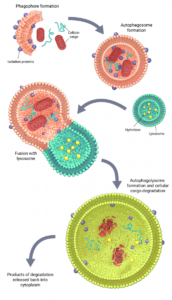
Autophagy is the body's way of cleaning out damaged cells, detoxifying itself, and regenerating newer, healthier cells. During this process, old or dysfunctional components within your cells are broken down and recycled. Think of it as your body’s internal recycling system. This is particularly important for protecting against diseases like cancer, neurodegenerative conditions, and infections.
Benefits of Autophagy
-
Cellular Rejuvenation: By clearing out cellular debris, autophagy helps your body create new, efficient cells.
-
Anti-Aging Effects: Autophagy may slow aging by reducing inflammation, oxidative stress, and DNA damage.
-
Boosted Immunity: It helps destroy pathogens and viruses, supporting immune system performance.
-
Brain Health: Autophagy may reduce the risk of neurodegenerative diseases like Alzheimer’s and Parkinson’s by eliminating harmful protein buildup.
-
Weight Management and Metabolic Health: Autophagy improves insulin sensitivity and helps burn fat, making it a popular topic among those practicing intermittent fasting.
How to Activate Autophagy Naturally
While autophagy occurs at a low level under normal conditions, certain lifestyle changes can stimulate and enhance this process:
1. Intermittent Fasting
Intermittent fasting is one of the most effective ways to activate autophagy. When you fast for 16–24 hours, your insulin levels drop, and the body shifts from using glucose for energy to burning fat and recycling damaged cells. Autophagy typically begins around the 12-hour mark and intensifies the longer you fast.
2. Exercise
Regular physical activity can also induce autophagy, particularly in muscles and the liver. High-intensity interval training (HIIT) and resistance training are especially effective.
3. Low-Carb or Ketogenic Diet
A ketogenic diet mimics the effects of fasting by lowering insulin and glucose levels, thus encouraging autophagy.
4. Sleep and Stress Management
Chronic stress and poor sleep can impair autophagy. Prioritizing rest and mindfulness supports the body’s natural rhythms and repair mechanisms.
Autophagy and Disease Prevention
Research suggests that impaired autophagy is linked to various health conditions, including cancer, cardiovascular disease, type 2 diabetes, and autoimmune disorders. By maintaining a lifestyle that promotes autophagy, you may reduce the risk of these diseases and enhance your quality of life.
Journal Metrics
Metrics can change by reporting year. Verify time-sensitive values with the publisher or indexing service.
Aims & Scope
Scope of Autophagy: Unlocking the Body’s Natural Detox Power
Autophagy, derived from the Greek words “auto” (self) and “phagy” (eating), literally means “self-eating.” This natural cellular process plays a critical role in maintaining health by breaking down and recycling damaged cell components. In recent years, autophagy has gained attention for its potential in anti-aging, disease prevention, and overall wellness. But what is the real scope of autophagy, and why is it considered such a game-changer in health science?
Understanding the Basics of Autophagy
Autophagy is the body’s way of cleaning out damaged cells, including misfolded proteins and dysfunctional mitochondria. It’s like a cellular housekeeping system that ensures cells function optimally. This process is especially active during fasting, intense exercise, and times of cellular stress, allowing the body to regenerate healthier cells and tissues.
Autophagy and Longevity
One of the most exciting areas of research is the link between autophagy and longevity. Studies in animals have shown that enhanced autophagy can extend lifespan by reducing oxidative stress and improving cellular repair mechanisms. By clearing out cellular debris, autophagy contributes to healthier aging and may protect against age-related diseases like Alzheimer’s and Parkinson’s.
Role in Disease Prevention
The scope of autophagy extends well beyond anti-aging. It plays a crucial role in preventing chronic illnesses. In cancer, for instance, autophagy can suppress tumor formation by removing damaged cells that could otherwise mutate. Conversely, in advanced cancer stages, tumors might hijack autophagy to survive – highlighting the need for precise medical interventions.
In metabolic disorders like type 2 diabetes and obesity, impaired autophagy contributes to insulin resistance and inflammation. Boosting autophagy through lifestyle interventions like intermittent fasting or ketogenic diets has shown promise in reversing these conditions.
Boosting Autophagy Naturally
While there are drugs and compounds under research for inducing autophagy (like spermidine or rapamycin), lifestyle strategies are the most accessible ways to activate it. These include:
-
Intermittent fasting: Time-restricted eating encourages the body to enter a state where autophagy is naturally activated.
-
Regular exercise: Physical activity enhances autophagic processes, especially in muscles and brain cells.
-
Nutritional choices: Diets low in sugar and refined carbs, and rich in antioxidants, support autophagic balance.
The Future of Autophagy in Medicine
As research evolves, the scope of autophagy is expanding into therapeutic areas like neurodegenerative diseases, cancer therapies, immune regulation, and even skin health. Scientists are exploring how modulating autophagy could enhance treatments or act as a preventive tool across a wide range of conditions.
Recent Research Articles
Latest publications matched automatically by ISSN.
Spatiotemporal control of Atg9 vesicle fusion in autophagosome formation
Takumi Kimura, Tetsuya Kotani, Hitoshi Nakatogawa
2026-09-09 · DOI: 10.1080/15548627.2026.2730073α-ketoglutarate ameliorates spinal motor neuron ferroptosis after sacral plexus transection via enhancing PINK1 O‑GlcNAcylation and mitophagy
Hui Han, Sheng Wang, Jiajia Lu, Jing Li et al.
2026-09-08 · DOI: 10.1080/15548627.2026.2730071Augmenting intracellular amino acid pools suppresses the phenotypes of autophagy-deficient cells
Rubén Barrios, Rebeca Gracia-Domingo, Cristina Corral-Ramos, Élida Alechaga et al.
2026-09-07 · DOI: 10.1080/15548627.2026.2719430A new agent in the matrix: PINK1’s expanded role in mitochondrial surveillance and regulation
Ian Collinson, Robin A. Corey, Adam G. Grieve
2026-09-04 · DOI: 10.1080/15548627.2026.2726091Heat shock-induced autophagy has cargo selectivity in Saccharomyces cerevisiae
Dimitra Dialynaki, Yuxiang Huang, Daniel J. Klionsky
2026-09-03 · DOI: 10.1080/15548627.2026.2724473Correction
2026-09-02 · DOI: 10.1080/15548627.2026.2728210RAB1 mediates OPTN-dependent mitophagy via ATG9A recruitment
Waka Kojima, Ryu Endo, Kei Okatsu, Hiroki Kinefuchi et al.
2026-09-01 · DOI: 10.1080/15548627.2026.2728346AKAP11 links autophagy to cognitive impairment in psychiatric diseases
Yuxuan Kan, Zhenyu Yue, Min Li, Zhiqiang Deng et al.
2026-09-01 · DOI: 10.1080/15548627.2026.2709295AI-augmented discovery of autophagy regulators through mechanistic interpretation of multiomics data
Dachao Tang, Weiduo Xia, Chi Zhang, Yu Xue et al.
2026-08-31 · DOI: 10.1080/15548627.2026.2719421Non-cell autonomous control of presynaptic remodeling by the hypothalamic autophagy-NPY axis
Giovanna Cazzolla, David Toppe, Gina Krause, Gaga Kochlamazashvili et al.
2026-08-30 · DOI: 10.1080/15548627.2026.2719429Thyroid hormone promotes lipid droplet remodeling and lipophagy through KAT2B/PCAF-dependent histone acetylation in preimplantation embryos
Song-Hee Lee, Cheng-Lin Zhan, Xiang-Shun Cui
2026-08-30 · DOI: 10.1080/15548627.2026.2726121Autophagic degradation of RAB8A promotes ferroptosis through dysregulation of TFRC-mediated iron uptake
Jingbo Li, Qile Zhou, Jiao Liu, Xin Chen et al.
2026-08-30 · DOI: 10.1080/15548627.2026.2726089Loss of BECN1 does not compromise autophagosome formation but alters cargo selection and HLA-restricted antigen presentation of B cells
Svenja L. Walter, Felix Baur Lermer, Sophie Buchser, Sibilla Sander et al.
2026-08-26 · DOI: 10.1080/15548627.2026.2719432Sequalae and reversal of age-dependent alterations in mitochondrial dynamics via autophagy enhancement in reprogrammed human neurons
Eva Klinman, Ji-Sun Kwon, Roland E. Dolle, Stephen C. Pak et al.
2026-08-23 · DOI: 10.1080/15548627.2026.2719435Connecting the dots: a centrosome-associated RAC1 signaling network links centrosome amplification with autophagy
Paula A. Coelho, David M. Glover
2026-08-23 · DOI: 10.1080/15548627.2026.2719427Dealing with membrane stress through CASM
Håvard Styrkestad Haukaas, Sven R. Carlsson, Alf Håkon Lystad
2026-08-21 · DOI: 10.1080/15548627.2026.2717033You can’t say you didn’t get fair warning
Daniel J. Klionsky, Nicholas Ktistakis
2026-09-02 · DOI: 10.1080/15548627.2026.2692832Inhibiting PIK3C3/VPS34 enhances anti-GD2 immunotherapy in neuroblastoma
Jiawen Zhang, Xiaoming Liu, Longgui Chen, Todd D. Schell et al.
2026-08-20 · DOI: 10.1080/15548627.2026.2717948Inhibiting Wnt/β-catenin-mTOR signaling enhances autophagy and porphyrin clearance in murine porphyrias with hepatic involvement
Oluwashanu Balogun, Pamela Cornuet, Elizabeth Lee, Garima Patel et al.
2026-08-19 · DOI: 10.1080/15548627.2026.2716960Transcriptome-based macroautophagy and chaperone-mediated autophagy states reveal context-dependent vulnerabilities across human cancers
Jiling Feng, Yu Zeng, Hao Wu, Yuanlong Feng et al.
2026-08-19 · DOI: 10.1080/15548627.2026.2717949Reviews
Community Reviews
Version History
April 20, 2025 at 2:06 pm
April 20, 2025