Academic Journal
Q1Bioactive Materials
About Bioactive Materials
Bioactive Materials is a scholarly journal published by KeAi Communications Co.. SCImago 2025 places it in Q1 with an SJR of 4.047 and an H-index of 150.
Its listed coverage is 2016-2026 and its research categories include Biomaterials (Q1); Biomedical Engineering (Q1); Biotechnology (Q1). The 2025 dataset reports 478 documents and 28974 citations across the latest three-year reporting window.
Bioactive materials have emerged as a groundbreaking innovation in the field of healthcare and material science. These materials possess unique properties that allow them to interact biologically with tissues, making them essential in a wide range of applications, particularly in medical devices, tissue engineering, and regenerative medicine. In this article, we explore the significance of bioactive materials, their types, and their transformative role in modern medicine.
What Are Bioactive Materials?
Bioactive materials are substances that elicit a biological response when they come into contact with living tissue. Unlike traditional materials, bioactive materials are designed to stimulate healing processes, promote tissue regeneration, and integrate with biological systems. These materials can either be synthetic or natural and are often used in medical devices such as bone implants, prosthetics, and wound healing products.
Types of Bioactive Materials
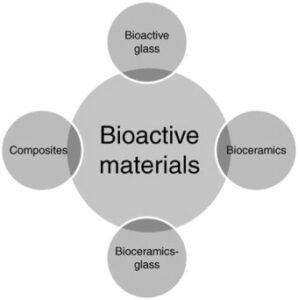
Bioactive materials can be broadly classified into three categories: ceramics, polymers, and composites.
-
Ceramics: Ceramics like hydroxyapatite and bioactive glass are widely used in orthopedic applications due to their similarity to natural bone material. Hydroxyapatite, in particular, has excellent osteoconductivity, promoting bone cell growth and enhancing bone healing. Bioactive glass, on the other hand, can bond directly to bone tissue and facilitate regeneration, making it a key material in bone implants and dental restorations.
-
Polymers: Polymers such as poly lactic acid (PLA) and poly glycolic acid (PGA) are biodegradable materials that can be used in tissue engineering. These materials are particularly beneficial in creating scaffolds for tissue growth, as they degrade over time and are replaced by natural tissue. Polymers can also be modified to incorporate bioactive molecules, further enhancing their effectiveness in healing.
-
Composites: Composites combine the best properties of ceramics and polymers, offering a balance between strength, flexibility, and bioactivity. These materials are used in a variety of biomedical applications, including joint replacements, bone regeneration, and cardiovascular devices. The combination of bioactive ceramics with polymer matrices can enhance the mechanical properties while maintaining biocompatibility.
Applications of Bioactive Materials
The primary applications of bioactive materials span across various medical fields:
-
Bone Regeneration: Bioactive ceramics, particularly hydroxyapatite, are widely used in bone regeneration. These materials promote the growth of new bone tissue and are ideal for use in implants, fractures, and joint replacements. Bioactive glasses have also shown promising results in stimulating bone growth and improving the integration of implants with natural bone tissue.
-
Wound Healing: Bioactive materials are used in wound healing products like dressings and bandages. These materials can accelerate the healing process by stimulating cell growth and reducing inflammation. Bioactive polymers have also been used to create tissue scaffolds for wound closure and skin regeneration.
-
Dental Implants: Bioactive materials, particularly bioactive glass, have found extensive use in dental implants. These materials bond directly to the surrounding bone, improving implant stability and reducing the risk of rejection. They also promote faster healing and tissue regeneration, making them ideal for dental applications.
-
Tissue Engineering: Tissue engineering involves creating artificial tissues that can replace or repair damaged organs. Bioactive materials serve as scaffolds that provide structural support while encouraging the growth of new tissue. These materials are being used to regenerate various tissues, including cartilage, bone, and skin.
Advantages of Bioactive Materials
-
Biocompatibility: Bioactive materials are designed to be compatible with living tissues, reducing the risk of immune rejection and complications.
-
Regenerative Properties: These materials actively promote tissue growth and healing, accelerating the recovery process and improving patient outcomes.
-
Customization: Bioactive materials can be engineered to meet the specific needs of patients, allowing for personalized treatment options.
-
Reduced Risk of Infection: Some bioactive materials possess antimicrobial properties that can reduce the risk of infection in implants and surgical sites.
Journal Metrics
Metrics can change by reporting year. Verify time-sensitive values with the publisher or indexing service.
Aims & Scope
Bioactive materials have emerged as an essential field in materials science, particularly for their unique ability to interact with biological systems in a beneficial manner. These materials have gained significant attention in diverse industries, including healthcare, environmental science, and biotechnology. In this article, we will explore the scope of bioactive materials and their growing importance in modern scientific research and application.
What Are Bioactive Materials?
Bioactive materials are substances that, when applied to biological environments, can influence living organisms in a specific and beneficial way. These materials are designed to interact with the body’s cells, tissues, or organs to promote healing, stimulate regeneration, or modify physiological responses. Unlike conventional materials, bioactive materials have the capability to trigger biological processes, making them invaluable in medical and environmental applications.
Applications of Bioactive Materials
1. Healthcare and Medical Applications The most prominent application of bioactive materials is in the healthcare industry. These materials play a pivotal role in the development of advanced medical devices, including prosthetics, implants, and tissue engineering scaffolds. Bioactive glasses, ceramics, and polymers are frequently used for bone regeneration, wound healing, and drug delivery systems. For example, bioactive glass has been used in orthopedic surgery to promote bone formation, while bioactive hydrogels are utilized for wound care to support tissue regeneration.
In addition, bioactive materials are crucial in the field of dental materials. Bioactive composites are increasingly being used for dental fillings, offering the advantage of releasing ions that enhance the remineralization of tooth enamel, thus improving dental health.
2. Environmental Science Bioactive materials are not only pivotal in medical fields but also have substantial potential in environmental applications. One key area is the development of bioactive coatings that can prevent microbial growth, corrosion, and fouling. These materials can be applied to surfaces such as water filtration systems or marine vessels to reduce contamination and enhance durability.
Furthermore, bioactive materials are being explored for their potential in environmental remediation. Bioactive compounds derived from natural sources are being utilized to remove toxins and pollutants from water bodies and soil, offering eco-friendly solutions to address global environmental challenges.
3. Biotechnology and Agriculture In biotechnology, bioactive materials are used to develop innovative products such as biosensors, bioactive food additives, and agricultural treatments. For example, bioactive compounds in materials can be engineered to detect pathogens or pollutants, offering a rapid and cost-effective means of diagnosis and monitoring.
In agriculture, bioactive materials derived from plants or microorganisms can be used to create eco-friendly pesticides and growth-promoting agents. These materials support sustainable farming practices by minimizing the use of harmful chemicals while enhancing crop productivity.
Advancements and Future Prospects
The scope of bioactive materials is constantly expanding with advancements in nanotechnology and biotechnology. Researchers are developing new materials with enhanced bioactivity, controlled release mechanisms, and tailored properties that can be customized for specific medical or environmental applications.
Future developments may include the creation of bioactive materials that can respond dynamically to changes in the body’s environment, such as changes in pH, temperature, or the presence of specific enzymes. Such innovations could lead to the development of smart medical devices and more effective treatments for a wide range of health conditions.
Recent Research Articles
Latest publications matched automatically by ISSN.
Water-responsive injectable hydrogel achieving rapid in situ gelation and long-term colonic mucoadhesion for efficient fecal microbiota transplantation
Zixin Chen, Yang Li, Wenxuan Xiong, Pengwei Ma et al.
2027-02 · DOI: 10.1016/j.bioactmat.2026.08.036Gas-propelled microneedles for precision transdermal therapeutics
Zhicheng Xiao, Fan Jia, Wentao Wu, Hoiian Ieong et al.
2027-02 · DOI: 10.1016/j.bioactmat.2026.08.059The immune-microbe-metal triad: a vicious cycle driving biomaterial corrosion in the oral inflammatory microenvironment
Haoxuan Wu, Zhiheng Quan, Mingyue Hu, Lin Wu et al.
2027-02 · DOI: 10.1016/j.bioactmat.2026.08.061From pathogenic to reparative: Context-Dependent function of extracellular vesicles in osteoarthritis
Zhen Yang, Qiyuan Lin, Hao Li, Senyang Xiao et al.
2027-02 · DOI: 10.1016/j.bioactmat.2026.09.005Dual metabolic checkpoint blockade via a 3D-Printed metalloplatform remodels the tumor ecosystem for systemic antitumor immunity
Xiaoyan Meng, Zhonglong Liu, Yongqiang Hao, Yingchun Zhu et al.
2027-02 · DOI: 10.1016/j.bioactmat.2026.08.034Hierarchical Nanorocket for spatially coordinated regulation of glycosaminoglycan deposition and metabolism in cartilage
Hang Su, Qiuwen Zhu, Junle Xiang, Qinyuan Wu et al.
2027-02 · DOI: 10.1016/j.bioactmat.2026.08.047Quercetin-derived carbon dots-modified ZIF-8 and M2 macrophage-derived migrasomes-functionalized microenvironment-responsive nanocomposite hydrogel for osteoporotic bone defects regeneration
Han Yin, Yuguo Li, Yanbin Zhu, Zineng Yan et al.
2027-02 · DOI: 10.1016/j.bioactmat.2026.07.029A multifunctional MOF-mineralized conductive hydrogel coating on zinc implants orchestrates neuro-osteogenic coupling for enhanced bone defect repair
Yujia Wei, Dong Mo, Meng Pan, Tingyu Yang et al.
2027-02 · DOI: 10.1016/j.bioactmat.2026.08.050Ultrasound-activated piezoelectric muscle constructs for tissue-engineered regenerative peripheral nerve interfaces
Lorenzo Vannozzi, Juliana Redondo, Diego Trucco, Carlotta Pucci et al.
2027-02 · DOI: 10.1016/j.bioactmat.2026.08.053Organoid Intelligent Morphomics: Decoding the organoid morphome through artificial intelligence from phenotypic quantification to mechanistic insight
Shangyan Li, Jiqing Huang, Yongyong Yan, Richard T. Jaspers et al.
2027-02 · DOI: 10.1016/j.bioactmat.2026.08.043Engineering bioactive citrate-based hydrogels for wound repair: From structure-function design to microenvironmental regulation
Liuyang Zhang, Bo Lei, Hongmou Zhao
2027-02 · DOI: 10.1016/j.bioactmat.2026.08.015PRP-activating hyaluronic acid hydrogels for immune-modulatory osteoarthritis repair
Yiwei Hu, Wenpeng Shan, Xiaotong Peng, Tongling Zhang et al.
2027-02 · DOI: 10.1016/j.bioactmat.2026.08.037An oral coral-like resveratrol nanocomplex protects against dry eye disease through ocular and systemic redox homeostasis
Qingchen Cui, Yaqiong Li, Mengzhen Xie, Ziyu Liu et al.
2027-02 · DOI: 10.1016/j.bioactmat.2026.08.039Barcoded oligonucleotide system (BOLT) for targeted organ delivery
Xucheng Hou, Changyue Yu, Yonger Xue, Yuwei Liu et al.
2027-02 · DOI: 10.1016/j.bioactmat.2026.08.058Harnessing gasotransmitters for orthopaedic infection therapy: Mechanisms and advanced delivery platforms
Jun-Yi Zhang, Yi-Qi Yang, Zhi-Xiong Zhang, Jia-Le Jin et al.
2027-02 · DOI: 10.1016/j.bioactmat.2026.05.047Bioprinted core-shell living material platform for spatially controlled encapsulation of Bacillus subtilis and sustained metabolite exchange
Lin Huang, Kathleen L. Furtado, William Brakewood, Maxwell Neal et al.
2027-02 · DOI: 10.1016/j.bioactmat.2026.08.025Hydrogen releasing biomaterials for bone regeneration: mechanisms, design strategies, and applications
Yanshan Chen, Yuanyuan Yin, Baoyi Huang, Jingqiu Chen et al.
2027-02 · DOI: 10.1016/j.bioactmat.2026.09.002Bioactive glasses-mediated ion therapy ameliorates hepatic osteodystrophy by reprogramming the liver-bone axis
Shuang-Chi Liu, En Xie, Peng Zhao, Yu-Shi Liu et al.
2027-02 · DOI: 10.1016/j.bioactmat.2026.08.028Biomaterials for intervertebral disc regeneration: Niche reprogramming, precision therapeutics, and structural reconstruction
Yu Jiang, Haifeng Li, Wanxue Wang, Qinge Guo et al.
2027-02 · DOI: 10.1016/j.bioactmat.2026.08.019From RNA design to delivery: Computational strategies for functional RNA therapeutics
Yiming Wang, Shengxin Tong, Xin Wang, Xiaowen Jin et al.
2027-02 · DOI: 10.1016/j.bioactmat.2026.08.045Reviews
Community Reviews
Version History
April 22, 2025 at 10:12 am
April 22, 2025