Academic Journal
Q1Brain
About Brain
About Brain
Brain: A Journal of Neurology is a peer-reviewed scientific journal of neurology founded in 1878, making it one of the oldest continuously published neurology journals in the world. It is published by Oxford University Press on behalf of the Guarantors of Brain, the charitable body that owns the title. Oxford Academic's own description of the journal states that it "has published landmark papers in clinical neurology and translational neuroscience since 1878" and that the journal is committed to increasing its scope — from studies that illuminate mechanisms of disease to novel clinical trials for brain disorders. Accepted articles are posted online within a few weeks of acceptance.
For nearly a century and a half, Brain has been where neurology's landmark observations first appeared in print: Wilder Penfield and Edwin Boldrey's 1937 mapping of the motor and sensory homunculus, Norman Geschwind's 1965 synthesis of disconnection syndromes, the Parma group's 1996 report of mirror-neuron-related action recognition in premotor cortex, and the modern diagnostic criteria for behavioral-variant frontotemporal dementia (2011) all appeared in its pages. OpenAlex records 19,601 works and over 1.77 million citations for the journal, with an OpenAlex h-index of 505 (retrieved October 2026). The journal's own about page publishes a full Journal Citation Reports history: the impact factor has exceeded 10.0 every year from 2015 through 2023, peaking at 15.255 in 2021, and the journal has ranked in the top 7 of the Clinical Neurology category in every one of those years.
Brain is a member of the Committee on Publication Ethics (COPE), and its editorial board — spanning neurology, neuroscience, genetics, neuroimaging, and related disciplines across Europe, North America, and beyond — reflects what the journal calls its broad coverage and international readership. The journal is published monthly, with print ISSN 0006-8950 and online ISSN 1460-2156. Oxford Academic also supports the title with supplementary channels: "Editor's Choice" article selections, a journal blog, podcasts, and videos, alongside advance articles posted online within a few weeks of acceptance, so new findings reach the community quickly even before they appear in a monthly issue.
History
Brain was founded in 1878 by four figures who shaped the birth of modern neurology: John Charles Bucknill, David Ferrier, James Crichton-Browne, and John Hughlings Jackson. Ferrier's experimental work on cortical localization and Hughlings Jackson's clinical insights into epilepsy and the hierarchical organization of the nervous system gave the new journal immediate intellectual weight, and the journal's first volumes carried the debates — over localization of function, the nature of aphasia, and the pathology of epilepsy — that defined neurology as a specialty distinct from general medicine and psychiatry.
The editorship passed through many of the great names of twentieth-century neurology. After the founders came Armand de Watteville (1884) and Robert Percy Smith (1901), followed by a line that reads like a history of the discipline itself: Henry Head (1905), Gordon Holmes (1923), Francis Walshe (1938), Russell Brain (1954) — later Lord Brain, author of the standard textbook Brain's Diseases of the Nervous System — Denis Williams (1967), Charles Phillips (1975), Peter Thomas (1982), Ian McDonald (1991), John Newsom-Davis (1997–2004, under whom the journal was among the first scientific journals to move online), Alastair Compston (2004–2013), and Dimitri Kullmann (2014–2021). The current editor-in-chief is Professor Masud Husain of the University of Oxford. (Editor list per the journal's official editorial board page; online-transition note per Wikipedia's history of the journal.)
Across its history the journal has repeatedly published papers that redefined their fields. The 1937 Penfield–Boldrey stimulation studies produced the cortical homunculus still taught to every medical student; Geschwind's 1965 "Disconnexion syndromes in animals and man" revived and systematized the nineteenth-century associationist tradition for the modern era; and in the 1990s and 2000s the journal carried foundational work on the anterior cingulate cortex, the cerebellar cognitive affective syndrome, the precuneus, and the genetics and pathology of Parkinson's disease. In the 2010s and 2020s, Brain has positioned itself at the translational frontier — disease mechanisms, biomarkers, genetics, and clinical trials — while retaining its historic role as a venue for definitive reviews and clinicopathological correlation. That dual identity, pairing deep clinical description with mechanistic explanation, is the thread that connects an 1878 case report on epilepsy to a 2026 trial readout: the journal has always treated the clinic and the laboratory as two ends of the same inquiry.
Scope and Subject Sections
The journal publishes research spanning clinical neurology and translational neuroscience: mechanistic studies of neurological disease, genetics, neuroimaging, neurophysiology, neuropathology, and clinical trials. Oxford Academic organizes the journal's content into the following subject sections, which together map its current scope:
- CNS Injury and Stroke
- Dementia
- Epilepsy and Sleep
- Genetics
- Movement Disorders
- Multiple Sclerosis / Neuroinflammation
- Neuro-oncology
- Neurodegeneration — Cellular & Molecular
- Neuromuscular Disease
- Neuropsychiatry
- Pain and Headache
Alongside original research articles, the journal publishes editorials, scientific commentaries, essays, and reviews — formats visible in every recent issue on Oxford Academic — and maintains "Editor's Choice" selections, blog posts, podcasts, and videos that extend selected articles to a wider audience. OpenAlex topic analysis of the journal's output (October 2026) confirms the clinical emphasis: the largest topics are neurology and historical studies, dementia and cognitive impairment research, neurological disorders and treatments, Alzheimer's disease, Parkinson's disease, epilepsy, and multiple sclerosis.
Editorial Leadership
The editor-in-chief is Professor Masud Husain, Professor of Neurology and Cognitive Neuroscience at the University of Oxford, Professorial Fellow at New College, Oxford, and a Fellow of the Royal Society and the Academy of Medical Sciences. He co-leads the Dementia theme of the NIHR Oxford Health Biomedical Research Centre. After a DPhil and postdoctoral work at MIT, he completed clinical training at Oxford, held posts at Imperial College London and University College London — where he led the Department of Brain Repair and Rehabilitation and was Deputy Director of the Institute of Cognitive Neuroscience — and his current research focuses on the mechanisms underlying motivation and memory in neurodegenerative disorders including Parkinson's disease, Alzheimer's disease, and cerebrovascular small vessel disease.
He is supported by a secretary and treasurer (Dr Emma Tallantyre, Cardiff University), an international advisory board drawn from major neuroscience centers in Europe, North America, and Australia, and a large editorial board of subject specialists whose biographies and specialisms are published on the journal's Oxford Academic pages. The journal's ownership — the Guarantors of Brain — is a charitable trust, and the journal states that its editorial board reflects its broad coverage and international readership.
Publication Details
| Item | Detail |
|---|---|
| Journal title | Brain: A Journal of Neurology |
| Publisher | Oxford University Press, on behalf of the Guarantors of Brain |
| Founded | 1878 (founders: John Charles Bucknill, David Ferrier, James Crichton-Browne, John Hughlings Jackson) |
| Frequency | Monthly |
| Print ISSN | 0006-8950 |
| Online ISSN | 1460-2156 |
| CODEN | BRAIAK |
| Journal homepage | academic.oup.com/brain |
| Publication ethics | Member of the Committee on Publication Ethics (COPE) |
| Access model | Hybrid: subscription journal with open-access options for authors |
| Indexing | MEDLINE, Scopus, Science Citation Index, and others (OpenAlex lists: medline, cwts-core, anvur-class-a, jufo-3, norway-2, and more) |
Brain operates a hybrid open-access model: authors may publish open access for a fee or publish under the subscription model. OpenAlex metadata (sourced from DOAJ) reports a list price of £4,224 (about $5,570 in 2025), but the journal's pages explicitly note that reported list prices are not fee quotations — authors should confirm current charges, taxes, waivers, and eligibility directly with Oxford University Press, as fees change over time.
Key Facts and Metrics
| Metric | Value | Source and year |
|---|---|---|
| Works recorded | 19,601 | OpenAlex source record, retrieved October 2026 |
| Citations recorded | 1,770,137 | OpenAlex source record, retrieved October 2026 |
| OpenAlex h-index | 505 | OpenAlex source record, retrieved October 2026 |
| Two-year mean citedness | 8.78 | OpenAlex source record, retrieved October 2026 |
| Impact factor 2023 | 10.6 (rank 7/277 Clinical Neurology; 14/310 Neurosciences) | Journal Citation Reports via the journal's official Oxford Academic about page (Clarivate, 2024) |
| Impact factor 2022 | 14.5 (5/212; 10/272) | Journal Citation Reports via the journal's official Oxford Academic about page (Clarivate, 2024) |
| Impact factor 2021 | 15.255 (6/212; 12/274) | Journal Citation Reports via the journal's official Oxford Academic about page (Clarivate, 2024) |
| Impact factor 2020 | 13.501 (6/208; 10/273) | Journal Citation Reports via the journal's official Oxford Academic about page (Clarivate, 2024) |
| Impact factor 2015–2019 | 10.103 – 11.814 (top-6 Clinical Neurology throughout) | Journal Citation Reports via the journal's official Oxford Academic about page (Clarivate, 2024) |
| Impact factor 2024 | 11.7 | Third-party summary (Wikipedia, citing Journal Citation Reports) — verify against current JCR |
| SCImago H-index | 406 | SCImago 2025, as displayed on this journal's JournalsWorld profile |
| Acceptance rate | Not officially published | No acceptance-rate figure is stated on the journal's official pages reviewed |
| Open-access list price | £4,224 (reported via DOAJ) | OpenAlex source record, retrieved October 2026 — not a fee quotation; confirm with OUP |
The journal's own published impact-factor history is unusually transparent: the Oxford Academic about page carries a full 2015–2023 table taken from Clarivate's Journal Citation Reports, showing the journal ranked between 4th and 7th in Clinical Neurology in every one of those nine years.
Landmark Papers Published in Brain
The following are among the most-cited papers Brain has ever published, ranked by citation counts in OpenAlex (October 2026). Each DOI was verified to resolve via Crossref. Together they trace the journal's arc from nineteenth-century-style clinicopathological observation to modern diagnostic criteria and network neuroscience.
1. Revised Diagnostic Criteria for Behavioural-Variant Frontotemporal Dementia (2011)
Katya Rascovsky, John R. Hodges, David Knopman, and an international consortium tested and refined the diagnostic criteria for the behavioral variant of frontotemporal dementia (bvFTD). The resulting criteria — combining clinical features, functional decline, and imaging-supported and definite diagnostic levels — became the international standard for bvFTD diagnosis and trial enrollment, and the paper is the journal's most-cited article of the modern era. DOI: 10.1093/brain/awr179
2. The Precuneus: A Review of Its Functional Anatomy and Behavioural Correlates (2006)
Andrea E. Cavanna and Michael R. Trimble synthesized the anatomy, connectivity, and functional imaging literature on the precuneus — a posteromedial parietal region implicated in visuospatial imagery, episodic memory, self-processing, and consciousness. The review became the standard reference for a region central to the default-mode network literature. DOI: 10.1093/brain/awl004
3. Action Recognition in the Premotor Cortex (1996)
Vittorio Gallese, Luciano Fadiga, Leonardo Fogassi, Giacomo Rizzolatti, and colleagues reported that neurons in the monkey ventral premotor cortex discharge both when the animal performs a goal-directed hand action and when it observes another individual performing a similar action — the discovery of mirror neurons. Few papers in twentieth-century neuroscience have been more influential or more debated, seeding research on empathy, imitation, language evolution, and autism. DOI: 10.1093/brain/119.2.593
4. Somatic Motor and Sensory Representation in the Cerebral Cortex of Man (1937)
Wilder Penfield and Edwin Boldrey mapped motor and sensory responses elicited by electrical stimulation of the human cortex during neurosurgery, producing the famous motor and sensory homunculi — the distorted "little man" diagrams still reproduced in every neuroscience textbook. The paper is a monument of twentieth-century neurology and the journal's most-cited historical article. DOI: 10.1093/brain/60.4.389
5. Ageing and Parkinson's Disease: Substantia Nigra Regional Selectivity (1991)
Julian M. Fearnley and Andrew J. Lees performed quantitative neuropathology on the substantia nigra across the lifespan and in Parkinson's disease, demonstrating selective vulnerability of the ventrolateral nigral tier and distinguishing normal age-related cell loss from the pathological pattern of Parkinson's. The paper remains a cornerstone reference for the anatomy of parkinsonian neurodegeneration. DOI: 10.1093/brain/114.5.2283
6. Disconnexion Syndromes in Animals and Man (1965)
Norman Geschwind's two-part synthesis revived the nineteenth-century disconnection framework — that higher cognitive deficits arise from lesions of white-matter pathways disconnecting cortical areas — and applied it systematically to human neuropsychology. The paper effectively founded modern behavioral neurology and remains one of the most cited theoretical papers in the field. DOI: 10.1093/brain/88.2.237
7. Contributions of Anterior Cingulate Cortex to Behaviour (1995)
Orrin Devinsky, Martha J. Morrell, and Brent A. Vogt integrated anatomical, physiological, and clinical evidence on the anterior cingulate cortex, covering its roles in affect, motivation, pain, and executive control. The review became the definitive reference on a region now central to research on depression, chronic pain, and cognitive control. DOI: 10.1093/brain/118.1.279
8. The Cerebellar Cognitive Affective Syndrome (1998)
Jeremy Schmahmann and Janet Sherman described a syndrome of executive, visuospatial, linguistic, and affective deficits following cerebellar lesions — challenging the classical view of the cerebellum as a purely motor structure and establishing its role in cognition and emotion. DOI: 10.1093/brain/121.4.561
For Prospective Authors
Manuscripts are submitted through the journal's submission site linked from academic.oup.com/brain, where the current author guidelines are maintained — including formatting requirements, article-type definitions, policies on clinical-trial registration, data availability, and preprint posting. Brain explicitly welcomes work ranging from mechanistic disease studies to novel clinical trials, so submissions should make their translational or conceptual significance explicit rather than assuming specialist readers will infer it. The journal's readership spans clinical neurologists and basic neuroscientists, so the strongest papers frame their findings for both audiences.
Because Brain is a hybrid journal, authors should decide at submission whether to publish open access and should confirm the current open-access fee, any taxes, and waiver or discount eligibility directly with Oxford University Press — third-party list prices (such as the £4,224 figure reported via DOAJ in OpenAlex metadata) are explicitly not fee quotations and change over time. The journal is a COPE member, and authors should be prepared to meet standard publication-ethics requirements on authorship, conflicts of interest, and human/animal research approvals.
Frequently Asked Questions
What is the ISSN of Brain?
Print ISSN 0006-8950; online ISSN 1460-2156 (CODEN BRAIAK).
Who publishes Brain?
Oxford University Press, on behalf of the Guarantors of Brain (the charitable trust that owns the title). Founded in 1878, it is among the oldest continuously published neurology journals in the world.
Who is the editor-in-chief?
Professor Masud Husain of the University of Oxford. Previous editors include Dimitri Kullmann, Alastair Compston, John Newsom-Davis, Ian McDonald, and — in the mid-twentieth century — Russell Brain (Lord Brain).
How often is Brain published?
Monthly. Accepted articles are posted online within a few weeks of acceptance.
What is Brain's impact factor?
The journal's official Oxford Academic page publishes a full Journal Citation Reports history: 10.6 in 2023 (rank 7 of 277 in Clinical Neurology), 14.5 in 2022, and 15.255 in 2021. Third-party summaries cite 11.7 for 2024 (Wikipedia, citing JCR) — verify against the current Journal Citation Reports.
Is Brain open access?
It is a hybrid journal: authors can choose open-access publication for a fee or publish under the subscription model. OpenAlex metadata reports a DOAJ-sourced list price of £4,224 — this is not a fee quotation, so confirm current charges with Oxford University Press.
What are Brain's most famous papers?
Penfield & Boldrey's 1937 cortical stimulation mapping (the homunculus), Geschwind's 1965 disconnection syndromes synthesis, the Parma group's 1996 mirror-neuron report, and the 2011 revised diagnostic criteria for behavioral-variant frontotemporal dementia — all among the journal's most-cited articles.
Where do I submit a manuscript?
Through the journal's submission site linked from academic.oup.com/brain; author guidelines, open-access options, and current charges are published there.
Who were the founders of Brain?
John Charles Bucknill, David Ferrier, James Crichton-Browne, and John Hughlings Jackson, who established the journal in 1878.
Unlocking the Power of the Brain: Nature's Most Complex Organ
The human brain is often described as the most complex and powerful organ in the human body. Responsible for controlling thought, memory, emotion, touch, motor skills, vision, breathing, temperature, and many other functions, the brain acts as the command center for the nervous system. Despite its importance, many people know surprisingly little about how this incredible organ works.
What is the Brain?
The brain is a part of the central nervous system (CNS) and works closely with the spinal cord to relay messages throughout the body. It is composed of billions of specialized cells called neurons that communicate through electrical and chemical signals. These neurons are supported by glial cells, which provide protection, nutrients, and structural support.
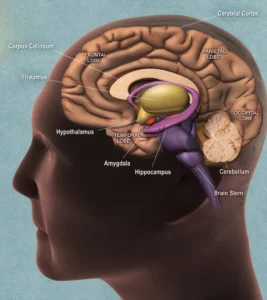
Weighing about three pounds, the brain is divided into several parts, each responsible for specific functions:
The cerebrum, which is the largest part, controls thinking, memory, and voluntary movement.
The cerebellum coordinates muscle movements and maintains posture and balance.
The brainstem manages basic life functions like breathing, heartbeat, and blood pressure.
Functions of the Brain
The brain is the center of cognition, emotion, and behavior. Some of its key functions include:
Thinking and Reasoning: The prefrontal cortex is responsible for decision-making, problem-solving, and planning.
Memory Storage: The hippocampus plays a critical role in forming and retrieving memories.
Emotional Regulation: The amygdala processes emotions like fear, anger, and pleasure.
Sensory Processing: The brain interprets information from the senses—sight, sound, smell, taste, and touch.
How to Keep Your Brain Healthy
Maintaining brain health is essential for long-term cognitive function and overall well-being. Here are a few scientifically-backed ways to keep your brain sharp:
Exercise Regularly: Physical activity increases blood flow to the brain and supports the growth of new neurons.
Eat Brain-Boosting Foods: Foods rich in omega-3 fatty acids, antioxidants, and vitamins (like leafy greens, berries, nuts, and fish) can enhance cognitive performance.
Get Quality Sleep: Sleep is vital for memory consolidation and mental clarity.
Stay Mentally Active: Engage in puzzles, reading, or learning new skills to stimulate neural connections.
Manage Stress: Chronic stress can impair brain function; mindfulness and relaxation techniques can help.
The Future of Brain Research
Neuroscience, the study of the brain and nervous system, is rapidly advancing. With innovations like brain-computer interfaces, artificial intelligence, and neuroimaging, scientists are uncovering new ways to understand and treat neurological disorders such as Alzheimer's disease, Parkinson's disease, and epilepsy.
Understanding the brain not only helps us treat disease but also enhances our knowledge of human potential, creativity, and consciousness.
Final Thoughts
The human brain is a remarkable organ that defines who we are. By taking steps to care for our brain and supporting brain research, we can unlock even more of its incredible capabilities. Whether you're interested in brain health, neuroscience, or mental performance, learning about the brain is a journey worth taking.
Source-backed journal facts
Topics in published research
Neurology and Historical Studies; Neurological disorders and treatments; Parkinson's Disease Mechanisms and Treatments; Genetic Neurodegenerative Diseases; Functional Brain Connectivity Studies; Epilepsy research and treatment.
OpenAlex classifies topics from published works. These topics are not the publisher’s official aims and scope.
Reported open-access list prices
4,224.00 GBP
APC list prices reported by OpenAlex, which obtains this information from DOAJ. Confirm current charges, taxes, waivers and eligibility with the publisher; this is not a fee quotation.
Source: OpenAlex source record. Retrieved 2026-10-03. Source record updated 2026-10-02. OpenAlex metrics are different from SCImago metrics and the Clarivate Journal Impact Factor.
Journal Metrics
Quartile, SJR and the listed SCImago H-index use the 2025 imported SCImago dataset. A quartile may vary by subject category. Values without a source or reporting year are unverified historical entries. Verify the current Journal Impact Factor with Clarivate or the publisher before using it.
Aims & Scope
Unlock Limitless Possibilities with Scope Brain: Your Ultimate Productivity and Innovation Partner
In today's fast-paced digital world, staying ahead requires more than just hard work—it demands smart tools and innovative thinking. That’s where Scope Brain comes in. Designed for forward-thinkers, entrepreneurs, and high-performance teams, Scope Brain is the ultimate platform that empowers users to ideate, plan, and execute with clarity and precision.
What is Scope Brain?
Scope Brain is an all-in-one productivity and innovation management platform that helps individuals and organizations bring their ideas to life. Whether you're brainstorming your next big project, mapping out a strategy, or collaborating with your team, Scope Brain provides the structure and tools you need to streamline the process.
Key Features of Scope Brain
AI-Powered Idea Generation: Harness the power of artificial intelligence to generate creative solutions and innovative strategies in seconds.
Project Mapping Tools: Visualize your projects with intuitive mind maps, timelines, and workflow diagrams.
Collaboration Made Simple: Work together with your team in real-time, assign tasks, and track progress effortlessly.
Customizable Templates: Start from scratch or use pre-built templates tailored for various industries—from tech startups to educational institutions.
Data-Driven Insights: Analyze your project performance and gain actionable insights to continuously improve your workflow.
Why Choose Scope Brain?
The biggest strength of Scope Brain lies in its flexibility and user-centric design. Whether you're a solo creator or part of a global team, Scope Brain adapts to your needs. Its powerful tools allow you to break down complex ideas into manageable steps, ensuring that no good idea goes to waste.
Moreover, Scope Brain is built with scalability in mind. As your projects grow, so does the platform’s ability to support them—making it ideal for startups, growing businesses, and large enterprises alike.
Boost Productivity and Spark Innovation
Scope Brain isn’t just another productivity tool—it’s a catalyst for innovation. By combining strategic planning features with intelligent automation, it reduces the clutter and lets your ideas take center stage. Say goodbye to scattered notes, missed deadlines, and communication breakdowns. With Scope Brain, everything you need is in one place, accessible anytime, anywhere.
SEO Benefits for Scope Brain Users
If you're using Scope Brain to manage your content marketing or SEO strategy, you’ll love its keyword tracking, content planning calendars, and integration capabilities. Plan your content with purpose, align it with your business goals, and ensure consistent performance across platforms.
Final Thoughts
Scope Brain is more than just a tool—it's a mindset. A mindset that champions creativity, collaboration, and clarity. Whether you're launching a new business, managing complex projects, or simply trying to stay organized, Scope Brain provides the foundation for success.
Join the growing community of innovators who trust Scope Brain to take their ideas further. Try it today and unlock the full potential of your vision.
Recent Research Articles
Latest publications matched automatically by ISSN.
TREM2: friend or foe in glioma?
Mekenzie M Peshoff, Dolores Hambardzumyan, Long-Jun Wu
2026-10-27 · DOI: 10.1093/brain/awag369KCNH1 variants associated with neurodevelopmental disorders exhibit prominent gain of function
Christopher H Thompson, Christine Q Simmons, Isabella K He, Nirvani P Jairam et al.
2026-10-27 · DOI: 10.1093/brain/awag373Short-term outcomes, longer-term disability and relapse risk in LGI1-antibody encephalitis
Sudarshini Ramanathan, John Soltys, Sophia Michael, Samuel V Mackrill et al.
2026-10-27 · DOI: 10.1093/brain/awag370Global best practice recommendations for genetic counselling and testing in amyotrophic lateral sclerosis
Kristiana Salmon, Martina de Majo, Nazli Basak, Ashley Crook et al.
2026-10-27 · DOI: 10.1093/brain/awag375Do psychiatrists have a spider-sense? Clinical impressions as violations of interpersonal Bayesian expectation
Ali Amad, Fabien D’Hondt, Christophe Gauld, Maxime Bertoux et al.
2026-10-26 · DOI: 10.1093/brain/awag365Clinically unresponsive patients with acute brain injury activate a brain-computer interface
Qi Shen, Andrey Eliseyev, Vedant Kansara, Joel Neves Briard et al.
2026-10-22 · DOI: 10.1093/brain/awag210Progenitor transcriptional alterations link fetal and adult pathology in Huntington’s disease
Mattia Battistella, Gianluca Damaggio, Paola Conforti, Andrea Scolz et al.
2026-10-22 · DOI: 10.1093/brain/awag364TMEM106B risk converges on C-terminal fragment homeostasis: genetics, mechanisms and therapy
Miranda Lastra Osua, Jolien Perneel, Cristina T Vicente, Rosa Rademakers et al.
2026-10-22 · DOI: 10.1093/brain/awag367Preventing autoimmunity after alemtuzumab in multiple sclerosis: regulatory T cells resist expansion
David P J Hunt
2026-10-21 · DOI: 10.1093/brain/awag308Serum β-synuclein predicts dementia conversion and mortality beyond amyloid-β and phospho-tau
Timo Jan Oberstein, Julian Schwarz, Laura Rudtke, Johannes Jablonowski et al.
2026-10-21 · DOI: 10.1093/brain/awag361Prematurity insults remodel cerebellar development and behaviour
Georgios Sanidas, Gabriele Simonti, Javid Ghaemmaghami, Kyla Woyshner et al.
2026-10-21 · DOI: 10.1093/brain/awag363A novel TARGET for anti-CD20 antibody therapy in multiple sclerosis
Sean A Freeman, Roland S Liblau
2026-10-17 · DOI: 10.1093/brain/awag360Is the entorhinal signal a tau origin or a treatment-relevant vulnerability map?
Li Yang, Yi Yin, Zheng Liu
2026-10-17 · DOI: 10.1093/brain/awag330Neuronavigated dual-target transcranial magnetic stimulation for schizophrenia negative symptoms
Yanyan Wei, Junjie Wang, Xiaochen Tang, Zhenying Qian et al.
2026-10-15 · DOI: 10.1093/brain/awag359Biallelic variants in PIKFYVE cause a hypomyelinating leukodystrophy with endolysosomal dysfunction
Luisa Averdunk, Martin Groß, Anna B Hamacher, Sandra Donkervoort et al.
2026-10-14 · DOI: 10.1093/brain/awag355Extracellular vesicle α-synuclein topology reveals disease-associated conformers in brain and blood
Suman Dutta, Amin Atashgaran, Anis Sahoo, Stelios Chatzimichail et al.
2026-10-14 · DOI: 10.1093/brain/awag356Target engagement and efficacy in disease-modifying trials of synuclein-related disorders
Carlo Alberto Artusi, Silvia Gallo, Silvia Galli, Domiziana Rinaldi et al.
2026-10-12 · DOI: 10.1093/brain/awag353Mapping therapeutic neural circuits from bed nucleus of stria terminalis biomarkers
Georgios P Skandalakis, David Botros, Leo J Y Kim, Shervin Rahimpour et al.
2026-10-12 · DOI: 10.1093/brain/awag354Progress divides the room: patients, biology and the 2024 McDonald criteria
Nikos Evangelou, Christopher G S Gilmartin
2026-10-12 · DOI: 10.1093/brain/awag346The genetic landscape of myotonic dystrophy type 1: insights from nearly one million genomes
Rezbieara P Rahman, Marta Futema, Elijah R Behr, Emma Matthews et al.
2026-10-10 · DOI: 10.1093/brain/awag350Reviews
Community Reviews
Version History
October 11, 2026 at 9:43 pm
April 21, 2025