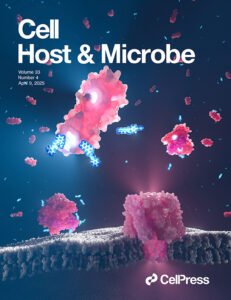
Academic Journal
Q1Cell Host and Microbe
About Cell Host and Microbe
Cell Host and Microbe is a scholarly journal published by Cell Press. SCImago 2025 places it in Q1 with an SJR of 9.892 and an H-index of 270.
Its listed coverage is 2007-2026 and its research categories include Cancer Research (Q1); Immunology and Microbiology (miscellaneous) (Q1); Microbiology (Q1); Molecular Biology (Q1); Parasitology (Q1); Virology (Q1). The 2025 dataset reports 220 documents and 9069 citations across the latest three-year reporting window.
Cell Host & Microbe is widely recognized as a trailblazer in the field of microbiology and immunology. By publishing high-impact research articles, this innovative journal has rapidly become a trusted resource for scientists, clinicians, and researchers around the globe who are eager to deepen their understanding of host-pathogen interactions and microbial pathogenesis.
A Hub for Groundbreaking Research
With a focus on exploring the intricate relationship between microbes and their hosts, Cell Host & Microbe serves as an essential platform for showcasing interdisciplinary studies that span virology, bacteriology, and parasitology. Its content encompasses cutting-edge discoveries, ranging from molecular mechanisms of infection to the complex dynamics of the host’s immune response. By emphasizing quality and innovation, the journal continuously delivers content that is both relevant and impactful in the fight against infectious diseases.
Pioneering Insights into Host-Pathogen Dynamics
At the core of Cell Host & Microbe is the exploration of how pathogens interact with host cells. The journal publishes research that dissects the strategies employed by bacteria, viruses, and other microbes to invade, replicate, and evade the immune system. Articles often focus on the following key areas:
-
Molecular Interactions: Studies that detail the binding mechanisms and signaling pathways triggered by microbial infection help scientists understand how pathogens subvert host cell functions.
-
Immune Evasion: Research exploring how pathogens avoid detection by the host immune system is crucial for developing new therapeutic strategies and vaccines.
-
Antimicrobial Resistance: With the rise in drug-resistant infections, the journal is at the forefront of offering insights into how resistance mechanisms evolve and spread among pathogenic communities.
Impact on Public Health and Therapeutics
The research disseminated through Cell Host & Microbe not only advances our scientific knowledge but also lays the groundwork for practical applications in medicine. By identifying new therapeutic targets and deciphering the pathways of infectious processes, the journal directly contributes to the development of novel treatments and preventative strategies. For example, insights gained from studying host-pathogen interactions have been pivotal in designing more effective vaccines and antimicrobial drugs that target specific stages of infection.
Encouraging Interdisciplinary Collaboration
One of the defining characteristics of Cell Host & Microbe is its commitment to fostering collaboration across scientific disciplines. The journal invites contributions from experts in microbiology, genetics, bioinformatics, and clinical research, creating a vibrant dialogue that accelerates discovery. This interdisciplinary approach not only enhances our understanding of microbial behavior but also inspires innovative approaches to addressing public health challenges in a rapidly evolving landscape.
Future Directions in Microbial Research
As emerging pathogens continue to challenge global health, the importance of research published in Cell Host & Microbe becomes ever more apparent. Future issues promise to delve into topics such as host genetic factors influencing infection outcomes, the role of the microbiome in health and disease, and the development of precision medicine approaches to combat infections. These research avenues are critical for staying ahead of infectious disease outbreaks and improving patient care worldwide.
Journal Metrics
Metrics can change by reporting year. Verify time-sensitive values with the publisher or indexing service.
Aims & Scope
Cell Host & Microbe is a premier scientific journal that serves as a leading platform for cutting-edge research at the interface between host organisms and microbes. Since its inception, the journal has carved a niche in the scientific community by publishing high-impact articles that enhance our understanding of the complex dynamics between hosts—ranging from humans to plants—and the diverse microbes that inhabit or invade them. The scope of Cell Host & Microbe is broad yet highly specialized, focusing on the biology, mechanisms, and therapeutic implications of host-microbe interactions.
Key Focus Areas
The journal welcomes research across a wide spectrum of biological systems and microbial species, including viruses, bacteria, fungi, and parasites. The primary aim is to uncover the molecular and cellular mechanisms that define the relationship between hosts and microbes. Key topics include:
-
Microbiome Research: Studies exploring the composition, function, and influence of the microbiome on host health and disease.
-
Pathogenesis: Investigations into how microbial pathogens infect hosts, evade immune responses, and cause disease.
-
Host Immunity: Research on innate and adaptive immune responses triggered by microbial presence or infection.
-
Microbial Symbiosis: Insights into beneficial host-microbe relationships that promote health or enhance biological functions.
-
Therapeutic Strategies: Innovative approaches for targeting host-pathogen interactions through vaccines, antimicrobial agents, or microbiome modulation.
Interdisciplinary Approach
One of the defining characteristics of Cell Host & Microbe is its commitment to interdisciplinary science. The journal features research that integrates microbiology, immunology, genomics, molecular biology, and clinical medicine. This holistic perspective allows for a more comprehensive understanding of the host-microbe ecosystem and facilitates translational discoveries that can be applied in real-world healthcare and biotechnology settings.
Article Types
To ensure comprehensive scientific coverage, Cell Host & Microbe publishes a variety of article types, including:
-
Original Research Articles
-
Reviews and Perspectives
-
Commentaries and Opinions
-
Brief Reports and Technical Advances
These formats allow for the dissemination of both foundational research and emerging ideas in the field, making the journal an invaluable resource for scientists, clinicians, and industry professionals alike.
Global Relevance and Impact
Cell Host & Microbe is a globally respected journal with a strong impact factor, consistently ranking among the top publications in microbiology and immunology. Its broad readership includes academic researchers, medical professionals, and policy-makers interested in infectious diseases, microbiota science, and host-pathogen biology. As the world continues to face challenges such as antibiotic resistance, emerging infectious diseases, and the role of the microbiome in chronic illness, the research published in Cell Host & Microbe becomes increasingly crucial.
Recent Research Articles
Latest publications matched automatically by ISSN.
Bacteroides acidifaciens enriched by KRAS mutation promotes colorectal tumorigenesis
Ying Jiao, Cillian Hao Cheng, Xiang Gao, Weixun Li et al.
2026-09 · DOI: 10.1016/j.chom.2026.08.010A microbial chromatin remodeler drives gastric cancer progression and immune evasion by reprogramming the host epigenome
Xiaoshan Xie, Yue Wei, Jiaying Zheng, Zhikai Zheng et al.
2026-09 · DOI: 10.1016/j.chom.2026.08.011Mobile virus-derived siRNAs drive plant antiviral silencing through reiterated 3–4 cell immunization
Daniele Albertini, Emanuel A. Devers, Gregory Schott, Rajendran Rajeswaran et al.
2026-09 · DOI: 10.1016/j.chom.2026.08.005Dual sensing activates antiviral reverse transcriptase for membrane targeting
Yushan Xia, Hua Qi, Xin-Yang Wei, Jun-Tao Zhang et al.
2026-09 · DOI: 10.1016/j.chom.2026.08.006Hippuric acid metabolism by Corynebacterium glucuronolyticum-like bacteria promotes calcium oxalate crystallization
Kuan Qi, Huahui Wu, Shuqing Yan, Xiao Xiao et al.
2026-09 · DOI: 10.1016/j.chom.2026.08.009Protein landscape of the chromatin domains in the malaria parasite Plasmodium falciparum
Gala Ramón-Zamorano, Sheila Mainye, Jessica Kimmel, Inge de Krijger et al.
2026-08 · DOI: 10.1016/j.chom.2026.07.016Seeking the invisible microbial oases in extreme environments
Weishu Zhao, Xiang Xiao
2026-08 · DOI: 10.1016/j.chom.2026.07.005Purging the transcriptome for antibiotic tolerance
João Pedro Teuber Carvalho, Daniel Schultz
2026-08 · DOI: 10.1016/j.chom.2026.07.011Genes from the deep: Evolution’s untapped biotechnology
Federico M. Ibarbalz, Juan José Pierella Karlusich
2026-08 · DOI: 10.1016/j.chom.2026.07.004Cell-type-specific activation of broadly perceived effector-triggered immunity restricts pathogen invasion in plants
Himanshu Chhillar, Leonardo Jo, Volkan Cevik, Amey Redkar et al.
2026-08 · DOI: 10.1016/j.chom.2026.07.009Single-cell detection and quantification of the microbiota by MicFLY
Christine M. Tin, Bianca Cordazzo Vargas, Darryl A. Abbott, Aditi R. Lohar et al.
2026-08 · DOI: 10.1016/j.chom.2026.05.029Variations in the latitudinal diversity gradients of the ocean microbiome
Dominic Eriksson, Jonas Schiller, Alexandre Schickele, Taylor Priest et al.
2026-08 · DOI: 10.1016/j.chom.2026.05.016Host eicosanoid signals define a granuloma fibroblast population that coordinates mycobacterial containment
Erika J. Hughes, Charlie J. Pyle, Mark Chambers, Jana Travnickova et al.
2026-08 · DOI: 10.1016/j.chom.2026.07.019The gut microbiota directs vitamin A flux to regulate intestinal T cell development
Tarun Srinivasan, Chaitanya Dende, Kelly A. Ruhn, Stefanie L. Moye et al.
2026-08 · DOI: 10.1016/j.chom.2026.05.019Mouth-to-gut microbial transmission signatures enable robust, non-invasive diagnosis of gastrointestinal cancers
Lae-Guen Jang, Ji-Won Huh, Seolah Kim, Ji-Young Lee et al.
2026-08 · DOI: 10.1016/j.chom.2026.07.007A family of lanthipeptides with anti-phage function
Helena Shomar, Marie Guillaume, Florian Tesson, Valentin Conte et al.
2026-08 · DOI: 10.1016/j.chom.2026.06.017Strong, sustained type I IFN signaling acts cell intrinsically to impair IFNγ responses and cause tuberculosis susceptibility
Stefan A. Fattinger, Bianca Parisi, Roberto A. Chavez, Marian R. Fairgrieve et al.
2026-08 · DOI: 10.1016/j.chom.2026.07.014Defined human Clostridia consortia reverse colitis via dual effects of tryptophan metabolites on microbiota and immunity
Akihiko Oka, Gerold Bongers, Yoshiyuki Mishima, Andrew J. Baltus et al.
2026-08 · DOI: 10.1016/j.chom.2026.08.003Uric acid remodels gut microbiota to fuel obesity
Dingwu Li, Xiang Zhang
2026-08 · DOI: 10.1016/j.chom.2026.07.003Uric acid promotes dietary lipid absorption through microbiome and metabolomic remodeling via a liver-gut endocrine axis
Cheng Tian, Xiaozhen Guo, Dongmei Wang, Qiubing Chen et al.
2026-08 · DOI: 10.1016/j.chom.2026.05.005Reviews
Community Reviews
Version History
April 15, 2025 at 4:44 am
April 15, 2025