Academic Journal
Q1Circulation
About Circulation
Circulation is a scholarly journal published by Lippincott Williams and Wilkins. SCImago 2025 places it in Q1 with an SJR of 8.311 and an H-index of 712.
Its listed coverage is 1950-2026 and its research categories include Cardiology and Cardiovascular Medicine (Q1); Physiology (medical) (Q1). The 2025 dataset reports 602 documents and 24668 citations across the latest three-year reporting window.
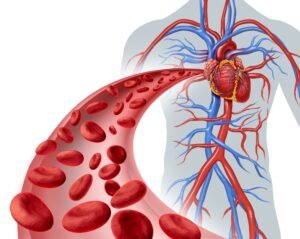
Circulation is a vital bodily function that refers to the movement of blood throughout the body. It is essential for delivering oxygen and nutrients to cells, removing waste products, and supporting overall health. Good circulation ensures that every organ functions efficiently, which is why it plays such a crucial role in our well-being.
What Is Blood Circulation?
Blood circulation is powered by the heart, which pumps blood through a complex network of blood vessels—arteries, veins, and capillaries. Oxygen-rich blood is transported from the heart to the rest of the body via arteries. After delivering oxygen and nutrients, the blood returns to the heart through the veins, now carrying carbon dioxide and waste products for disposal.
This continuous loop keeps your body alive and functioning. Any disruption in this process can lead to serious health issues, such as heart disease, stroke, or poor wound healing.
Why Is Healthy Circulation Important?
Maintaining healthy circulation is critical for numerous bodily functions, including:
-
Heart health: Good circulation reduces strain on the heart and lowers the risk of cardiovascular disease.
-
Brain function: Proper blood flow ensures that your brain gets enough oxygen and nutrients, improving focus and memory.
-
Immune support: Circulation helps white blood cells move efficiently through the body to fight off infection.
-
Muscle and joint health: Adequate circulation reduces stiffness and speeds up recovery from injuries or fatigue.
-
Skin health: Healthy blood flow gives skin a natural glow and helps wounds heal faster.
Signs of Poor Circulation
Poor circulation can develop slowly and may go unnoticed at first. Common signs include:
-
Cold hands and feet
-
Tingling or numbness in extremities
-
Muscle cramps
-
Fatigue
-
Swelling in legs or ankles
-
Slow healing of cuts or wounds
If you experience any of these symptoms consistently, it’s important to consult a healthcare professional.
How to Improve Your Circulation
Fortunately, improving circulation is possible with a few lifestyle changes:
-
Stay Active: Regular physical activity like walking, swimming, or yoga helps keep blood moving.
-
Eat a Healthy Diet: Foods rich in omega-3 fatty acids, antioxidants, and fiber support vascular health.
-
Stay Hydrated: Proper hydration improves blood viscosity and flow.
-
Avoid Smoking: Tobacco restricts blood vessels and impairs circulation.
-
Manage Stress: High stress can elevate blood pressure, negatively impacting circulation.
-
Massage and Stretching: These promote better blood flow and reduce tension.
Journal Metrics
Metrics can change by reporting year. Verify time-sensitive values with the publisher or indexing service.
Aims & Scope
In today’s fast-paced digital environment, businesses and organizations are constantly searching for ways to optimize their operations. One key element that often goes overlooked is scope circulation. Whether you’re in project management, healthcare, education, or content development, efficient scope circulation can significantly enhance productivity, communication, and accountability within teams.
What Is Scope Circulation?
Scope circulation refers to the systematic distribution and review of project scopes, plans, or documents among relevant stakeholders. This process ensures that everyone involved understands the objectives, expectations, timelines, and responsibilities before execution begins. It’s an essential part of collaborative workflows, particularly in industries where multiple departments must stay aligned.
By maintaining clear and consistent scope circulation, teams can reduce misunderstandings, prevent costly errors, and deliver better outcomes.
Why Is Scope Circulation Important?
Effective scope circulation is vital for several reasons:
-
Improved Communication: It keeps all stakeholders on the same page, fostering better collaboration and transparency.
-
Error Reduction: By circulating scopes for feedback and approval, potential issues can be identified and resolved early.
-
Accountability: Everyone involved knows their role and responsibilities, reducing ambiguity and duplication of effort.
-
Documentation Trail: Circulating scopes creates a record of decisions, changes, and approvals, which is invaluable for audits or future reference.
How to Implement an Efficient Scope Circulation Process
-
Use Collaborative Tools: Platforms like Google Workspace, Notion, Asana, or Trello allow teams to create, share, and update scopes in real-time. Version control is also essential for tracking changes.
-
Create a Circulation Schedule: Set deadlines for scope reviews, feedback submissions, and final approvals to keep the process moving.
-
Define Roles Clearly: Assign reviewers, approvers, and editors to ensure the right people are responsible for specific aspects of the scope.
-
Standardize Formats: Use templates or standardized forms to streamline circulation and ensure consistency across projects.
-
Automate Where Possible: Workflow automation tools like Zapier or Monday.com can help automate notifications, reminders, and status updates to avoid delays.
SEO Benefits of Structured Scope Circulation
For digital marketers and content strategists, scope circulation isn't just a project management tactic—it can improve SEO outcomes too. Here's how:
-
Content Accuracy: Well-reviewed scopes ensure published content is aligned with SEO goals and brand messaging.
-
Faster Turnaround: Efficient circulation means quicker content production and publishing, helping you stay competitive in search rankings.
-
Cross-Functional Alignment: From copywriters to SEO analysts and designers, everyone is aligned on the strategy, which results in more effective content.
Recent Research Articles
Latest publications matched automatically by ISSN.
Surviving Pediatric Cardiogenic Shock: Clinical Approach, Improving Outcomes, and Future Directions: A Scientific Statement From the American Heart Association
Kriti Puri, Kiona Allen, Jacob Jentzer, Rhynn Soderstrom et al.
2026-09-08 · DOI: 10.1161/cir.0000000000001461Letter by Xiong et al Regarding Article, “HELZ2 Regulates Apob mRNA Stability to Modulate Fatty Liver Disease and Atherosclerosis”
Bingquan Xiong, Qian Wu, Guangsu Qu
2026-09-08 · DOI: 10.1161/circulationaha.126.079345YAP Promotes Microtubule Growth to Facilitate Sarcomere Disassembly in Adult Cardiomyocytes
Feng Zhang, Jenna K. Cusick, Jie Liang, Fangfei Wang et al.
2026-09-08 · DOI: 10.1161/circulationaha.126.080761COL1A1-Enhanced CD44/SLC7A11 Interaction and Cystine Uptake Result in CD34 + Foam-Like Macrophage Accumulation in Transplant Arteriosclerosis
Junru Wu, Tian He, Mengyao Qi, Liang Chen et al.
2026-09-08 · DOI: 10.1161/circulationaha.126.080261Correction to: 2026 ACC/AHA/AACVPR/ABC/ACPM/ADA/AGS/APhA/ASPC/NLA/PCNA Guideline on the Management of Dyslipidemia: A Report of the American College of Cardiology/American Heart Association Joint Committee on Clinical Practice Guidelines
Roger S. Blumenthal, Pamela B. Morris, Mario Gaudino, Heather M. Johnson et al.
2026-09-08 · DOI: 10.1161/cir.0000000000001475HNRNPK Lactylation Amplifies Inflammation and Exacerbates Myocardial Ischemia/Reperfusion Injury by Regulating Jag2 Splicing
Suyun Chen, Siman Shen, Wenmei Su, Linhang Fu et al.
2026-09-08 · DOI: 10.1161/circulationaha.126.081410Advancing Quality in the Evaluation, Surveillance, and Management of Aortic Stenosis: A Report From the AHA Target: AS Registry
Brian R. Lindman, Linda D. Gillam, Elizabeth M. Perpetua, Sammy Elmariah et al.
2026-09-08 · DOI: 10.1161/circulationaha.126.081405An Updated Evidence Assessment of the Genetic Causes of Dilated Cardiomyopathy
Elizabeth Jordan, Phoenix Grover, Patricia Parker, Jason Cowan et al.
2026-09-08 · DOI: 10.1161/circulationaha.126.080302Redefining Severe Aortic Stenosis in Symptomatic Patients: The Weakness of Using Simple Cutoffs
Blase Carabello, Rick Nishimura
2026-09-08 · DOI: 10.1161/circulationaha.126.081126Foam Cells Beyond the Intima: Adventitial Macrophage Lipid Loading in Transplant Arteriosclerosis
Claudia Monaco, Esther Lutgens
2026-09-08 · DOI: 10.1161/circulationaha.126.081817Letter by Huntzinger and Séraphin Regarding Article, “HELZ2 Regulates Apob mRNA Stability to Modulate Fatty Liver Disease and Atherosclerosis”
Eric Huntzinger, Bertrand Séraphin
2026-09-08 · DOI: 10.1161/circulationaha.126.080005Overcoming Intrinsic Barriers in Myofibroblasts Permits Efficient Cardiac Reprogramming After Infarction
Jingdong Wu, Chunyan Yang, Donghui Wu, Shaoqi Zhu et al.
2026-09-08 · DOI: 10.1161/circulationaha.126.078415Infective Endocarditis: Diagnosis, Antibiotic Therapy, and Management: A Scientific Statement From the American Heart Association
Daniel C. DeSimone, Laura Marks, Mark J. Dayer, Zerelda Esquer Garrigos et al.
2026-09-08 · DOI: 10.1161/cir.0000000000001466Impaired Glycolysis Leads to Defective Efferocytosis and Impaired Plaque Resolution in Tet2 Clonal Hematopoiesis
Mustafa Yalcinkaya, Cheng-Chieh Hsu, Linke Li, Ranran Wang et al.
2026-09-08 · DOI: 10.1161/circulationaha.126.080527Partnerships That Leverage Existing Community Strengths Are Key to Improving Cardiovascular Health
Tiffany M. Powell-Wiley
2026-09-08 · DOI: 10.1161/circulationaha.126.080229Response by Jiang and Zhang to Letter Regarding Article, “HELZ2 Regulates Apob mRNA Stability to Modulate Fatty Liver Disease and Atherosclerosis”
Yiao Jiang, Zhao Zhang
2026-09-08 · DOI: 10.1161/circulationaha.126.081113Arrhythmic Risk Stratification According to LGE Corridors and Genetics in Nonischemic Dilated Cardiomyopathy
Noemí Ramos-López, Nerea Mora-Ayestarán, Juan Pablo Ochoa, Eduard Claver et al.
2026-09-08 · DOI: 10.1161/circulationaha.126.080608Guideline-Recommended Follow-Up for Moderate Aortic Stenosis in the United States
Joseph Kassab, Musa Ali Rizvi, Ambarish Pandey, Saket Girotra et al.
2026-09-08 · DOI: 10.1161/circulationaha.126.080210Methodologic Standards for Follow-Up Extension in Cardiovascular Trials: A Scientific Statement From the American Heart Association
Mario Gaudino, Sigrid Sandner, Emilia Bagiella, Joshua A. Beckman et al.
2026-09-08 · DOI: 10.1161/cir.0000000000001458Macrotroponin Complexes and Risk of Cardiovascular Events
Marie de Bakker, Alexander J.F. Thurston, Ola Hammarsten, Mareta Khachatryan et al.
2026-09-08 · DOI: 10.1161/circulationaha.126.080483Reviews
Community Reviews
Version History
April 13, 2025 at 1:28 pm
April 13, 2025