Academic Journal
Q1Developmental Cell
About Developmental Cell
Developmental Cell is a scholarly journal published by Cell Press. SCImago 2025 places it in Q1 with an SJR of 5.494 and an H-index of 318.
Its listed coverage is 2001-2026 and its research categories include Biochemistry, Genetics and Molecular Biology (miscellaneous) (Q1); Cell Biology (Q1); Developmental Biology (Q1); Molecular Biology (Q1). The 2025 dataset reports 289 documents and 5828 citations across the latest three-year reporting window.
Understanding Developmental Cell: A Leading Journal in Cell and Developmental Biology
Developmental Cell is a prestigious, peer-reviewed scientific journal that publishes groundbreaking research in the fields of cell biology and developmental biology. Established in 2001 and published by Cell Press, the journal has earned a reputation for showcasing high-impact studies that contribute significantly to our understanding of cellular processes and organismal development. It serves as a vital resource for researchers, academics, and students interested in the intricate mechanisms that drive cell function and tissue formation.
What is Developmental Cell?
Developmental Cell focuses on research that reveals fundamental insights into cell structure, behavior, and the molecular pathways that govern development from the embryonic stage to adulthood. The journal covers a broad range of topics, including:
-
Cell signaling and communication
-
Stem cell biology and differentiation
-
Morphogenesis and pattern formation
-
Gene regulation during development
-
Tissue regeneration and repair
-
Cell cycle control and apoptosis
By highlighting the intersection between cellular behavior and organismal development, Developmental Cell bridges gaps between molecular biology, genetics, and systems biology.
Why is Developmental Cell Important?
Developmental Cell plays a key role in advancing our understanding of how cells build tissues, organs, and ultimately, entire organisms. Its rigorous editorial standards ensure the publication of only the most novel and well-supported findings. Researchers around the globe rely on Developmental Cell to stay informed on new discoveries that could impact not only basic science but also translational research in fields such as regenerative medicine, cancer therapy, and genetic engineering.
Key Features of Developmental Cell
-
High-Quality Research: Each article undergoes a stringent peer-review process, ensuring scientific accuracy and relevance.
-
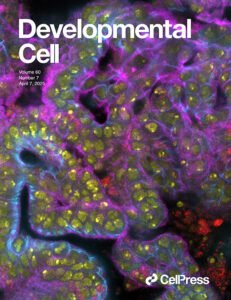
Innovative Visual Content: Developmental Cell is known for its high-quality figures and illustrations that make complex biological processes easier to understand.
-
Diverse Formats: The journal publishes full-length research articles, reviews, previews, and commentaries, catering to a wide scientific audience.
-
Global Reach: With an international editorial board and contributions from leading scientists worldwide, the journal maintains a global perspective on developmental biology.
Audience and Accessibility
Developmental Cell is intended for researchers, educators, and clinicians in the fields of biology, biochemistry, and biomedical sciences. It is accessible through institutional subscriptions, and select articles may be available via open access, ensuring broader dissemination of critical scientific discoveries.
How to Publish in Developmental Cell
Publishing in Developmental Cell is highly competitive. Authors must present well-designed studies with compelling data and clear relevance to the field. The journal encourages interdisciplinary approaches and values work that opens new directions for future research. Submission guidelines, editorial policies, and resources for authors can be found on the official Cell Press website.
Journal Metrics
Metrics can change by reporting year. Verify time-sensitive values with the publisher or indexing service.
Aims & Scope
Scope of Developmental Cell: A Premier Platform in Developmental Biology
Developmental Cell stands at the forefront of research in developmental biology, offering groundbreaking insights into the mechanisms that govern cell growth, differentiation, and morphogenesis. As one of the flagship journals in the Cell Press family, Developmental Cell plays a critical role in advancing our understanding of how organisms develop from a single cell into complex, multicellular beings. This article explores the scope, significance, and impact of Developmental Cell, highlighting its role in shaping the future of developmental biology.
A Leading Journal in Developmental Biology
Developmental Cell provides a high-impact platform for publishing novel and significant research in the field of cell and developmental biology. The journal welcomes studies that integrate molecular, cellular, genetic, and imaging approaches to address fundamental questions of development. It serves as a bridge between basic cell biology and the intricacies of developmental processes, from the earliest stages of embryogenesis to tissue regeneration and stem cell biology.
Areas Covered by Developmental Cell
The scope of Developmental Cell is broad yet focused, emphasizing innovative and mechanistic insights into:
-
Cell differentiation and fate determination
-
Stem cell biology and tissue regeneration
-
Morphogenesis and pattern formation
-
Signaling pathways during development
-
Developmental genetics and genomics
-
Organelle and cytoskeletal dynamics
-
Neural development and neurogenesis
-
Evolutionary developmental biology (Evo-Devo)
The journal seeks to highlight how cellular processes are coordinated in time and space to drive the formation of functional tissues and organs.
High Standards and Editorial Excellence
Maintaining rigorous peer review and editorial standards, Developmental Cell publishes only the most impactful studies that significantly advance the field. The editorial team, composed of experts in diverse areas of developmental and cell biology, ensures that published work meets the highest scientific and ethical standards.
Audience and Accessibility
The target audience includes researchers, postdoctoral fellows, graduate students, and academic professionals in developmental biology, molecular biology, genetics, and related fields. Developmental Cell is indexed in major scientific databases and enjoys a strong online presence, making its content widely accessible and highly cited.
SEO Relevance and Scientific Impact
For readers and scholars looking for cutting-edge research in developmental biology, Developmental Cell is an essential resource. Keywords like “developmental cell research,” “stem cell development,” “morphogenesis studies,” and “cell signaling pathways” are commonly associated with the journal, enhancing its search engine visibility and scholarly reach.
Recent Research Articles
Latest publications matched automatically by ISSN.
Chromatin context shapes SPT5 regulation of promoter-proximal Pol II, fine-tuning gene expression changes during Drosophila embryogenesis
Alessandro Dulja, Marvin Mayer, Niklas Engel, Arkadiy K. Golov et al.
2026-09 · DOI: 10.1016/j.devcel.2026.08.008Elongating human heart organoids recapitulate early cardiac morphogenesis and axial organization
Jinwoo Lee, Ahri Kim, Yideul Jeong, Eugene Choi et al.
2026-08 · DOI: 10.1016/j.devcel.2026.07.015Functional versatility of synergid cells in plant reproduction
Ling Li, Honghui Lin, Li-Jia Qu, Sheng Zhong et al.
2026-08 · DOI: 10.1016/j.devcel.2026.08.001Longitudinal zone- and cell type-specific pattern-triggered immune responses in Arabidopsis roots
Lahong Xu, Fausto Andres Ortiz-Morea, Sung-Il Kim, Camilla Ferrari et al.
2026-08 · DOI: 10.1016/j.devcel.2026.07.002Postnatal Pax7-expressing limb cells are multipotent and generate non-myogenic lineages that persist into adulthood
Stamatia Gioftsidi, Takuto Hayashi, Sidy Fall, Sabrina Jagot et al.
2026-08 · DOI: 10.1016/j.devcel.2026.07.019Wiring autophagy: Neural circuits regulate lysosomal homeostasis in muscle
Min Chen, Congcong He
2026-08 · DOI: 10.1016/j.devcel.2026.07.008A TREK that activates thermogenic adipose tissue by sensing cold air in the lung
Andrew D.J. Tu, Deane F. Mosher, Judith A. Simcox
2026-08 · DOI: 10.1016/j.devcel.2026.07.016The actin crosslinker Fimbrin is required for force sensing at tricellular junctions
Nilay Taneja, Claire A. Looney, Michael F. Moubarak, Meriel J. McGovern et al.
2026-08 · DOI: 10.1016/j.devcel.2026.07.001Mechanical control of human embryonic mesoderm fate via β-catenin is conserved with other metazoans
Laurie Exposito, Paula Cambronera-Ghiglione, Maria Elena Fernández-Sánchez, Emmanuel Farge et al.
2026-08 · DOI: 10.1016/j.devcel.2026.07.010Redox signaling in development: An emerging frontier
Agnes Ulfig, Ursula Jakob
2026-08 · DOI: 10.1016/j.devcel.2026.07.005Proteasome-dependent protein degradation shapes developmental tempo in mouse and human neural progenitors
Shota Nakanoh, Despina Stamataki, Lorena Garcia-Perez, Chiara Azzi et al.
2026-08 · DOI: 10.1016/j.devcel.2026.07.014Two parallel neuronal circuits involving electrical synapse and DAF-7/TGF-β signaling regulate muscle autophagy in C. elegans
Hui Zheng, Hongyu Zhao, Hong Zhang
2026-08 · DOI: 10.1016/j.devcel.2026.06.001The ARLA1A-NAC089 module coordinates ER phagy with the unfolded protein response to maintain cellular homeostasis in plants
Lianming Yang, Weixin Luo, Tingting Huang, Shuo Wang et al.
2026-08 · DOI: 10.1016/j.devcel.2026.07.007Systematic differences in protein stability underlie species-specific developmental tempo
Mitsuhiro Matsuda, Henrik M. Hammarén, Jorge Lázaro, Mikhail M. Savitski et al.
2026-08 · DOI: 10.1016/j.devcel.2026.07.012Molecular dynamics driving phenotypic divergence among KRAS mutants in pancreatic tumorigenesis
Adrien Grimont, David J. Falvo, Whitney J. Sisso, Francisco Santos et al.
2026-08 · DOI: 10.1016/j.devcel.2026.06.016Uncovering mammalian fertilization dynamics
Tianyu Wu, Lei Wang
2026-08 · DOI: 10.1016/j.devcel.2026.07.004KRAS mutations take different trajectories to drive pancreatic transformation
Kayla C. LaRue-Nolan, Martin E. Fernandez-Zapico
2026-08 · DOI: 10.1016/j.devcel.2026.07.013Tissue tension permits β-catenin phosphorylation to drive mesoderm specification in human embryonic stem cells
Nadia M.E. Ayad, Aisha Almsoud, Johnathon N. Lakins, Ajinkya Ghagre et al.
2026-08 · DOI: 10.1016/j.devcel.2026.06.014Nodal/Smad2 signaling sustains developmental pausing by repressing Pparg-mediated lipid metabolism
Giacomo Furlan, S. Bryn Martin, Brandon Cho, Ying Yu Ng et al.
2026-08 · DOI: 10.1016/j.devcel.2026.07.006A thermoregulatory module for timekeeping in Arabidopsis
Yuqing He, Xiling Wang, Chen Su, Yufan Niu et al.
2026-08 · DOI: 10.1016/j.devcel.2026.07.011Reviews
Community Reviews
Version History
April 20, 2025 at 6:39 am
April 20, 2025