Academic Journal
Q1Gut
About Gut
Gut is a scholarly journal published by BMJ Publishing Group. SCImago 2025 places it in Q1 with an SJR of 8.772 and an H-index of 385.
Its listed coverage is 1960-2026 and its research categories include Gastroenterology (Q1). The 2025 dataset reports 390 documents and 15893 citations across the latest three-year reporting window.
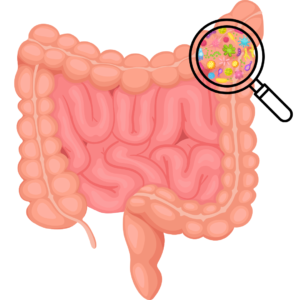
When we think about health, we often focus on our heart, weight, or skin. But one of the most crucial components of our overall well-being lies deep within our digestive system—our gut. Known as the “second brain,” your gut health plays a vital role in everything from your mood to your immune system. Taking care of your gut microbiome is one of the smartest moves you can make for your body.
What Is Gut Health?
Gut health refers to the balance and function of the bacteria, viruses, fungi, and other microorganisms that live in your digestive tract—collectively known as the gut microbiome. These microorganisms help your body digest food, absorb nutrients, and even fight off harmful pathogens.
When your gut is healthy, you feel energized, focused, and balanced. But when your gut is out of sync, you might experience bloating, gas, fatigue, skin issues, or even anxiety and depression.
Why Gut Health Matters
-
Digestive Function: A healthy gut helps break down food efficiently, absorb nutrients properly, and eliminate waste smoothly.
-
Immunity Boost: Over 70% of your immune cells live in the gut. A balanced microbiome strengthens your immune system and helps you fight infections.
-
Mental Health: The gut-brain axis is a communication network that links your digestive system and brain. An imbalanced gut can contribute to stress, anxiety, and depression.
-
Weight Management: Research shows that a healthy gut microbiome influences your metabolism and may help with weight control.
How to Improve Gut Health Naturally
-
Eat Fiber-Rich Foods: Fiber feeds the good bacteria in your gut. Load up on fruits, vegetables, whole grains, and legumes.
-
Include Probiotics and Prebiotics:
-
Probiotics are live bacteria found in fermented foods like yogurt, kefir, kimchi, and sauerkraut.
-
Prebiotics are fibers that feed probiotics. Foods like garlic, onions, bananas, and asparagus are great sources.
-
-
Stay Hydrated: Water supports digestion and nutrient absorption, keeping your gut functioning smoothly.
-
Limit Processed Foods and Sugar: These can harm the balance of good and bad bacteria in your gut.
-
Manage Stress: Chronic stress can disrupt your gut flora. Try meditation, deep breathing, or light exercise to manage daily stress.
Signs of an Unhealthy Gut
-
Frequent bloating or gas
-
Irregular bowel movements
-
Chronic fatigue
-
Sugar cravings
-
Skin irritation or acne
-
Trouble sleeping
Journal Metrics
Metrics can change by reporting year. Verify time-sensitive values with the publisher or indexing service.
Aims & Scope
In today’s fast-paced world, maintaining optimal gut health is more important than ever. With busy schedules, irregular meals, and processed foods dominating our diets, our digestive systems can easily become overwhelmed. That’s where Scope Gut comes in — a powerful and science-backed solution to support your digestive wellness naturally.
What Is Scope Gut?
Scope Gut is a premium gut health supplement designed to balance your digestive system, promote nutrient absorption, and support a healthy gut microbiome. Whether you're struggling with bloating, irregular bowel movements, or simply want to strengthen your overall digestive health, Scope Gut offers a clean, effective formula to help you feel your best every day.
Why Gut Health Matters
Did you know that your gut is home to over 70% of your immune system? A healthy gut doesn't just improve digestion — it impacts your immune response, mental clarity, mood, and even skin health. When your gut is off balance, it can trigger a cascade of health issues including fatigue, inflammation, and brain fog.
By restoring balance in your gut flora and improving your digestive efficiency, Scope Gut helps you take charge of your overall well-being.
Key Benefits of Scope Gut
-
✅ Improved Digestion: Alleviates gas, bloating, and discomfort after meals.
-
✅ Gut Flora Balance: Supports the growth of beneficial bacteria and suppresses harmful microbes.
-
✅ Boosted Immunity: Strengthens your body’s natural defenses by supporting gut-immune connection.
-
✅ Increased Nutrient Absorption: Helps your body get more from the food you eat.
-
✅ Enhanced Mood and Mental Clarity: A healthy gut can positively influence brain health.
What Makes Scope Gut Different?
Scope Gut isn’t just another probiotic — it’s a carefully crafted formula that combines prebiotics, probiotics, and digestive enzymes, ensuring holistic gut support from top to bottom. Our ingredients are selected based on clinical research and third-party tested for quality and safety.
Plus, Scope Gut is:
-
🟢 Non-GMO
-
🟢 Gluten-Free
-
🟢 Vegan-Friendly
-
🟢 Free of artificial fillers and preservatives
How to Use Scope Gut
Take one capsule daily with a glass of water, preferably with a meal. Consistent daily use leads to optimal results. Most users report noticeable improvements in digestion and energy within 2 to 3 weeks.
Recent Research Articles
Latest publications matched automatically by ISSN.
Blocking the gut–liver IgA axis attenuates macrophage-mediated inflammation and injury in alcohol-associated liver disease
Min Gu Kim, Kwon Yong Tak, Deok Hwa Seo, Gil Won Lee et al.
2026-09-07 · DOI: 10.1136/gutjnl-2026-338715Rapid muscle loss in cirrhosis: competing risks, scan timing and regression to the mean
Vishavdeep Singh Rana, Jasvinder Nain, Naveen Bhagat, Arka De et al.
2026-09-07 · DOI: 10.1136/gutjnl-2026-340341Post-transplant CKLM: extending integrated clinical trial design to solid organ transplant recipients
Alessandro Mattina, Ilaria Tarantino, Massimo Pinzani
2026-09-07 · DOI: 10.1136/gutjnl-2026-340432Excessive supragastric belching can be identified in up to one-fifth of patients with conclusive gastro-oesophageal reflux disease
Walter W Chan, Allison Franz, Juan Pablo Garcia-Marmolejo, Edward Hurtte et al.
2026-09-07 · DOI: 10.1136/gutjnl-2026-339248Beyond average efficacy: how should patients be matched to gut-directed hypnotherapy for IBS?
Ao Wang, Yong Sun
2026-09-07 · DOI: 10.1136/gutjnl-2026-340327Unusual mass at the hepatic flexure
Michael Colwill, Aaron Bhakta, Nirav Patel, Gareth Sadler et al.
2026-09-07 · DOI: 10.1136/gutjnl-2026-340480Blue-purple mucosa with luminal narrowing in ascending and transverse colon
Guoxin Wang, Shufei Wei, Chao Yang, Mengmeng Zhang et al.
2026-09-07 · DOI: 10.1136/gutjnl-2026-340360Response to ‘Beyond ‘one in ten’: stratifying self-reported non-coeliac gluten/wheat sensitivity’
Mohamed G Shiha, Francesca Manza, Imran Aziz, David S Sanders et al.
2026-09-07 · DOI: 10.1136/gutjnl-2026-340438S1P-TREM2 axis protects immunosuppressive neutrophils from ferroptosis to promote tumour progression in hepatocellular carcinoma
Jun Ma, Tong Wu, Diyu Chen, Can Zhu et al.
2026-09-07 · DOI: 10.1136/gutjnl-2025-337414Ascites response, immune recovery and infection after TIPS: clarifying the temporal relationship
Jie Xue, Yifu Xia, Chunqing Zhang, Guangchuan Wang et al.
2026-09-07 · DOI: 10.1136/gutjnl-2026-340333Response to: Beyond gastrointestinal symptom burden: exploring the impact of previous cholecystectomy on ultrasound-based hepatocellular carcinoma surveillance in patients with liver cirrhosis
Bo Konings, Lukas Michaja Balsiger, Jan Tack
2026-09-04 · DOI: 10.1136/gutjnl-2026-340428Proteomic landscape of pan-tissue neuroendocrine carcinomas defines subtype-specific functional architectures, biomarkers and therapeutic targets
Fan Ge, Zhanyu Wang, Sufei Zheng, Guibin Wang et al.
2026-08-26 · DOI: 10.1136/gutjnl-2026-339593From pressure to prognosis: establishing a common language for portal hypertension in advanced chronic liver disease
Angus W Jeffrey, Emmanuel A Tsochatzis, Joan Genescà, Leon A Adams et al.
2026-08-25 · DOI: 10.1136/gutjnl-2026-339845Multi-kingdom signatures of the gut microbiome in Lynch syndrome: a prospective model for colorectal cancer evolution
Nanako Shirai, Amrisha Bhosle, Etienne Nzabarushimana, Jiaxian Shen et al.
2026-08-25 · DOI: 10.1136/gutjnl-2026-339088Childhood exposure to a sibling with Crohn’s disease alters gut microbiome and Crohn’s disease susceptibility
Rirong Chen, Hyun Jung Kim, Maham Bushra, Cong Phi Dang et al.
2026-08-25 · DOI: 10.1136/gutjnl-2026-339257Replication of protein associations is not external validation of a fixed mortality score
Guimei Chen, Feiyan Mu, Xingyu Tao, Guaili Liu et al.
2026-08-24 · DOI: 10.1136/gutjnl-2026-340272Emerging exposure-driven accelerated colorectal carcinogenesis: a model with implications for screening colonoscopy effectiveness
Kaspar Truninger, Hariharan Easwaran, Finlay Macrae, Primo Schär et al.
2026-08-24 · DOI: 10.1136/gutjnl-2026-339128Mortality prediction by rate of skeletal muscle loss in cirrhosis: some methodological considerations
Junyuan Zhu, Chunqing Zhang
2026-08-24 · DOI: 10.1136/gutjnl-2026-340267Antibody behind the phenotype: neutralising IL-10 autoantibodies in IBD
Moritz Leppkes, Raja Atreya
2026-08-21 · DOI: 10.1136/gutjnl-2026-339841Activation of the KPNA2-mediated nuclear import of PPARα by KIF13B mitigates alcohol-associated liver steatosis
Kaikai Lu, Si Mei, Lianxin Zhang, Li-You Lian et al.
2026-08-21 · DOI: 10.1136/gutjnl-2026-339656Reviews
Community Reviews
Version History
April 14, 2025 at 11:36 am
April 14, 2025