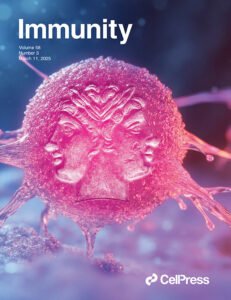
Academic Journal
Q1Immunity
About Immunity
Immunity is a scholarly journal published by Cell Press. SCImago 2025 places it in Q1 with an SJR of 16.481 and an H-index of 498.
Its listed coverage is 1994-2026 and its research categories include Immunology (Q1); Immunology and Allergy (Q1); Infectious Diseases (Q1). The 2025 dataset reports 254 documents and 14743 citations across the latest three-year reporting window.
Immunity is the body's natural defense system against infections, diseases, and harmful pathogens. A strong immune system helps fight off bacteria, viruses, and other threats, keeping you healthy and active.
Why Is Immunity Important?
A well-functioning immune system:
- Prevents infections by identifying and destroying harmful invaders.
- Speeds up recovery when you fall sick.
- Reduces inflammation, lowering the risk of chronic diseases.
- Enhances overall well-being, ensuring a healthier and more energetic life.
Ways to Strengthen Your Immune System
1. Eat a Balanced Diet
Nutrition plays a crucial role in immunity. Consume:
- Vitamin C-rich foods like oranges, lemons, and bell peppers to boost white blood cell production.
- Zinc-rich foods such as nuts, seeds, and whole grains to improve immune response.
- Antioxidant-rich foods like berries, spinach, and green tea to fight free radicals.
- Probiotics found in yogurt and fermented foods to maintain gut health.
2. Stay Hydrated
Drinking plenty of water helps flush out toxins and supports the immune system. Herbal teas and fresh fruit juices also contribute to hydration.
3. Get Enough Sleep
Lack of sleep weakens the immune system. Aim for 7-9 hours of quality sleep each night to allow the body to repair and regenerate.
4. Exercise Regularly
Moderate exercise, such as walking, yoga, or cycling, boosts circulation, reduces stress, and enhances immune function.
5. Manage Stress Levels
Chronic stress weakens immunity. Practice relaxation techniques like meditation, deep breathing, and mindfulness to keep stress in check.
6. Maintain Good Hygiene
Washing hands, maintaining cleanliness, and avoiding close contact with sick individuals can help prevent infections.
7. Avoid Smoking and Excessive Alcohol
Smoking and excessive alcohol consumption suppress immune function. Limiting these habits can significantly improve your body’s defense system.
Best Immunity-Boosting Foods
- Citrus Fruits – Rich in vitamin C.
- Garlic – Contains allicin, known for its immune-boosting properties.
- Ginger – Reduces inflammation and fights infections.
- Turmeric – Has curcumin, which supports immune function.
- Almonds – High in vitamin E, a key immune booster.
Journal Metrics
Metrics can change by reporting year. Verify time-sensitive values with the publisher or indexing service.
Aims & Scope
In today’s fast-paced world, maintaining a strong immune system is essential for overall well-being. Scope Immunity is a term that refers to a holistic approach to boosting immunity through proper nutrition, lifestyle changes, and natural remedies. A well-functioning immune system helps protect against infections, diseases, and environmental threats. In this article, we will explore how you can enhance your immune system naturally.
Importance of a Strong Immune System
The immune system acts as a defense mechanism, fighting off harmful pathogens such as bacteria, viruses, and toxins. A robust immune system ensures quicker recovery from illnesses and reduces the risk of chronic diseases. Factors such as poor diet, stress, lack of exercise, and insufficient sleep can weaken immunity. Strengthening your immune system requires a well-rounded approach that includes healthy habits and dietary choices.Key Factors to Enhance Scope Immunity
- Nutrient-Rich Diet
- Consume a diet rich in vitamins and minerals, such as Vitamin C, Vitamin D, and Zinc.
- Include antioxidant-rich foods like citrus fruits, berries, leafy greens, and nuts.
- Probiotics found in yogurt and fermented foods help maintain gut health, which is crucial for immunity.
- Regular Exercise
- Engaging in moderate physical activity like walking, jogging, or yoga improves circulation and immune function.
- Exercise reduces inflammation and promotes overall well-being.
- Adequate Sleep
- Quality sleep of 7-9 hours enhances immune responses.
- Poor sleep patterns can lead to increased vulnerability to infections.
- Hydration and Detoxification
- Drinking enough water flushes out toxins and supports immune function.
- Herbal teas, green tea, and detoxifying drinks help cleanse the body.
- Stress Management
- Chronic stress weakens the immune system.
- Meditation, deep breathing exercises, and engaging in hobbies help reduce stress levels.
- Herbal and Natural Remedies
- Turmeric, ginger, garlic, and honey have antimicrobial properties that support immunity.
- Herbal supplements like echinacea and ashwagandha boost immune function naturally.
Lifestyle Changes for Long-Term Immunity
Apart from diet and exercise, lifestyle choices play a crucial role in immunity enhancement. Avoiding smoking, limiting alcohol intake, and maintaining good hygiene are essential practices. Regular health check-ups and vaccinations also contribute to a well-balanced immune system.Recent Research Articles
Latest publications matched automatically by ISSN.
Autophagy maintains high endothelial venule identity and function during inflammation
Kathryn A. Jacobs, Yichao Hua, Apostolos Panagiotis Nikolakopoulos, Swati Gupta et al.
2026-09 · DOI: 10.1016/j.immuni.2026.06.020GPCR-Gα13 signaling regulates survival of intestinal intraepithelial CD8+ lymphocytes through migration to cytokine-rich niches
Zachary M. Earley, Anshul Rao, Longhui Qiu, Konrad Knöpper et al.
2026-09 · DOI: 10.1016/j.immuni.2026.07.021Twenty-year persistence of SARS-CoV-1 immune imprinting shapes antibody responses to SARS-CoV-2 infection
Qi Zhang, Peng Chen, Fenglin Guo, Runhong Zhou et al.
2026-09 · DOI: 10.1016/j.immuni.2026.08.009Canonical and noncanonical autophagy in immunity
Vojo Deretic
2026-09 · DOI: 10.1016/j.immuni.2026.07.017Sensory nerves send lymphoid assembly up in smoke
Aditya Patil, Lloyd Bod
2026-09 · DOI: 10.1016/j.immuni.2026.08.007Metabolic inflammation, obesity, and cancer
Fawaz Alzaid, Camille Blériot, Gerasimos Anagnostopoulos, Svetoslav Chakarov et al.
2026-09 · DOI: 10.1016/j.immuni.2026.07.020An inflammatory bowel disease-linked lncRNA suppresses transcription factor T-BET expression in T cells to limit intestinal inflammation
Ruxiao Yang-Fischer, Alyssa Shearer, Jingyao Zhao, Theodore Nelson et al.
2026-09 · DOI: 10.1016/j.immuni.2026.07.019Flavin adenine dinucleotide is an endogenous suppressor for cytosolic DNA and RNA sensors to modulate innate immunity
Yao Wang, Yanyan Shen, Jiayu Liu, Qi Qi et al.
2026-09 · DOI: 10.1016/j.immuni.2026.06.010Chromatin triggers tissue-specific immunity in 3D
Joshua McKeever, Andrew S. Koh
2026-09 · DOI: 10.1016/j.immuni.2026.08.010Coordinated transcriptional networks program organelle expansion and metabolic flows for high endothelial morphology and function
Yuhan Bi, Kevin Brulois, Aiman Ayesha, Menglan Xiang et al.
2026-09 · DOI: 10.1016/j.immuni.2026.07.014Transcription factor BHLHE40 expression in group 3 innate lymphoid cells and RORγt⁺ antigen-presenting cells coordinates intestinal immunity
Wei Yang, Silvia Pires, Emre Cardakli, Manabu Nagayama et al.
2026-09 · DOI: 10.1016/j.immuni.2026.06.007Granzyme B Is Critical for T Cell Receptor-Induced Cell Death of Type 2 Helper T Cells
Satish Devadas, Jyoti Das, Catherine Liu, Liying Zhang et al.
2026-09 · DOI: 10.1016/j.immuni.2026.08.006UV irradiation drives lineage-specific MITF-mediated transcription of PD-L1 to confer immune tolerance to UV-mutated melanocytes
Jennifer A. Lo, Inbal Rachmin, Jessica L. Flesher, Xunwei Wu et al.
2026-09 · DOI: 10.1016/j.immuni.2026.08.014UV irradiation drives lineage-specific MITF-mediated transcription of PD-L1 to confer immune tolerance to UV-mutated melanocytes
Jennifer A. Lo, Inbal Rachmin, Jessica L. Flesher, Xunwei Wu et al.
2026-09 · DOI: 10.1016/j.immuni.2026.07.018A pulmonary innate lymphoid cell-driven serotonergic neuroimmune axis orchestrates airway hyperreactivity and cough hypersensitivity
Chia-Hui Luo, Jheng-Syuan Shao, Alan Chuan-Ying Lai, Wei-Chang Huang et al.
2026-09 · DOI: 10.1016/j.immuni.2026.08.004Lending an ear to the lung
Bingpeng Yao, Xin Sun
2026-09 · DOI: 10.1016/j.immuni.2026.08.005Temporal analyses of immune responses in sepsis reveal asynchrony between clinical stage of illness and immune states
Matthew Fish, Jennifer Rynne, Emma Timms, Aislinn Jennings et al.
2026-09 · DOI: 10.1016/j.immuni.2026.08.003Single-allele chromatin tracing reveals cytokine-dependent super-enhancer repositioning in CD4+ T cells
Atishay Jay, Yeqiao Zhou, Sora Yoon, Bereketab N. Abeje et al.
2026-09 · DOI: 10.1016/j.immuni.2026.08.001The transcription factor BACH1 couples chromatin priming and repression to enable macrophage plasticity and adaptation
Petros Tzerpos, Dóra Bojcsuk, Krisztian Bene, Noemí Caballero-Sánchez et al.
2026-09 · DOI: 10.1016/j.immuni.2026.06.022Speedy delivery: EV-derived fungal antigens establish oral-gut Th17 crosstalk
Joanne E. Konkel, Sarah L. Gaffen
2026-09 · DOI: 10.1016/j.immuni.2026.08.008Reviews
Community Reviews
Version History
April 14, 2025 at 11:18 am
March 21, 2025