Academic Journal
Q1Journal of Financial and Quantitative Analysis
About Journal of Financial and Quantitative Analysis
Journal of Financial and Quantitative Analysis is a scholarly journal published by Cambridge University Press. SCImago 2025 places it in Q1 with an SJR of 4.404 and an H-index of 164.
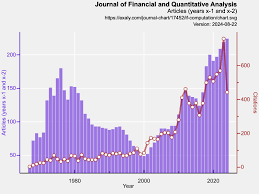
Its listed coverage is 1966-2026 and its research categories include Accounting (Q1); Economics and Econometrics (Q1); Finance (Q1). The 2025 dataset reports 193 documents and 1572 citations across the latest three-year reporting window.
About the Journal of Financial and Quantitative Analysis (JFQA)
The Journal of Financial and Quantitative Analysis (JFQA) is one of the most prestigious academic journals in the field of finance. Published by the Michael G. Foster School of Business at the University of Washington, JFQA is recognized worldwide for its high-quality research and significant contributions to financial theory and practice.
Overview of JFQA
Founded in 1966, JFQA serves as a leading forum for the publication of empirical and theoretical research in financial economics. The journal covers a wide range of finance topics, including corporate finance, asset pricing, financial markets, risk management, behavioral finance, international finance, and financial econometrics. It is published bimonthly and consistently ranks among the top finance journals globally.
Impact and Reputation
The Journal of Financial and Quantitative Analysis has a strong academic reputation and a high impact factor, which reflects the quality and influence of its published research. It is widely read by academics, policymakers, financial professionals, and graduate students. Articles published in JFQA are frequently cited in other scholarly journals, indicating their importance in shaping modern finance theory and practice.
JFQA is also included in key academic databases such as JSTOR, EBSCOhost, Scopus, and Web of Science, making it easily accessible to researchers and professionals around the world.
Editorial Process and Standards
JFQA maintains a rigorous peer-review process to ensure the highest standards of academic integrity and research excellence. Manuscripts submitted to the journal undergo a double-blind review, where both the author and reviewers remain anonymous. This process ensures objectivity and fairness in evaluating submissions.
The journal’s editorial board is composed of leading finance scholars from top universities and research institutions. Their expertise helps maintain the quality and relevance of the content published in JFQA.
Submission and Publication
JFQA welcomes submissions from researchers across the globe. The journal looks for original, innovative, and methodologically sound research that adds value to the financial academic community. Authors interested in submitting their work can find detailed guidelines on the JFQA website, including formatting requirements, submission fees, and review timelines.
Accepted papers undergo a thorough editorial process before publication, ensuring they meet the highest standards of academic excellence. Once published, articles are distributed to an international audience, amplifying their impact and visibility.
Journal Metrics
Metrics can change by reporting year. Verify time-sensitive values with the publisher or indexing service.
Aims & Scope
Scope of the Journal of Financial and Quantitative Analysis (JFQA)
The Journal of Financial and Quantitative Analysis (JFQA) is a leading academic journal recognized globally for its rigorous research in the fields of finance and quantitative methods. Published by the Michael G. Foster School of Business at the University of Washington, JFQA serves as a critical platform for scholars, researchers, and professionals seeking high-impact research on financial economics. With its focus on analytical and empirical studies, the journal plays a pivotal role in shaping modern financial theory and practice.
Core Areas of Research
JFQA publishes articles that make substantial contributions to the understanding of financial markets, institutions, and instruments. The journal's scope includes, but is not limited to, the following areas:
-
Asset Pricing: Research exploring how securities are priced in markets, including both theoretical models and empirical tests of asset pricing frameworks such as the CAPM, APT, and multifactor models.
-
Corporate Finance: Studies on capital structure, dividend policy, corporate governance, mergers and acquisitions, and executive compensation.
-
Market Microstructure: Articles analyzing the functioning of financial markets at the transaction level, including order flow, liquidity, and market efficiency.
-
Banking and Financial Institutions: Research that investigates the role and behavior of banks, financial intermediaries, and regulators in the global economy.
-
Behavioral Finance: Work that incorporates psychological insights into financial decision-making and market outcomes.
-
International Finance: Analysis of global financial systems, exchange rates, cross-border investments, and the financial integration of markets.
-
Derivatives and Risk Management: Studies focused on financial instruments like options, futures, and swaps, and the strategies used to manage financial risk.
Target Audience
The Journal of Financial and Quantitative Analysis is tailored for an audience that includes academic researchers, Ph.D. students, financial economists, policy makers, and practitioners in finance. It is especially valuable for those engaged in the advancement of financial theory, econometric modeling, and investment analysis.
Academic Rigor and Peer Review
All submissions to JFQA undergo a strict peer-review process conducted by experts in finance and quantitative analysis. The journal is known for its high academic standards and emphasis on methodological soundness, originality, and relevance. It is consistently ranked among the top finance journals in the world, making it a highly respected source in academic and professional finance communities.
Importance in Financial Research
As financial markets evolve, the Journal of Financial and Quantitative Analysis continues to be at the forefront of disseminating important research findings. Its influence extends across academia and industry, contributing to the formulation of financial strategies, investment practices, and regulatory policies. JFQA is also frequently cited in top-tier journals and textbooks, reinforcing its reputation as a cornerstone of financial literature.
Recent Research Articles
Latest publications matched automatically by ISSN.
The Risk of Outsourcing: How External Advisors Influence Mutual Fund Performance
Jung Hoon Lee, Saurin Patel, Shyam Sunder Venkatesan
2026-07-30 · DOI: 10.1017/s0022109026103287Inflation and Corporate Credit Risk: Global Evidence
Buhui Qiu, Thomas To, Gaiyan Zhang
2026-07-29 · DOI: 10.1017/s0022109026103305Macroeconomic Fundamentals and the Shape of Sovereign Credit Risk
Daniele Bianchi, Teng Jiao
2026-07-29 · DOI: 10.1017/s0022109026103329Financial Consequences of the Belt and Road Initiative – CORRIGENDUM
Mehmet Ihsan Canayaz
2026-07-23 · DOI: 10.1017/s0022109026103196Location, Location, Location: Senate Trading and Seat Proximity
Dane M. Christensen, Hengda Jin, Beverly R. Walther, Laura A. Wellman et al.
2026-07-22 · DOI: 10.1017/s0022109026103299Estimating the Term Premium: Sample Periods Matter
Zehao Li
2026-07-21 · DOI: 10.1017/s0022109026103263The Impact of a Principles-Based Approach to Director Gender Diversity
Tor-Erik Bakke, Laura Casares Field, Hamed Mahmudi, Aazam Virani et al.
2026-07-13 · DOI: 10.1017/s0022109026103238Continuity and Change on Corporate Boards
Peter Cziraki, Adriana Z. Robertson
2026-07-13 · DOI: 10.1017/s002210902610324xLabor Exposure to Climate Risk, Productivity Loss, and Capital Deepening
Zhanbing Xiao
2026-07-13 · DOI: 10.1017/s0022109026103251Misconduct and Market Implications of Honest Advisers’ Decisions
Michael Gelman, Amir Shoham
2026-07-10 · DOI: 10.1017/s0022109026103214The Effects of Open Banking on FinTech Firms’ Dynamics and Funding Structure
Andrés Alonso-Robisco, José Manuel Carbó, Pedro Jesús Cuadros-Solas, Jara Quintanero et al.
2026-07-07 · DOI: 10.1017/s0022109026103135Securing Debt in the Knowledge Economy: Evidence from Intellectual Property Registers
Laurie Ciaramella, David Heller, Leo Leitzinger
2026-06-26 · DOI: 10.1017/s002210902610310xUnlocking ESG Premium from Options
Jie (Jay) Cao, Amit Goyal, Xintong (Eunice) Zhan, Weiming (Elaine) Zhang et al.
2026-06-26 · DOI: 10.1017/s0022109026103123Crowding-Out Innovation
Julian Atanassov, Vikram Nanda
2026-06-25 · DOI: 10.1017/s0022109026103111How Does Benchmarking Affect Market Efficiency? The Role of Learning Technology
Wen Chen, Bo Hu, Yajun Wang
2026-06-25 · DOI: 10.1017/s0022109026103160Measuring the Cost of Regulation: A Text-Based Approach
Charles W. Calomiris, Harry Mamaysky, Ruoke Yang
2026-06-24 · DOI: 10.1017/s0022109026103147Portfolio Choice with Nonfungible Brokerage Cash
Xindi He, Ning Zhu
2026-06-17 · DOI: 10.1017/s0022109026103093Do Banks Overreact to Disaster Risk?
Qianqian Huang, Feng Jiang, Yuhai Xuan, Tao Yuan et al.
2026-06-15 · DOI: 10.1017/s0022109026103081Common Idiosyncratic Quantile Factors and Asset Prices
Jozef Baruník, Matěj Nevrla
2026-06-10 · DOI: 10.1017/s002210902610307xSwimming Against the Current: Contrarian Retail Trading – CORRIGENDUM
Brad Cannon, Hannes Mohrschladt
2026-06-09 · DOI: 10.1017/s0022109026103019Reviews
Community Reviews
Version History
April 20, 2025 at 3:00 pm
April 20, 2025