Academic Journal
Q1Nano Energy
About Nano Energy
Nano Energy: Journal Profile
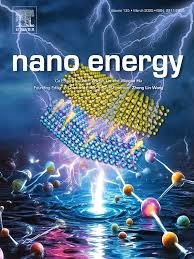
Nano Energy is a multidisciplinary, rapid-publication peer-reviewed journal published by Elsevier B.V. in the Netherlands, devoted to the science and engineering of nanomaterials and nanodevices used in energy harvesting, conversion, storage, utilisation and policy. Its print ISSN is 2211-2855 and its online ISSN is 2211-3282, the pair recorded by both the publisher's ScienceDirect journal pages and the OpenAlex source record for the journal. Launched at the start of the 2010s, with publication coverage beginning in 2012, the journal arrived at a moment when nanoscience was moving from laboratory curiosity toward working energy technologies: batteries that charge faster and hold more, solar cells built from engineered nanostructures, devices that harvest wasted mechanical motion, and catalysts that split water or reduce carbon dioxide. Rather than treating those topics as separate specialisms, Nano Energy was designed as a single forum where materials scientists, chemists, physicists, electrical engineers and energy researchers could read and challenge one another's work. That founding editorial bet has shaped everything about the journal since: it is selective, fast-moving, citation-dense, and firmly positioned at the high-impact end of energy materials publishing. For authors, a paper here signals that nanoscale work has clear energy relevance and broad interest. For readers, it is one of the first places to check when a new nanogenerator architecture, electrode material or photovoltaic concept begins to attract attention across the field.
The journal's own description, as published by Elsevier, calls it a forum for original peer-reviewed contributions on nanomaterials and nanodevices in all forms of energy harvesting, conversion, storage and utilisation, together with energy policy. Through a mixture of full articles, reviews, communications, research news and comment on key developments, it aims to give comprehensive coverage of a field that joins nanoscience and nanotechnology with energy science. That combination matters for how submissions are judged. A technically excellent nanomaterial with no demonstrated or credibly argued energy function sits outside the journal's centre of gravity, while an energy device study whose nanoscale mechanism is routine may be judged too incremental. The strongest papers usually do both halves of the title at once: they advance understanding of a nanoscale phenomenon and show, with convincing device or performance evidence, why that advance changes what an energy technology can do. Understanding that dual test is the single most useful thing a prospective author can learn from this profile, because many rejections in journals of this type are fit rejections rather than quality verdicts, and fit here is defined by the meeting point of the nano and the energy, not by either side alone.
| Field | Detail |
|---|---|
| Journal title | Nano Energy |
| Publisher | Elsevier B.V. (Netherlands) |
| Print ISSN | 2211-2855 |
| Online ISSN | 2211-3282 |
| First publication coverage | 2012 |
| Co-Editors-in-Chief (ScienceDirect listing) | Weiguo Hu (University of Chinese Academy of Sciences) and Zhiqun Lin (National University of Singapore) |
| Founding Editor-in-Chief | Zhong Lin Wang |
| Subject areas (publisher) | Materials Chemistry, Energy (general), Nanotechnology |
| Publishing model | Subscription with optional open access |
| Indexing (publisher listing) | Scopus, Science Citation Index Expanded (SCIE) |
History and Development
Nano Energy was introduced by Elsevier in late 2011, ahead of its first volume in 2012, with Zhong Lin Wang of the Georgia Institute of Technology as its founding Editor-in-Chief. Wang, who directs the Beijing Institute of Nanoenergy and Nanosystems and is widely credited with pioneering the nanogenerators field, set the journal's tone in his introductory statements: energy research, he argued, would sit at the core of science and technology for decades, and a dedicated platform was needed for global research in green and sustainable energy built on nanomaterials and nanotechnology. The timing was apt. Triboelectric and piezoelectric nanogenerators were emerging as a new way to harvest mechanical energy from motion, vibration, wind and water; lithium-ion research was being reshaped by nanostructured electrodes; and perovskite photovoltaics were about to begin their rapid rise. A journal scoped precisely at that intersection could grow with the field rather than chase it, and the citation record summarised later in this profile suggests that it did.
Through the 2010s the journal expanded from its nanogenerator heartland into a broad energy-materials portfolio: supercapacitors, metal-air and lithium-sulfur batteries, electrocatalysis for hydrogen production, thermoelectrics, light-emitting devices and self-powered systems that combine harvesting with sensing. Self-powered nanosystems became a signature theme, reflecting the founding editor's research programme on distributed energy for sensors and wearable electronics. Editorial leadership has since broadened. ScienceDirect currently lists two Co-Editors-in-Chief, Professor Weiguo Hu of the University of Chinese Academy of Sciences and Professor Zhiqun Lin of the National University of Singapore, supported by a large international board. That structure, with leadership spanning China, Singapore and the journal's wider contributor base, mirrors where nano-energy research output is concentrated. Prospective authors should always check the live editorial board page before submitting, because board composition changes over time and the names recorded here describe the listing seen during preparation of this profile.
Aims, Scope and Subject Coverage
The publisher's aims and scope statement welcomes original experimental and theoretical research on all aspects of energy-related work that uses nanomaterials and nanotechnology. The topics the journal itself names give the clearest map of its territory: batteries; fuel cells; hydrogen generation and storage; light-emitting diodes; optoelectronic devices for efficient energy use; photovoltaics; piezoelectric nanogenerators; policy and perspectives in energy; recycling of energy materials; self-powered nanodevices and nanosystems; supercapacitors; and thermoelectrics. Each of those headings hides a competitive subfield. Battery papers compete on metrics such as capacity retention, rate capability, safety and cycle life, and are expected to compare performance honestly against the state of the art using full-cell or otherwise realistic testing where the claims demand it. Photovoltaics papers are judged on certified or carefully measured efficiency, stability under realistic conditions, and the novelty of the nanoscale design, whether that is interface engineering, quantum-dot or perovskite nanostructure control, or light management. Nanogenerator papers, the journal's founding speciality, are expected to report output power density, durability over many cycles, and a plausible application pathway, rather than open-circuit voltage alone.
Several scope boundaries deserve emphasis. First, the energy connection must be real and central: routine synthesis of a nanomaterial with a speculative final sentence about future energy use rarely survives triage. Second, the nanoscale contribution must be more than decoration; reviewers look for size, interface, defect or quantum effects that are characterised and linked to the energy performance claimed. Third, the journal also publishes work on energy policy and perspectives, and on recycling of energy materials, which widens the door for well-evidenced analysis pieces, but those contributions are held to the same standard of significance. Fourth, computational and theoretical studies are in scope when they produce testable insight into energy materials or devices, not merely descriptive modelling. Finally, authors working on carbon dioxide reduction, water splitting and other electrocatalytic topics should present product quantification, faradaic efficiency and stability data of the standard the catalysis community expects, because the journal's readership includes specialists who will check those numbers first. Reading recent issues is the fastest way to calibrate all of these expectations, since the scope statement describes the territory while published papers reveal the evidentiary bar in practice.
Article Types and What They Must Do
Elsevier's guide for authors describes four manuscript types. Review articles inform readers of the latest research and advances in energy science; in this journal a competitive review does not simply catalogue papers but organises a fast-moving area around mechanisms, performance frontiers and unresolved problems, giving the reader a map they could not assemble alone. Rapid communications feature exciting research breakthroughs; they are short by design and reserved for results whose novelty and urgency justify speed, so authors should reserve this format for findings that genuinely cannot wait for a full article. Full-length articles report comprehensive research developments, with the complete experimental or theoretical record, characterisation, controls and analysis that a breakthrough claim requires. News and opinion pieces comment on topical issues or express views on developments in related fields, and are typically developed with the editors rather than submitted cold. Choosing between a communication and a full article is a strategic decision: the communication route rewards a single sharp advance presented economically, while the full article allows layered evidence, broader comparisons and deeper mechanism. Authors whose work has both should discuss the split with care, because dividing one study into minimal units is discouraged in scholarly publishing generally and is a poor fit for a journal that values comprehensive coverage.
Editorial Leadership and Peer Review
Peer review at Nano Energy follows the standard Elsevier pattern for its high-selectivity titles: submissions pass an editorial triage in which fit, novelty and evidentiary completeness are assessed, and manuscripts that clear triage are sent to independent expert reviewers whose reports inform the editor's decision. The publisher's journal insights page reports operational figures that help authors plan: a first decision in a matter of days for many submissions, reflecting active desk screening; around four weeks from submission to a decision after review; roughly two months from submission to acceptance for successful papers; and online publication within days of acceptance. Those are publisher-reported averages at the time the insights page was captured, not guarantees for any individual manuscript, and papers requiring major revision, additional experiments or multiple review rounds will take longer. The same insights listing reported an acceptance rate of about sixteen percent, which is the most honest single number an author can use when deciding whether a manuscript is ready: roughly five of every six submissions do not appear in the journal, so pre-submission honesty about fit and completeness matters more than optimistic formatting.
Editorial governance rests with the Co-Editors-in-Chief named in the quick-facts table, an executive layer drawn from the nano-energy community, and a broad editorial board whose members handle manuscripts across the journal's topic families. Because the field is interdisciplinary, editors routinely combine reports from reviewers with different lenses, for example a materials characterisation specialist alongside a device engineer, and authors should write introductions and significance statements that a smart non-specialist editor can follow. Clear articulation of the energy problem, the nanoscale idea, the decisive evidence and the advance over prior work, in that order, is the structure that survives triage most reliably. Like other Elsevier journals, Nano Energy operates within the publisher's research-integrity framework: submissions are screened for plagiarism and image irregularities, authorship changes after submission are restricted, and data-availability and competing-interest declarations form part of the modern submission record. Authors should prepare those elements before submission rather than treating them as administrative afterthoughts.
Metrics, Indexing and Standing
Nano Energy is indexed in Scopus and in the Science Citation Index Expanded, the two listings the publisher itself highlights, and it carries Q1 standing in the Scopus-based category rankings summarised by SCImago for Electrical and Electronic Engineering, Materials Science and Renewable Energy, Sustainability and the Environment. On the publisher's comparison listing, ScienceDirect reports a CiteScore of 29.6 and a Journal Impact Factor of 16.7 for the journal; an earlier capture of the publisher's insights page showed 30.4 and 17.1 respectively. Those two readings are not a contradiction to be hidden but a normal feature of metric cycles: CiteScore and Impact Factor are recomputed on annual cycles, move as citation windows roll forward, and should always be quoted with their source and cycle. SCImago-derived summaries report an SJR of about 3.8 and a Scopus-based h-index of 303 in recent listings. Treat all such figures as dated snapshots, verify the current values in Scopus Sources or Journal Citation Reports before citing them in a grant or promotion document, and never compare them across fields without allowing for different citation cultures.
The OpenAlex source record, fetched directly for ISSN 2211-2855 during preparation of this profile, gives an independent, database-wide view: 11,721 works, 950,804 citations, an h-index of 323 and a two-year mean citedness of about 19.3, under source identifier S2497301991. OpenAlex counts differ from Scopus counts because the underlying databases index different document sets and update on different schedules; the h-index values of 303 and 323 from the two systems are therefore complementary rather than competing claims. What both systems agree on is the substantive point: this is one of the most heavily cited journals in energy materials, with citation density far above general materials titles. For readers, that standing makes the journal a useful early-warning system for techniques about to spread. For authors, it cuts both ways: publication here brings visibility, but the same visibility means methods sections and performance claims will be read, reused and checked by exactly the specialists best placed to find their weaknesses.
Open Access, Charges and Licensing
Nano Energy operates a hybrid model. The subscription route charges authors no publication fee, and published articles are made available to subscribers immediately. The open access route makes the individual article freely available on publication in exchange for an article publishing charge; ScienceDirect's current journal listing puts that charge at USD 5,900 excluding taxes, while its insights page captured earlier showed USD 5,470, so authors must confirm the live figure in the submission system before committing, and should check whether their institution holds a read-and-publish agreement with Elsevier that covers part or all of the charge for eligible corresponding authors. Funders with open access mandates may require the paid route or a compliant self-archiving route under the publisher's sharing policies; the correct choice depends on the funder, the institution and the licence selected, and it should be decided before acceptance rather than after. A search of the Directory of Open Access Journals made for this profile returned no listing for the journal's ISSN, which is consistent with its hybrid status: hybrid journals are not DOAJ-listed titles, and the absence of a DOAJ record is not a quality signal in either direction for a journal of this type.
Who Should Submit, and How to Judge Fit
The best-fit authors are research groups with a complete, well-characterised advance at the nano-energy interface: a new electrode architecture with convincing cycling data, a nanogenerator with record power density and durability, a photovoltaic device whose nanoscale design produces a measurable efficiency or stability gain, a catalyst whose activity and selectivity are quantified to community standards, or a self-powered system demonstrated end to end. Review proposals are strongest from groups who have themselves shaped the subfield they propose to survey. Poor fits include incremental materials variations with thin characterisation, device papers missing standard control experiments, and energy claims supported only by a single favourable metric. Before submitting, authors should perform three checks that mirror editorial triage. First, state the advance in one sentence without mentioning the journal; if the sentence needs the phrase "for the first time" to sound interesting, examine whether the advance is real. Second, list the three closest prior papers, ideally including recent Nano Energy papers, and write down precisely what is new relative to each; that paragraph usually becomes the heart of the cover letter. Third, audit the figures for the controls a sceptical specialist would demand, and run any missing experiment before submission rather than after review. Time spent on those checks is repaid either in a stronger submission here or in a faster, better-targeted submission to a sister energy or materials title if the honest conclusion is that the work, while sound, belongs one tier over.
Reading the Journal as a Research Tool
Beyond submission strategy, Nano Energy rewards systematic reading. Its review articles are efficient entry points into unfamiliar subfields, typically written by leading groups and organised around open problems. Its communications flag techniques early: triboelectric sensing, perovskite interface passivation strategies and solid-state battery interphase designs all appeared in rapid formats before becoming standard topics elsewhere. Researchers building a literature review in energy materials should pair this journal with its broader Elsevier neighbours and with society titles, remembering that a high-impact generalist lens can over-represent fashionable topics; the absence of a subject here does not mean the subject is inactive, only that it has not cleared this journal's significance bar recently. Librarians and research managers evaluating subscriptions should note the journal's Scopus coverage from 2012 onward and its monthly publication rhythm as listed in secondary directories, and should base usage decisions on local download and citation data rather than headline metrics alone. Students, finally, can use the journal to learn how high-selectivity energy papers are argued: the pattern of problem, nanoscale idea, decisive evidence and quantified advance is visible in nearly every successful article, and imitating that argument structure, while doing original work of one's own, is a legitimate and effective education in scientific writing.
Frequently Asked Questions
Is Nano Energy a legitimate, peer-reviewed journal? Yes. It is an Elsevier B.V. title, indexed in Scopus and the Science Citation Index Expanded, with named academic editors and a published guide for authors; it should not be confused with similarly named newer titles from other publishers, which are separate journals with their own ISSNs.
What are its ISSNs? Print ISSN 2211-2855 and online ISSN 2211-3282, as listed by the publisher and confirmed in the OpenAlex source record.
Is it open access? It is a hybrid journal: subscription publication carries no author fee, while an optional open access route is offered for an article publishing charge that must be confirmed live at submission, since listings captured at different times showed different amounts.
How selective is it? The publisher's insights page reported an acceptance rate of about sixteen percent at the time of capture; figures change, but authors should plan for a highly selective process.
How fast is it? Publisher-reported averages at capture were a few days to first decision, about twenty-eight days to a decision after review, and about two days from acceptance to online publication; individual manuscripts vary, especially when revision and extra experiments are required.
Does it appear in DOAJ? A DOAJ search by ISSN made for this profile returned no listing, which is expected for a hybrid subscription journal and is not a negative quality indicator.
Who founded it, and who leads it now? Zhong Lin Wang was the founding Editor-in-Chief, introduced by Elsevier in 2011 ahead of the 2012 first volume. ScienceDirect currently lists Weiguo Hu and Zhiqun Lin as Co-Editors-in-Chief; always verify current leadership on the live editorial board page.
What is the most common avoidable mistake? Submitting work whose energy relevance or nanoscale novelty is asserted rather than demonstrated. The journal's scope requires both halves of its title to be advanced by the paper itself.
Sources and Verification Note
This profile was prepared from the publisher's ScienceDirect journal, insights, aims-and-scope and guide-for-authors pages for Nano Energy; the OpenAlex source record fetched directly by ISSN (source S2497301991), which supplied the works, citation, h-index and mean-citedness figures attributed to OpenAlex above; a Directory of Open Access Journals search by ISSN, which returned no listing; SCImago-derived category and quartile summaries as reported by secondary journal directories; and Elsevier's 2011 announcement introducing the founding Editor-in-Chief. Metric values are dated snapshots from those sources and differ between databases by design; readers should re-verify current figures in Scopus, Journal Citation Reports or the live publisher pages before formal use. Where a field could not be supported from those sources, it has been left general rather than filled with an unverified value.
Source-backed journal facts
Topics in published research
Advanced Sensor and Energy Harvesting Materials; Conducting polymers and applications; Advancements in Battery Materials; Advanced Battery Materials and Technologies; Supercapacitor Materials and Fabrication; Perovskite Materials and Applications.
OpenAlex classifies topics from published works. These topics are not the publisher’s official aims and scope.
Reported open-access list prices
5,210.00 USD; 4,870.00 EUR; 4,170.00 GBP; 646,200.00 JPY
APC list prices reported by OpenAlex, which obtains this information from DOAJ. Confirm current charges, taxes, waivers and eligibility with the publisher; this is not a fee quotation.
Source: OpenAlex source record. Retrieved 2026-10-03. Source record updated 2026-10-02. OpenAlex metrics are different from SCImago metrics and the Clarivate Journal Impact Factor.
Journal Metrics
Quartile, SJR and the listed SCImago H-index use the 2025 imported SCImago dataset. A quartile may vary by subject category. Values without a source or reporting year are unverified historical entries. Verify the current Journal Impact Factor with Clarivate or the publisher before using it.
Aims & Scope
The publisher’s official aims and scope have not yet been verified for this profile. Use the journal website to check subject fit and accepted article types before submitting.
Recent Research Articles
Latest publications matched automatically by ISSN.
ZIF-8 derived polarity-engineered N-doped carbon/PAN nanofibers based triboelectric tactile sensors for AIoT applications
Harris Varghese, Kaustav Roy, Vaishna Priya Kallupadi, Anas Salim et al.
2027-01 · DOI: 10.1016/j.nanoen.2026.112542Lead-free rare-earth-based halide scintillators with near-unity quantum yield and robust stability for high-definition X-Ray imaging
Sini He, Louwen Zhang, Lishuai Huang, Tao Chen et al.
2027-01 · DOI: 10.1016/j.nanoen.2026.112558A bioinspired piezoelectric-triboelectric dual-modal soft gripper for manipulation-state sensing and recognition of underwater handwheel-operated valves
Yuanzheng Li, Yonglin Wu, Hongyu Wang, Peng Xu et al.
2027-01 · DOI: 10.1016/j.nanoen.2026.112603Contact-electro-catalysis: From contact electrification to interfacial redox chemistry
Dae-Jin Kim, In-Yong Suh, Youngwook Chung, Min Jae Park et al.
2027-01 · DOI: 10.1016/j.nanoen.2026.112591Coupled mechanics and electrostatics in compliant rotary triboelectric interfaces
Junrong Chen, Hanyu Chen, Chuzhan Jin, Ge Chen et al.
2027-01 · DOI: 10.1016/j.nanoen.2026.112608Self-powered acoustic sensing based on triboelectric nanogenerators: Principle, fabrication, architecture, and intelligent applications
Jiajia Chen, Mingjun Zou, Daren An, Ying Zhang et al.
2027-01 · DOI: 10.1016/j.nanoen.2026.112540A leaf-mimetic triboelectric-piezoelectric-photovoltaic platform for weather-adaptive multimodal energy harvesting
Zhengnan Sun, Aiwu Zhou, Hanyu Yang, Haoyi Sun et al.
2027-01 · DOI: 10.1016/j.nanoen.2026.112605Electrochemically activated multicenter redox mechanism for high-energy aqueous zinc-ion batteries
Yu Tang, Fangfang Mao, Hua Yao, Leping Liu et al.
2027-01 · DOI: 10.1016/j.nanoen.2026.112581Covert electrostatic-memory platform for tamper-evident information storage: Programmable encoding and self-generated electrostatic readout
Seonmin Yu, Donghan Lee, Hayoung Kim, Sunmin Jang et al.
2027-01 · DOI: 10.1016/j.nanoen.2026.112627An injectable wet-adhesive hydrogel for wireless ultrasound-driven physico-chemical synergistic repair of cavernous nerve injury via piezoelectricity and nitric oxide release
Shenghan Xu, Yang Liu, Linghua Luo, Dingran Li et al.
2027-01 · DOI: 10.1016/j.nanoen.2026.112528Coplanar electronegativity gradients for circumventing charge saturation limits in liquid–solid triboelectrification
Huiyuan Huang, Xue Gong, Yuting Xie, Bingran Wang et al.
2027-01 · DOI: 10.1016/j.nanoen.2026.112623Unraveling the discrepancy between indirect and direct electrocaloric measurements
Jeyeon Lee, Gimin Park, Tae Kyoung Yoon, So-Min Song et al.
2027-01 · DOI: 10.1016/j.nanoen.2026.112613Robust vertical nanosheet arrays enable dendrite-free and ultra-stable molten salt aluminum batteries
Xiaoxue Yan, Kai Luo, Ziyang Liu, Xiaoying Cui et al.
2027-01 · DOI: 10.1016/j.nanoen.2026.112585Synergistic electronic push–pull modulation enables reversible Mn/O redox in P2-type cathodes
Junhao Du, Sicheng Yang, Zhenguo Xiang, Junrong Luo et al.
2027-01 · DOI: 10.1016/j.nanoen.2026.112620Direct measurement of scale-dependent ion transport in individual solid-electrolyte particles
Anhao Zuo, Junyi Qi, Mengzhen Zou, Xiangzhou Kong et al.
2027-01 · DOI: 10.1016/j.nanoen.2026.112580Synergistic dual-interfacial regulation via H2O-poor EDL and inorganic-rich SEI for long-life zinc anodes with high depth discharge
Haoqi Bao, Chenyue Huang, Saisai Lin, Chuming Zheng et al.
2027-01 · DOI: 10.1016/j.nanoen.2026.112593Asynchronous lithiation enables durable fast charging in graphite anodes via interphase ion redistribution
Jiafeng Fan, Yu Li, Fudong Gao, Baofeng Mu et al.
2027-01 · DOI: 10.1016/j.nanoen.2026.112577Thickness-driven charge transfer pathways in droplet-TENGs
Oli Prendergast, Giulio Fatti, Andrew S. Holmes, Tom Reddyhoff et al.
2027-01 · DOI: 10.1016/j.nanoen.2026.112586Fluorine-driven electrolytes for low-temperature lithium batteries: From atomic substitution to rational design
Hui Li, Junjie Ji, Yongkang Wei, Zhihui Yang et al.
2027-01 · DOI: 10.1016/j.nanoen.2026.112539Electron trapping at intrinsic oxygen-deficient sites of oxide fillers enables capacitive energy storage in polymer composites at 200 °C
Zhichao Hu, Hua Wang, Hongcheng Yang, Enzhu Li et al.
2027-01 · DOI: 10.1016/j.nanoen.2026.112571Reviews
Community Reviews
Version History
October 18, 2026 at 3:25 am
April 21, 2025