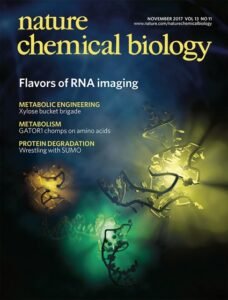
Academic Journal
Q1Nature Chemical Biology
About Nature Chemical Biology
Overview
Nature Chemical Biology (Nat. Chem. Biol.) is a monthly peer-reviewed scientific journal published by Nature Portfolio (Springer Nature). Established in June 2005, it provides a high-visibility international forum for top-tier original research and commentary in chemical biology — the interdisciplinary field where chemistry and biology intersect to understand and manipulate biological systems with molecular precision. The journal is editorially independent within the Nature Portfolio and shares editorial criteria with Nature and the other Nature research journals, selecting papers of broad significance through a fair but comprehensive peer review process that emphasises rigorous chemical and biological characterisation.
Its 2025 Journal Impact Factor is reported as 15.8 by Nature Portfolio (checked October 2026), placing it among the leading journals in biochemistry, molecular biology, and cell biology. The journal publishes original research articles, reviews, perspectives, News & Views, research highlights, and commentary, and its readership spans chemists applying the tools of chemistry to biological questions and biologists seeking to understand and control biological processes at the molecular level.
This profile was researched from the journal's official nature.com pages, the OpenAlex source record, and corroborating sources in October 2026. Marker: NATCHEMBIOL-DEPTH-119-OCT2026
History
Nature Chemical Biology was first published in June 2005 (Volume 1, Issue 1) as part of Nature Publishing Group's expansion of the Nature research journal family into new interdisciplinary fields. The founding Chief Editor was Terry L. Sheppard, a full-time professional editor who led the journal from its planning phase in 2004 through 2022 — an 18-year tenure that shaped the journal's identity as a home for molecular-level chemical biology.
The journal's launch editorial articulated four founding themes of contemporary chemical biology that continue to frame its scope: (1) Chemical Synthesis, including biosynthesis, as an enabling technology; (2) Chemical Mechanisms in Biology, using chemical and biological tools to understand natural biological systems; (3) Expanding Biology through Chemistry, applying chemical techniques to broaden the range of accessible biological systems; and (4) Expanding Chemistry through Biology, harnessing biological diversity and information in the service of chemistry.
From launch, the journal committed to the Nature journals' model of professional editorial decision-making without an external editorial board, with manuscript decisions made by an in-house team of chemical-biology editors in consultation with expert referees. As of 2026 the journal is publishing Volume 22 (the October 2026 issue was Volume 22, Issue 10, per nature.com), and it has built a citation record of roughly 5,500 works and over 457,000 citations in OpenAlex's October 2026 data.
Editorial Leadership
Like the other Nature research journals, Nature Chemical Biology does not have an external editorial board. Instead, all editorial decisions are made by a team of full-time professional editors who are themselves trained chemical biologists, in consultation with experts in the field. The journal is editorially independent from the other Nature titles: each manuscript is considered on its own merits, focusing on its appropriateness for the journal's scope, its potential significance within the field, and its likely interest to a general audience of chemists and biologists.
The founding Chief Editor was Terry L. Sheppard (2004–2022). The current editor-in-chief is Russell Johnson (as listed in encyclopedic journal records; the Nature Portfolio careers pages confirm an active professional editorial team supporting the journal). The editorial team places a high premium on manuscripts that report significant conceptual or methodological advances and that demonstrate the biological relevance of their results.
Aims & Scope
According to the journal's official Aims & Scope page on nature.com, Nature Chemical Biology is an international monthly journal providing a high-visibility forum for the publication of top-tier original research and commentary for the chemical biology community. Chemical biology, as the journal frames it, combines the scientific ideas and approaches of chemistry, biology, and allied disciplines to understand and manipulate biological systems with molecular precision.
The journal publishes papers from the expanding community of chemical biologists — contributions from chemists applying the principles and tools of chemistry to biological questions, and from biologists interested in understanding and controlling biological processes at the molecular level. The journal gives priority to studies reporting significant conceptual or practical advances in any area where chemistry and biology intersect. It is primarily interested in basic research, especially studies that report new chemical or biological tools or present significant new molecular-level insights into the mechanisms underpinning biological processes. It also considers applied molecular studies at the chemistry–biology interface and seeks manuscripts that blend chemistry and biology in new ways — particularly those offering major conceptual or methodological advances likely to open innovative avenues of research.
Topic areas covered by this highly selective title include metabolism, signalling pathways, proteostasis, genome engineering, glycobiology, proteomics, protein engineering, metabolic engineering, biosynthesis, biosensors, lipids, nucleic acids, and computational methods (Nature Portfolio editorial recruitment pages). Each monthly issue also carries enhanced content — reviews, research highlights, and News & Views articles that put important developments in context for a broad readership — and the journal organises themed collections such as the April 2026 mini-focus on metabolism/redox biology (nature.com, October 2026).
Article formats include original research Articles, Review Articles, News & Views, Research Highlights, Comments, and Analysis pieces.
Key Facts
| Fact | Detail |
|---|---|
| Journal title | Nature Chemical Biology |
| ISO 4 abbreviation | Nat. Chem. Biol. |
| CODEN | NCBABT |
| Publisher | Nature Portfolio (Springer Nature) |
| Founded | June 2005 (Volume 1, Issue 1) |
| Print ISSN | 1552-4450 |
| Online ISSN | 1552-4469 |
| ISSN-L | 1552-4450 |
| Frequency | Monthly (12 issues per year) |
| Language | English |
| Peer reviewed | Yes |
| Open access model | Hybrid (subscription with gold open access option) |
| Editor-in-Chief | Russell Johnson |
| Founding Chief Editor | Terry L. Sheppard (2004–2022) |
Metrics
All metrics below are cited with their source and year; figures vary across databases because each uses different methodology and coverage.
- Journal Impact Factor: 15.8 — 2025 impact factor as reported by Nature Portfolio (checked 2026-10-03; confirmed via journal records).
- Journal Impact Factor: 13.5 (2024) — Journal Citation Reports, via Wikipedia.
- Journal Impact Factor: 16.290 (2021) — Journal Citation Reports, via Wikipedia; ranked 13th of 296 journals in "Biochemistry & Molecular Biology."
- CiteScore: 23.4 — journalsinsights (2026 metrics roundup).
- SCImago Journal Rank (SJR): ~5.5–6.0; Q1 in Cell Biology and Molecular Biology — journalsinsights reports SJR 5.509; journalsearches reports SJR 6.032.
- H-index: 246–282 per third-party metric sites (journalsinsights, journalsearches); OpenAlex independently computes an H-index of 315 from its own coverage (October 2026).
- SNIP: 2.623 — journalsinsights.
- OpenAlex: ~5,512 works; ~457,000 citations; 2-year mean citedness 10.7 — OpenAlex source record (retrieved October 2026).
The journal's acceptance rate is not officially published by Nature Portfolio. As one of the most selective journals in chemical biology, competition is intense, but no official acceptance-rate figure is available — any third-party figure should be treated as unverified.
Open Access & APC
Nature Chemical Biology is a hybrid journal: authors may publish via the subscription route or choose gold open access. OpenAlex's October 2026 source record lists the journal's open-access article processing charges at USD 12,690 (with the GBP list price around £9,190 and EUR around €10,690 in third-party journal records). OpenAlex obtains APC list prices from DOAJ data feeds; authors should confirm current charges, taxes, waivers, and eligibility directly with the publisher, as this is not a fee quotation. The journal is not marked as fully open access (OpenAlex is_oa: false; not in DOAJ), and a substantial share of its recent content — including October 2026 research articles — is published open access under authors' chosen licences.
Indexing
Nature Chemical Biology is abstracted and indexed in:
- Chemical Abstracts Service (CAS / CASSI)
- Science Citation Index and Science Citation Index Expanded (Web of Science)
- Current Contents — Life Sciences
- BIOSIS Previews
- Scopus (coverage 2005–present)
- PubMed / MEDLINE
- Embase
- UGC CARE lists
Submission Information
Nature Chemical Biology is a highly selective journal, and its official guidance stresses that the review process is fair but comprehensive, with particular emphasis on rigorous chemical and biological characterisation of reported results.
- How to submit: manuscripts are submitted online through the Nature Portfolio submission system linked from the journal's nature.com homepage.
- What the editors look for: significant conceptual or methodological advances at the chemistry–biology interface; new chemical or biological tools; molecular-level mechanistic insights into biological processes; applied molecular studies where chemical biology approaches manipulate or engineer biological systems. Manuscripts should blend chemistry and biology in new ways and be likely to open innovative avenues of research.
- Editorial process: decisions are made by full-time professional editors (no external editorial board) in consultation with expert referees; the journal shares editorial criteria with Nature and the other Nature research journals.
- Fees: no submission fee; gold open access APC applies only if the author chooses the open-access route (see above).
- Article formats: Articles, Review Articles, News & Views, Research Highlights, Comments, Analysis, correspondence, and commentaries.
FAQs
What is the ISSN of Nature Chemical Biology?
Print ISSN 1552-4450; online ISSN 1552-4469 (ISSN-L 1552-4450).
Who publishes Nature Chemical Biology?
Nature Portfolio, part of Springer Nature.
When was Nature Chemical Biology founded?
June 2005 (Volume 1, Issue 1), with Terry L. Sheppard as founding Chief Editor.
Who is the current editor-in-chief?
Russell Johnson; editorial decisions are made by a team of full-time professional editors rather than an external editorial board.
What is the impact factor of Nature Chemical Biology?
15.8 (2025, as reported by Nature Portfolio); 13.5 (2024, Journal Citation Reports).
How often is it published?
Monthly — 12 issues per year.
Is Nature Chemical Biology open access?
It is a hybrid journal: subscription-based with a gold open access option (APC around USD 12,690 per OpenAlex list prices; confirm with the publisher).
What is the acceptance rate?
The acceptance rate is not officially published by Nature Portfolio.
Where is Nature Chemical Biology indexed?
Chemical Abstracts Service, Science Citation Index (Expanded), Current Contents–Life Sciences, BIOSIS Previews, Scopus, PubMed, and Embase.
What topics does it cover?
Metabolism, signalling, proteostasis, genome engineering, glycobiology, proteomics, protein engineering, metabolic engineering, biosynthesis, biosensors, lipids, nucleic acids, and computational methods at the chemistry–biology interface.
What Makes It Distinctive
Nature Chemical Biology's defining feature is its editorial model. Like the other Nature research journals, it has no external editorial board: every manuscript decision is made by full-time professional editors who are themselves trained chemical biologists, working in consultation with expert referees. This model, articulated at the journal's launch, was designed to give editorial flexibility and to ensure that viewpoints from across the field are heard — rather than filtering decisions through a fixed board of senior academics.
The journal is also editorially independent within the Nature Portfolio: despite sharing editorial criteria with Nature and the other Nature research journals, each manuscript is judged on its own merits — its fit to the journal's scope, its significance within chemical biology, and its likely interest to a broad audience of chemists and biologists. Manuscripts are not ranked against one another, and there is no quota.
A second hallmark is the rigour bar: the journal's official guidance states that its review process emphasises rigorous chemical and biological characterisation. In practice this means papers reporting new molecules, probes, or mechanisms are expected to characterise both the chemistry (identity, purity, selectivity) and the biology (target engagement, cellular or in vivo relevance) — a dual standard that reflects the journal's position at the interface of two disciplines.
The Nature Portfolio Context
Nature Chemical Biology is one of the Nature research journals published by Nature Portfolio, the journals division of Springer Nature. The family was founded on the model of the flagship journal Nature (established 1869): highly selective, professionally edited, broad-readership titles spanning the natural sciences. Sibling titles launched in the same era include Nature Chemical Biology's close neighbours in the chemistry–life-sciences space, and the portfolio has since grown to dozens of research journals.
Being part of this portfolio gives the journal its infrastructure: a unified online submission and peer-review system, professional in-house editorial staff, a shared production and art-editing pipeline (the journal is known for its striking cover art, such as the protein-gel artwork featured in 2026 announcements), and cross-portfolio discovery through nature.com. For readers, a Nature+ subscription bundles Nature Chemical Biology with Nature and more than 55 other Nature journals. For authors, the portfolio's journal-transfer service means a manuscript declined by one Nature title can, with author consent, be considered by another — though each journal decides independently.
Representative Recent Coverage
The journal's October 2026 issue (Volume 22, Issue 10) illustrates the breadth of its current programme. Featured content included a review of small-molecule modulators of protein synthesis that disrupt translation in sequence-dependent ways; a News & Views piece on the TransCODE Consortium's systematic mapping of the human non-canonical proteome ("the dark proteome"); coverage of a study redirecting pancreatic α-cells toward insulin-producing β-cell identity via a PRC2-centred epigenetic–metabolic axis; and a Comment on agentic AI systems reshaping drug discovery.
Recent research articles spanned high-resolution NMR of proteins in intact mitochondria, cryo-EM structures of cisplatin-induced DNA interstrand crosslinks stalled with RNA polymerase II, multiomic proximity labelling in live animals using engineered peroxidases, single-cell glycan barcoding of tumour-infiltrating T cells, dissection of a KDM4 inhibitor's true target (dihydroorotate dehydrogenase) in glioblastoma, engineered amidases and urethanases for plastic depolymerisation, and fungal cytochrome P450 enzymes that construct allene and alkyne motifs from prenyl groups. Review and analysis coverage included cell-by-cell glycan reading, context-dependent drug targeting, and advances in biocatalytic depolymerisation.
This snapshot captures the journal's signature mix: molecular mechanism, new chemical tools, and biological systems from bacteria to humans — with an emphasis on work that changes how researchers think or what they can do.
For Prospective Authors
Nature Chemical Biology is among the most selective journals in its field, and its editors advise authors to weigh scope fit carefully before submitting. Practical guidance from the journal's official pages:
- Conceptual or methodological advance is the currency. The journal prioritises studies reporting significant conceptual or practical advances where chemistry and biology intersect — incremental extensions of established methods are unlikely to clear the bar.
- Characterise both sides. Papers must stand up to rigorous chemical characterisation (compound identity, selectivity, controls) and biological characterisation (target engagement, physiological relevance).
- Basic research first, applied welcome. The journal is primarily interested in basic research — new tools, new molecular-level mechanistic insights — but also considers applied molecular studies at the interface, such as chemical-biology approaches to manipulating or engineering biological systems.
- Expect a full peer-review process. Decisions are made by professional editors in consultation with referees; the journal strives for a fair but comprehensive review.
- No submission fee. Costs arise only if authors choose the gold open access route (APC around USD 12,690 per OpenAlex list prices — confirm current charges with the publisher).
Additional FAQs
Is Nature Chemical Biology the same as Nature Chemistry?
No. They are separate Nature Portfolio journals: Nature Chemical Biology (launched 2005) covers the chemistry–biology interface, while Nature Chemistry covers chemistry more broadly.
Does the journal have an editorial board?
No external editorial board. Manuscript decisions are made by a team of full-time professional editors in consultation with expert referees.
What was the journal's first issue?
Volume 1, Issue 1, June 2005, under founding Chief Editor Terry L. Sheppard.
Does it publish reviews?
Yes — alongside original research articles, it publishes review articles, perspectives, News & Views, research highlights, comments, and analysis pieces.
Is there a submission fee?
No submission fee. The gold open access APC (around USD 12,690 per OpenAlex list prices) applies only if the author chooses the open-access route.
What is the acceptance rate?
The acceptance rate is not officially published by Nature Portfolio.
Sources
- Nature Portfolio — Nature Chemical Biology journal pages: nature.com/nchembio, including the official Aims & Scope page (retrieved October 2026)
- Nature Portfolio editorial recruitment pages (journal scope description; professional editorial team)
- OpenAlex source record, ISSN 1552-4450 (works count, citation counts, H-index, ISSNs, APC list price; retrieved October 2026)
- Wikipedia — "Nature Chemical Biology" (history, founding editor, impact factors, indexing; corroboration)
- journalsinsights and journalsearches metric pages (CiteScore, SJR, SNIP, H-index figures with cited values)
- Nature Chemical Biology launch editorial — "A community of chemists and biologists" (founding themes, editorial model)
Nature Chemical Biology: Bridging Chemistry and Biology for Groundbreaking Discoveries
Nature Chemical Biology is a prestigious, peer-reviewed scientific journal that stands at the intersection of chemistry and biology. Published by the renowned Nature Publishing Group, the journal has become a leading platform for high-impact research that explores the chemical basis of biological processes and the biological functions of chemical molecules. Since its launch in 2005, Nature Chemical Biology has served as a vital resource for researchers, academics, and industry professionals interested in the latest advancements in chemical biology.
What Is Nature Chemical Biology?
Nature Chemical Biology focuses on research that integrates the principles of chemistry with the complexities of biology. The journal publishes a wide range of content, including original research articles, reviews, perspectives, and commentaries. Topics commonly featured include enzyme mechanisms, chemical probes, synthetic biology, drug discovery, and systems biology, among others. The journal emphasizes studies that reveal novel insights into biological function through chemical approaches or provide new tools that enable biological discovery.
Why Is Nature Chemical Biology Important?
In the modern era of interdisciplinary science, the fusion of chemistry and biology is more crucial than ever. Nature Chemical Biology plays a key role in advancing this convergence by highlighting innovative research that uses chemical tools and methods to understand biological systems. This approach not only enhances our understanding of life at the molecular level but also leads to the development of new therapeutics, diagnostic tools, and biotechnological applications.
The journal's high standards for publication ensure that only the most rigorous and impactful studies are featured, making it a trusted source for cutting-edge scientific knowledge. As a result, articles published in Nature Chemical Biology are widely cited and have significant influence across multiple disciplines.
Key Features of Nature Chemical Biology
High-Impact Research: The journal is known for publishing influential studies that push the boundaries of current scientific understanding.
Interdisciplinary Focus: It brings together chemists, biologists, and biophysicists to solve complex biological problems.
Rigorous Peer Review: Each submission undergoes a stringent peer-review process to maintain scientific integrity and excellence.
Global Reach: With a diverse authorship and readership, the journal has a strong international presence.
Topics Covered
Some of the common themes in Nature Chemical Biology include:
Small molecule modulation of biological systems
Mechanistic enzymology and protein engineering
Chemical genetics and proteomics
Development of new chemical tools for biological investigation
Interactions between synthetic molecules and cellular pathways
Verified field sources
- Journal Impact Factor: 15.8 — Official source; checked 2026-10-03. 2025 Journal Impact Factor reported by Nature Portfolio; not a five-year impact factor.
- Impact Factor year: 2025 — Official source; checked 2026-10-03. 2025 Journal Impact Factor reported by Nature Portfolio; not a five-year impact factor.
Source-backed journal facts
Topics in published research
RNA and protein synthesis mechanisms; RNA modifications and cancer; Ubiquitin and proteasome pathways; Microbial Natural Products and Biosynthesis; CRISPR and Genetic Engineering; Glycosylation and Glycoproteins Research.
OpenAlex classifies topics from published works. These topics are not the publisher’s official aims and scope.
Reported open-access list prices
12,690.00 USD; 10,690.00 EUR; 9,190.00 GBP
APC list prices reported by OpenAlex, which obtains this information from DOAJ. Confirm current charges, taxes, waivers and eligibility with the publisher; this is not a fee quotation.
Source: OpenAlex source record. Retrieved 2026-10-03. Source record updated 2026-10-02. OpenAlex metrics are different from SCImago metrics and the Clarivate Journal Impact Factor.
Journal Metrics
Quartile, SJR and the listed SCImago H-index use the 2025 imported SCImago dataset. A quartile may vary by subject category. Values without a source or reporting year are unverified historical entries. Verify the current Journal Impact Factor with Clarivate or the publisher before using it.
Aims & Scope
Scope of Nature Chemical Biology
Nature Chemical Biology is a leading peer-reviewed journal that sits at the dynamic intersection of chemistry and biology. Its scope encompasses a wide range of interdisciplinary research, with a focus on the application of chemical approaches to the understanding and manipulation of biological systems. As part of the prestigious Nature Portfolio, Nature Chemical Biology maintains a high editorial standard, publishing innovative and impactful studies that advance the frontiers of chemical biology.
Interdisciplinary Focus
The journal encourages submissions that bridge the gap between chemistry and biology. Research areas covered include chemical genetics, molecular pharmacology, synthetic biology, bioorthogonal chemistry, and chemical proteomics. Studies that introduce novel chemical tools, methods, or conceptual frameworks to explore biological questions are especially welcomed.
A hallmark of Nature Chemical Biology is its emphasis on originality and mechanistic insight. Whether it’s the development of small molecules to probe biological pathways or the engineering of biomolecules for therapeutic purposes, the journal showcases work that not only reveals new biology but also provides foundational chemical knowledge.
Types of Articles Published
Nature Chemical Biology publishes a variety of content formats, including:
Research Articles: Full-length reports of original research that provide significant advances in the field.
Brief Communications: Shorter articles that describe important new findings.
Reviews and Perspectives: In-depth discussions that synthesize current knowledge and offer expert insights into emerging trends in chemical biology.
Technical Reports: Descriptions of novel methodologies or technologies with broad applicability.
All submissions undergo rigorous peer review to ensure scientific accuracy, reproducibility, and relevance to the broader community.
Target Audience
The journal serves a global audience of researchers, educators, and professionals working in academic institutions, biotech companies, and pharmaceutical industries. Chemists, biologists, bioengineers, and pharmacologists all find value in the curated content of Nature Chemical Biology, making it a critical resource for those developing new drugs, diagnostic tools, or understanding cellular processes at the molecular level.
Impact and Relevance
With a high impact factor and a strong citation record, Nature Chemical Biology is recognized as a premier journal in its field. Its articles often set the stage for new research directions and influence funding and policy decisions in science and healthcare. Researchers looking to gain visibility and contribute meaningfully to the scientific discourse frequently aim to publish in this journal.
Recent Research Articles
Latest publications matched automatically by ISSN.
Chemogenetic activation of mitochondria counteracts the Warburg effect in tumor cells
Dina Y. Bass, Ekaterina S. Potekhina, Alexander V. Ivanenko, Aleksandr A. Moshchenko et al.
2026-10-22 · DOI: 10.1038/s41589-026-02350-7Putting the Warburg effect in reverse
Valentin Cracan
2026-10-22 · DOI: 10.1038/s41589-026-02343-6Finding signal in the noise
Irene Serrano
2026-11 · DOI: 10.1038/s41589-026-02360-5Let’s degrade
Francesco Zamberlan
2026-11 · DOI: 10.1038/s41589-026-02365-0Reduction reporter
Grant Miura
2026-11 · DOI: 10.1038/s41589-026-02364-1Being N sync
Gene Chong
2026-11 · DOI: 10.1038/s41589-026-02361-4Sensing red light
Huijuan Guo
2026-11 · DOI: 10.1038/s41589-026-02363-2Developing phenylalanine decaging
Russell Johnson
2026-11 · DOI: 10.1038/s41589-026-02362-3Beyond the obvious pocket
Xinchao Shi, Jian Zhang
2026-10-16 · DOI: 10.1038/s41589-026-02326-7Tryptoline stereoprobe elaboration identifies inhibitors of the GRPEL1–HSPA9 complex
Rachel E. Hayward, Raymond F. Berkeley, Zijian Gao, Maximilian Garhammer et al.
2026-10-16 · DOI: 10.1038/s41589-026-02348-1Single Staphylococcus aureus SauUSI restriction enzyme motors fragment methylated DNA
Steven J. Shaw, Alex Hughes-Games, Oscar E. Torres Montaguth, Sam McDowall et al.
2026-10-15 · DOI: 10.1038/s41589-026-02353-4PRADA enables in vivo peroxidase proximity labeling for multiomics
2026-10-14 · DOI: 10.1038/s41589-026-02351-6Targeting ribosome biogenesis
Michael Prattes, Helmut Bergler
2026-10-13 · DOI: 10.1038/s41589-026-02344-5A selective NVL inhibitor suppresses tumor growth by targeting ribosome biogenesis
Holly H. Guo, Ye Tao, Victor E. Cruz, Divya Reddy et al.
2026-10-13 · DOI: 10.1038/s41589-026-02324-9An RNA mark for pluripotency
Manish Kumar, Jing Liu
2026-10-12 · DOI: 10.1038/s41589-026-02337-4PUS7 pseudouridylation of 7SK orchestrates human somatic cell reprogramming into iPS cells
Hongxia Cai, Cheng-Wei Ju, Jianfei Chao, Yunzheng Liu et al.
2026-10-12 · DOI: 10.1038/s41589-026-02339-2Proteome-guided drug discovery maps and mitigates therapeutic degrader toxicity
Shaon Basu, Jason Shu Lim Yu, Jessica Bosak, Sharan K. Bagal et al.
2026-10-09 · DOI: 10.1038/s41589-026-02347-2Reading sugars cell by cell
Tongtong Wang, Peng Wu
2026-11 · DOI: 10.1038/s41589-026-02342-7Retraction Note: α-Ketoglutarate dictates AMPK protein synthesis for energy sensing in human cancers
Wen Mi, Yun Xue, Haohang Yan, Yurou Zhang et al.
2026-11 · DOI: 10.1038/s41589-026-02346-3High-resolution NMR spectroscopy of proteins in intact mitochondria
Zeting Zhang, Cai Zhang, Guohua Xu, Ruichen Du et al.
2026-10-07 · DOI: 10.1038/s41589-026-02314-xReviews
Community Reviews
Version History
October 11, 2026 at 7:58 pm
April 20, 2025