Academic Journal
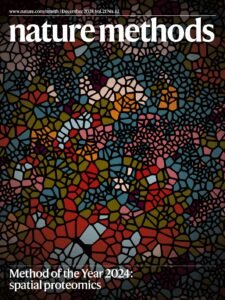
Q1Nature Methods
About Nature Methods
Nature Methods is a scholarly journal published by Nature Research. SCImago 2025 places it in Q1 with an SJR of 15.624 and an H-index of 432.
Its listed coverage is 2004-2026 and its research categories include Biochemistry (Q1); Biotechnology (Q1); Cell Biology (Q1); Molecular Biology (Q1). The 2025 dataset reports 415 documents and 17421 citations across the latest three-year reporting window.
Nature Methods is a premier peer-reviewed scientific journal that focuses on the development and application of cutting-edge methodologies in the life sciences. As part of the prestigious Nature Portfolio, it provides a platform for researchers and scientists to showcase innovative techniques that advance biological and biomedical research. With a high impact factor, Nature Methods is recognized globally for its rigorous editorial standards and groundbreaking contributions.
What is Nature Methods? Nature Methods publishes research papers, reviews, and technical reports on novel experimental techniques, computational tools, and laboratory protocols. The journal covers diverse fields, including molecular biology, genomics, proteomics, imaging, bioinformatics, and synthetic biology. By disseminating innovative approaches, it helps researchers improve the accuracy, efficiency, and reproducibility of scientific experiments. Key Features of Nature Methods- High-Impact Research – Nature Methods publishes cutting-edge studies that introduce transformative technologies and methodologies in biological research.
- Interdisciplinary Scope – The journal covers a wide range of topics, including microscopy, single-cell analysis, sequencing techniques, and CRISPR gene editing.
- Expert Reviews and Commentary – Leading scientists contribute reviews and perspectives on emerging trends and technological advancements in the life sciences.
- Technical Reports and Protocols – Researchers benefit from detailed methodologies that enhance reproducibility and application in experimental research.
- Open Access and Visibility – Some articles are available with open access, ensuring that researchers worldwide can utilize new methods for scientific advancements.
- Advanced imaging techniques such as super-resolution microscopy and cryo-electron microscopy.
- Genomic and transcriptomic sequencing technologies, including single-cell RNA sequencing.
- Proteomics and mass spectrometry innovations.
- CRISPR and genome-editing methodologies.
- AI-driven bioinformatics tools for big data analysis.
Journal Metrics
Metrics can change by reporting year. Verify time-sensitive values with the publisher or indexing service.
Aims & Scope
Research is a systematic process of inquiry that aims to expand knowledge, solve problems, and develop new theories. It is an essential component of academic, scientific, and business domains. Understanding the scope, nature, and methods of research helps in conducting well-structured investigations that yield reliable and valuable results.
Scope of Research
The scope of research defines the boundaries within which a study is conducted. It includes:- Subject Area: Research can be conducted in various disciplines such as science, technology, humanities, and social sciences.
- Purpose: Research may focus on theoretical understanding, practical application, or policy formulation.
- Target Audience: It can be aimed at academics, professionals, businesses, or the general public.
- Time Frame: Research can be historical, contemporary, or futuristic.
- Geographical Coverage: Some studies may focus on local, national, or global perspectives.
Nature of Research
The nature of research varies depending on its objectives and approach. It can be classified as:- Basic vs. Applied Research:
- Basic Research: Focuses on fundamental principles without immediate practical application.
- Applied Research: Aims to solve specific, real-world problems.
- Qualitative vs. Quantitative Research:
- Qualitative Research: Involves non-numerical data, focusing on understanding concepts and behaviors.
- Quantitative Research: Uses numerical data and statistical analysis to establish patterns and relationships.
- Descriptive vs. Analytical Research:
- Descriptive Research: Provides an account of characteristics, trends, or situations.
- Analytical Research: Explores causes, effects, and relationships.
- Empirical vs. Theoretical Research:
- Empirical Research: Based on observation, experiments, and real-world data.
- Theoretical Research: Uses models, theories, and existing literature to develop new concepts.
Methods of Research
Different methodologies are employed depending on the nature of the study. The most common research methods include:- Experimental Method:
- Involves controlled experiments to test hypotheses.
- Common in sciences, medicine, and engineering.
- Survey Method:
- Uses questionnaires, interviews, or polls to collect data from a large group.
- Frequently used in social sciences, marketing, and business research.
- Case Study Method:
- In-depth analysis of a particular individual, organization, or event.
- Provides detailed insights but may not be generalizable.
- Observational Method:
- Directly observing subjects in their natural environment.
- Used in psychology, anthropology, and sociology.
- Historical Method:
- Analyzing past events and trends through archival records and documents.
- Common in history, law, and cultural studies.
Recent Research Articles
Latest publications matched automatically by ISSN.
Reviews
Community Reviews
Version History
April 13, 2025 at 12:17 pm
March 19, 2025