Academic Journal
Q1Trends in Chemistry
About Trends in Chemistry
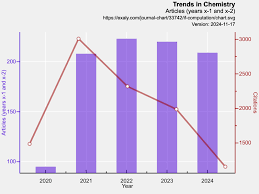
Trends in Chemistry is a scholarly journal published by Cell Press. SCImago 2025 places it in Q1 with an SJR of 2.18 and an H-index of 86.
Its listed coverage is 2019-2026 and its research categories include Chemistry (miscellaneous) (Q1). The 2025 dataset reports 101 documents and 2180 citations across the latest three-year reporting window.
The field of chemistry is evolving rapidly, driven by global challenges and technological advancements. In 2025, the focus is shifting toward sustainability, innovation, and interdisciplinary collaboration. Whether you're a student, researcher, or industry professional, staying updated with the latest chemistry trends is essential. Here’s a deep dive into the top trends in chemistry you should know about in 2025.
1. Green Chemistry and Sustainability
Green chemistry remains a dominant trend, aiming to reduce the environmental impact of chemical processes. Chemists are developing eco-friendly methods for manufacturing, reducing waste, and using renewable resources. Biodegradable plastics, solvent-free reactions, and carbon capture technologies are revolutionizing industries such as pharmaceuticals, agriculture, and packaging.
2. Artificial Intelligence in Chemical Research
Artificial Intelligence (AI) and Machine Learning (ML) are transforming how chemists conduct research. From predicting chemical reactions to designing new compounds, AI is accelerating drug discovery, material science, and reaction optimization. In 2025, more labs are integrating AI tools to automate experiments and analyze large datasets efficiently.
3. Advanced Materials and Nanotechnology
Nanotechnology continues to be a game-changer in materials science. Chemists are developing smart materials with tailored properties for use in electronics, energy storage, and healthcare. Innovations like self-healing materials, graphene-based products, and nano-drug delivery systems are becoming mainstream.
4. Synthetic Biology and Chemical Engineering Integration
Synthetic biology, where chemistry meets biology and engineering, is gaining traction. Researchers are designing synthetic molecules and enzymes to mimic or enhance biological functions. This trend is especially important for producing biofuels, medicines, and sustainable chemicals through engineered organisms.
5. Electrochemistry and Energy Solutions
With the global push toward renewable energy, electrochemistry is playing a crucial role in battery technology, fuel cells, and hydrogen production. Lithium-sulfur and solid-state batteries are being developed to replace traditional lithium-ion batteries, offering higher capacity and safety.
6. Personalized and Precision Chemistry
Chemistry is becoming more personalized, particularly in healthcare. Precision chemistry enables the creation of custom molecules for targeted drug therapies. This approach reduces side effects and improves treatment outcomes, especially in cancer and genetic disorders.
7. Circular Economy and Chemical Recycling
Chemical recycling is a growing trend in 2025, where waste materials are chemically converted back into raw materials. This process supports a circular economy and helps industries reduce their environmental footprint by reusing polymers, plastics, and other complex waste.
Journal Metrics
Metrics can change by reporting year. Verify time-sensitive values with the publisher or indexing service.
Aims & Scope
Chemistry, often called the "central science," connects physics, biology, medicine, engineering, and environmental sciences. Over the years, the scope of chemistry has significantly evolved, and emerging trends continue to shape its future. With advancements in technology and global challenges such as climate change and health crises, chemistry plays a vital role in finding sustainable and innovative solutions.
The Expanding Scope of Chemistry
The scope of chemistry today extends far beyond laboratories and textbooks. Modern chemistry impacts numerous fields including:
-
Pharmaceutical Chemistry: The discovery and development of new drugs, vaccines, and personalized medicine heavily rely on chemical research. The COVID-19 pandemic, for instance, highlighted how rapidly chemistry can contribute to lifesaving therapies.
-
Green Chemistry: With rising environmental concerns, green chemistry aims to reduce or eliminate hazardous substances in chemical processes. This eco-friendly approach promotes sustainability and safe industrial practices.
-
Materials Chemistry: Innovations in nanotechnology, polymers, and smart materials are driven by chemistry. From biodegradable plastics to wearable electronics, the materials revolution is deeply chemical.
-
Agricultural Chemistry: Chemistry contributes to food security through fertilizers, pesticides, and soil analysis, supporting sustainable agriculture and increased crop yields.
-
Forensic and Analytical Chemistry: Law enforcement and criminal justice systems depend on chemical techniques to detect substances, analyze evidence, and solve crimes.
Key Trends in Chemistry in 2025
As we step deeper into the 21st century, several major trends are influencing the direction of chemistry:
1. AI and Machine Learning in Chemistry
Artificial intelligence is transforming the way chemists predict reactions, discover drugs, and optimize experiments. Machine learning algorithms can analyze massive datasets to forecast chemical behaviors, accelerating research timelines.
2. Sustainable Chemistry Solutions
With global warming and pollution at critical levels, sustainable chemistry is gaining traction. Researchers focus on developing cleaner fuels, carbon capture techniques, and plastic alternatives, aiming for a circular economy.
3. Personalized and Precision Medicine
Tailoring medical treatments based on genetic makeup is a growing trend, and chemistry is at the heart of this transformation. Chemical diagnostics and bioanalytical tools help design treatments specific to individual patients.
4. Renewable Energy Storage and Conversion
Chemistry is key in improving batteries, fuel cells, and solar cells. Innovations in lithium-ion and solid-state batteries promise better energy storage for electric vehicles and renewable energy grids.
5. Chemistry in Space Exploration
Space agencies are investing in chemical research to support life on Mars and beyond. From oxygen generation to fuel synthesis on extraterrestrial surfaces, chemistry is paving the path for interplanetary missions.
Recent Research Articles
Latest publications matched automatically by ISSN.
Biohybrid materials enable efficient biosynthesis of chemicals
Jingnan Wang, Feng Guo, Fengxue Xin, Wenming Zhang et al.
2026-09 · DOI: 10.1016/j.trechm.2026.07.006Visualizing polymer dynamics: from covalent fluorophores to intrinsic clusteroluminescence
Yiqi Wang, Shuaitong Wei, Xumin Cai, Yuping Wang et al.
2026-09 · DOI: 10.1016/j.trechm.2026.07.009Enantioselective cross-dehydrogenative C(sp3)–heteroatom bond formation via copper catalysis
Heng-Hui Li, Søren Kramer
2026-09 · DOI: 10.1016/j.trechm.2026.08.002Subscription and Copyright Information
2026-09 · DOI: 10.1016/s2589-5974(26)00189-9Reverse β-oxidation versus fatty acid biosynthesis
Yanjin Luo, Yawei Li, Xue Zhou, Junzeng Xu et al.
2026-09 · DOI: 10.1016/j.trechm.2026.08.007Advisory Board and Contents
2026-09 · DOI: 10.1016/s2589-5974(26)00186-3Nitrous oxide as an electrophile in synthetic chemistry
Deacon Herndon, Upasana Chatterjee, Kenneth M. Nicholas, Indrajeet Sharma et al.
2026-09 · DOI: 10.1016/j.trechm.2026.07.007Dedioxygenation of acids to phosphorus compounds
Shilong Wang, Xiaoqiang Wu, Tao XU
2026-09 · DOI: 10.1016/j.trechm.2026.08.003Tweaking regiochemistry in single-atom insertion
Mugeon Song, Ilju Jeong, Won-jin Chung
2026-09 · DOI: 10.1016/j.trechm.2026.06.003From polymerization to polymer backbone editing
Adithya Tharayil, Nezha Badi
2026-09 · DOI: 10.1016/j.trechm.2026.07.003Single-atom catalysts for cross-coupling reactions
Zhe Zheng, Baoyuan Hu, Kangkang Sun, Guo-Ping Lu et al.
2026-09 · DOI: 10.1016/j.trechm.2026.07.005Stereochemical fidelity in C(sp3)–C(sp3) cross-coupling
Mousumi Behera, Sandip Murarka
2026-09 · DOI: 10.1016/j.trechm.2026.08.005Boronic-ester-based vitrimers for next-generation sustainable materials
Ganapathy Ranjani, Sathiyaraj Subramaniyan
2026-09 · DOI: 10.1016/j.trechm.2026.06.007Evaluating photochemically induced deformation of organic materials
Wenwen Xu, Hantao Zhou, Alexa S. Kuenstler, Jaechul Ju et al.
2026-09 · DOI: 10.1016/j.trechm.2026.07.004Engineering functional perovskite and pyrochlore complex oxide catalysts
Xiaomei Yu, Junwei Xu, Xiang Wang
2026-08 · DOI: 10.1016/j.trechm.2026.07.002Subscription and Copyright Information
2026-08 · DOI: 10.1016/s2589-5974(26)00167-xA Dual-Use Design Logic for chemical and biochemical engineering
Saul Utrera-Barrios, Anne Ladegaard Skov
2026-08 · DOI: 10.1016/j.trechm.2026.06.010Alkylidene polyhydroxyalkanoates close the loop
Shuang-Lin Zou, Ling-Ping Xiao, Run-Cang Sun
2026-08 · DOI: 10.1016/j.trechm.2026.06.005Photoisomerization-driven smart polymer adhesives: mechanisms and latest applications
Song Chen, Zexin Zhang, Jun Xuan
2026-08 · DOI: 10.1016/j.trechm.2026.07.001High-entropy ruthenium oxides for acidic water oxidation
Seung Heon Jung, Ji Hyo Kim, Haneul Jin, Taehyun Kwon et al.
2026-08 · DOI: 10.1016/j.trechm.2026.06.004Reviews
Community Reviews
Version History
April 23, 2025 at 9:37 am
April 23, 2025